

Ready & Packaged Foods
All →Vegetables & Legumes
All →Desserts & Confectionery
All →Meat & Protein
All →Grains & Bakery
All →Beverages
All →Milk & Dairy
All →

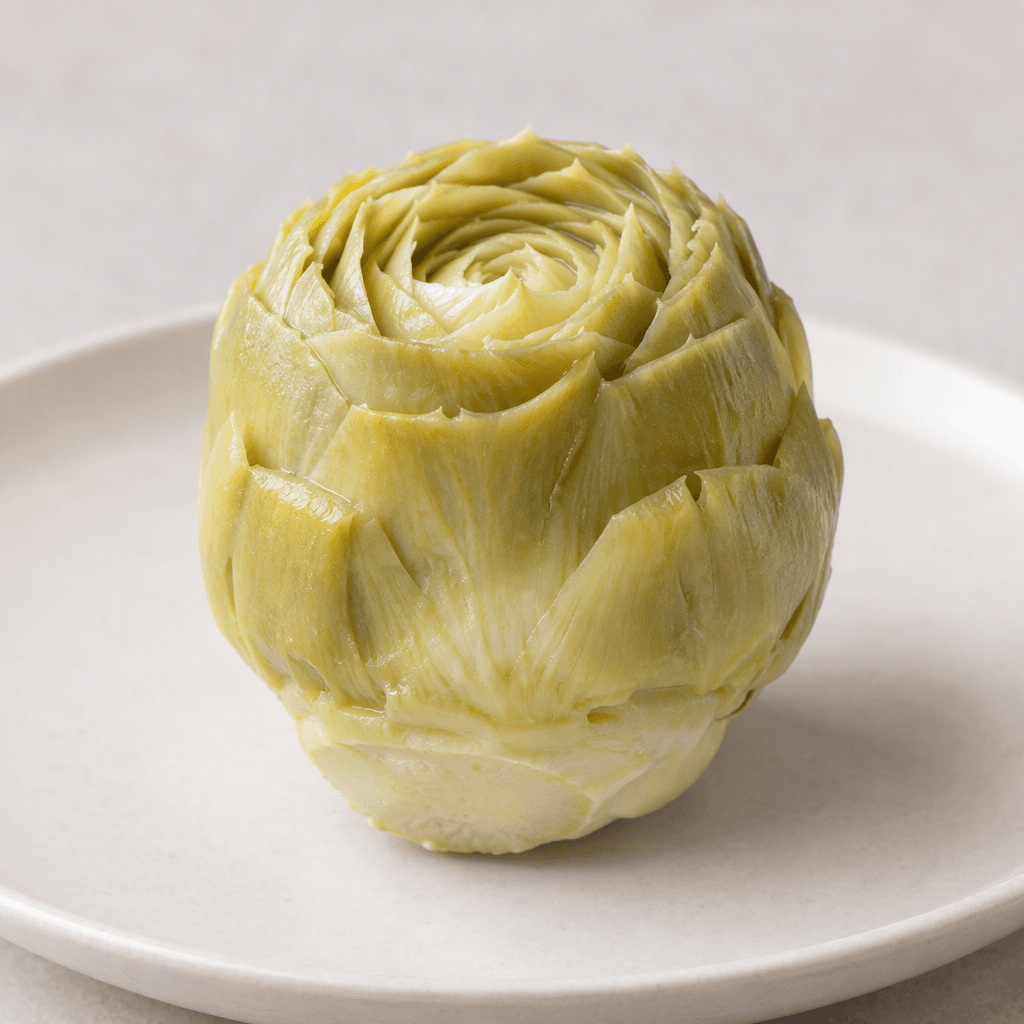
Artichoke heart Calories
Rich in fiber, folate, and antioxidants
In season: Spring
CALORIES
GI
POTASSIUM
FIBER
Quick answer
1 piece (medium) of Artichoke heart (40 g) has 19 calories. That works out to 47 calories per 100 g. It contains 4.2 g of carbs, 1.3 g of protein, 0.1 g of fat and 2.2 g of fiber. Its 0.1 mg of Copper covers 10% of the Daily Value. Its glycemic index is 15 (low), so it raises blood sugar slowly.
What is Artichoke heart?
An artichoke heart is the tender, fleshy centre left after an artichoke’s tougher outer leaves and choke are removed. It is a familiar ingredient in Mediterranean cooking, sold fresh as well as preserved in jars or cans for convenient use.
Mildly sweet and delicate, with a soft texture, it works well in salads, pasta, dips and vegetable dishes. Across the Mediterranean it is often dressed with olive oil, lemon and herbs; elsewhere, jarred hearts are an easy addition to sandwiches or grain bowls. Artichoke hearts provide fibre and folate while remaining low in fat; a 100 g portion has 5.4 g of fibre. For a lighter serving, use lemon and herbs rather than a rich, creamy dressing.
Artichoke heart Nutrition Facts
Selected: 100 g
47
KCAL / 100G
Carbs
10.5g
· 4% DV
Protein
3.3g
· 7% DV
Fat
0.2g
· 0% DV
Fiber
5.4g
· 19% DV
DV is the share of the daily value covered, on a 2,000 kcal reference diet.
Calories come from: Carbs 74% · Protein 23% · Fat 3%
Artichoke heart Vitamins & Minerals
Vitamins
Folate
68µg · 17% DV
Vitamin K
14.8µg · 12% DV
Vitamin C
7.4mg · 8% DV
B5
0.34mg · 7% DV
Minerals
Magnesium
60mg · 14% DV
Phosphorus
90mg · 13% DV
Potassium ⭐
370mg · 11% DV
Iron
1mg · 6% DV
How Nutritious Is Artichoke heart?
Nutrient density
Very high
How many vitamins, minerals and how much fiber this food carries per calorie. A high score means a lot of nutrition for few calories.
Satiety score
High
An EatBetter score computed from fiber, protein and calorie density. A high score means staying full longer on the same calories.
Both scores are calculated per 100 g and do not change with the selected portion. The satiety score is EatBetter's own calculation, not a clinical measure.
Artichoke heart Glycemic Index
GLYCEMIC INDEX
GLYCEMIC LOAD
Accounts for portion size — a more realistic measure than GI alone.
How to Burn Off Artichoke heart
To burn the 47 calories in 100 g:
🚶
Walking (5 km/h)
🏃
Running (8 km/h)
🚴
Cycling
🏊
Swimming
Times are calculated with the MET equation for a 70 kg adult. Actual burn varies with your weight, age and pace.
Is Artichoke heart Processed?
NOVA 1
Unprocessed
1. Unprocessed
2. Minimally Processed
3. Processed
4. Ultra-Processed
NOVA classifies foods into 4 groups by industrial processing. NOVA 1 (unprocessed) is the healthiest.
Does Artichoke heart Contain Allergens?
No known major allergens
Which Diets Is Artichoke heart Good For?
Vegan
✓ Suitable
Vegetarian
✓ Suitable
Gluten-Free
✓ Suitable
Dairy-Free
— Not suitable
Mediterranean
✓ Suitable
Paleo
✓ Suitable
Whole30
— Not suitable
DASH
— Not suitable
Keto
— Not suitable
Low FODMAP
— Not suitable
Artichoke heart Fat Profile
SATURATED
0.04g
MONOUNSATURATED
0.01g
POLYUNSATURATED
0.07g
Omega 6:3 ratio 2:1
Below the ideal 4:1 — a good omega balance.
Compare Artichoke heart
Foods Similar to Artichoke heart
Frequently Asked Questions About Artichoke heart
How do you cook artichoke hearts?
Artichoke hearts can be steamed, simmered, roasted, or sautéed until tender. For fresh hearts, a little lemon in the cooking water helps preserve their color; canned hearts are already cooked and only need warming or browning.
What part of the artichoke is the heart?
The artichoke heart is the tender center at the base of the leaves, including the fleshy artichoke bottom. On a whole mature artichoke, remove the leaves and the fuzzy choke above the heart before eating it.
Can you eat artichoke hearts raw?
Yes, very young, tender artichoke hearts can be eaten raw. Trim away tough outer leaves and any fuzzy choke, then slice the heart thinly and dress it with lemon to keep it from browning.
Are canned artichoke hearts already cooked?
Yes, canned artichoke hearts are cooked and ready to eat once drained. Rinse them if you want to reduce the salty brine taste, or add them directly to pasta, salads, dips, and other dishes.
How do you keep artichoke hearts from turning brown?
Keep cut artichoke hearts in water acidulated with lemon juice while you prepare them. Their exposed surfaces oxidize and darken in air; drain them just before cooking, since prolonged soaking can dilute their flavor.
Can you freeze fresh artichoke hearts?
Yes, but blanch fresh artichoke hearts briefly first, cool them promptly, and drain them well before packing airtight for the freezer. Thawed hearts may be softer, so they work especially well in cooked dishes rather than crisp salads.
What is the difference between artichoke hearts and artichoke bottoms?
An artichoke bottom is the flat, fleshy base left after the leaves and fuzzy choke are removed. Artichoke heart can refer to that base or to the tender central portion more broadly, so product names are not always used consistently.
How do you use marinated artichoke hearts?
Marinated artichoke hearts are ready to eat; drain them if you want less oil or a milder flavor. Add them to salads, sandwiches, pasta, or antipasto plates, and use a little of the marinade as a dressing.
Why do artichoke hearts taste bitter?
Artichoke hearts can have a mild natural bitterness, which may become more noticeable as they age or after cut surfaces darken. Choose fresh-looking hearts, keep them in lemon water while prepping, and avoid cooking them until they turn mushy.
How should you store fresh artichoke hearts?
Store trimmed fresh artichoke hearts in a covered container in the refrigerator, submerged in lemon water to limit browning. Use them promptly for the best texture; freeze blanched hearts if you need to keep them longer.
Have another question about Artichoke heart?
Ask the AI nutrition coach — calories, portions, alternatives and more, answered in seconds in the app.

Scan calories with your camera
Instant AI nutrition analysis

Nutrition data compiled from USDA FoodData Central and scientific sources.