

Ready & Packaged Foods
All →Vegetables & Legumes
All →Desserts & Confectionery
All →Meat & Protein
All →Grains & Bakery
All →Beverages
All →Milk & Dairy
All →

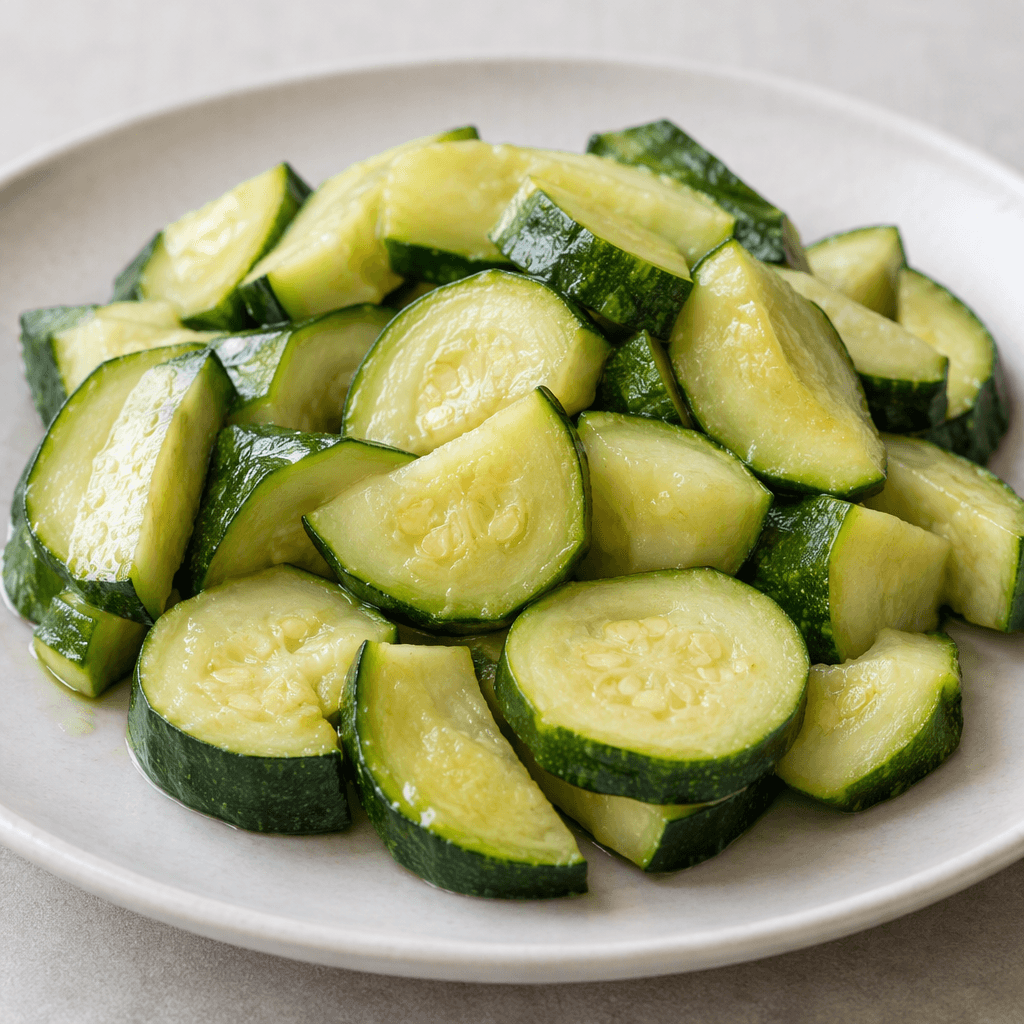
Zucchini (Cooked) Calories
Low calorie, high fiber, rich in vitamins and minerals
In season: Summer
CALORIES
GI
POTASSIUM
FIBER
Quick answer
1 cup (medium) of Zucchini (Cooked) (180 g) has 31 calories. That works out to 17 calories per 100 g. It contains 5.6 g of carbs, 2.2 g of protein, 0.5 g of fat and 2 g of fiber. Its 19.8 mg of Vitamin C covers 22% of the Daily Value. Its glycemic index is 15 (low), so it raises blood sugar slowly.
What is Zucchini (Cooked)?
Cooked zucchini is the tender flesh of summer squash, prepared by methods such as steaming, boiling or sautéing. Its mild flavour and soft, moist texture make it an easy side dish, and it also works well stirred into soups, pasta or grain bowls. In many cuisines it is served simply, while Mediterranean cooking often pairs it with olive oil, herbs and other seasonal vegetables.
It is light in calories—17 per 100 g—and provides some fibre along with vitamins and minerals. Serve it warm or chilled with lemon and herbs, or add yogurt or a protein-rich food for a more filling plate. Cook it just until tender to keep the pieces intact and avoid a watery result.
Zucchini (Cooked) Nutrition Facts
Selected: 100 g
17
KCAL / 100G
Carbs
3.1g
· 1% DV
Protein
1.2g
· 2% DV
Fat
0.3g
· 0% DV
Fiber
1.1g
· 4% DV
DV is the share of the daily value covered, on a 2,000 kcal reference diet.
Calories come from: Carbs 62% · Protein 24% · Fat 14%
Zucchini (Cooked) Vitamins & Minerals
Vitamins
Vitamin C
11mg · 12% DV
B6
0.15mg · 9% DV
B2
0.09mg · 7% DV
Folate
24µg · 6% DV
Minerals
Potassium ⭐
260mg · 8% DV
Magnesium
18mg · 4% DV
Phosphorus
28mg · 4% DV
Calcium
16mg · 2% DV
How Nutritious Is Zucchini (Cooked)?
Nutrient density
High
How many vitamins, minerals and how much fiber this food carries per calorie. A high score means a lot of nutrition for few calories.
Satiety score
Medium
An EatBetter score computed from fiber, protein and calorie density. A high score means staying full longer on the same calories.
Both scores are calculated per 100 g and do not change with the selected portion. The satiety score is EatBetter's own calculation, not a clinical measure.
Zucchini (Cooked) Glycemic Index
GLYCEMIC INDEX
GLYCEMIC LOAD
Accounts for portion size — a more realistic measure than GI alone.
How to Burn Off Zucchini (Cooked)
To burn the 17 calories in 100 g:
🚶
Walking (5 km/h)
🏃
Running (8 km/h)
🚴
Cycling
🏊
Swimming
Times are calculated with the MET equation for a 70 kg adult. Actual burn varies with your weight, age and pace.
Is Zucchini (Cooked) Processed?
NOVA 2
Minimally Processed
1. Unprocessed
2. Minimally Processed
3. Processed
4. Ultra-Processed
NOVA classifies foods into 4 groups by industrial processing. NOVA 1 (unprocessed) is the healthiest.
Does Zucchini (Cooked) Contain Allergens?
No known major allergens
Which Diets Is Zucchini (Cooked) Good For?
Vegan
✓ Suitable
Vegetarian
✓ Suitable
Gluten-Free
✓ Suitable
Dairy-Free
— Not suitable
Mediterranean
✓ Suitable
Paleo
✓ Suitable
Whole30
— Not suitable
DASH
— Not suitable
Keto
✓ Suitable
Low FODMAP
— Not suitable
Zucchini (Cooked) Fat Profile
SATURATED
0.06g
MONOUNSATURATED
0.02g
POLYUNSATURATED
0.04g
Omega 6:3 ratio 3:1
Below the ideal 4:1 — a good omega balance.
Compare Zucchini (Cooked)
Foods Similar to Zucchini (Cooked)
Frequently Asked Questions About Zucchini (Cooked)
How do you cook zucchini so it does not turn mushy?
Cook zucchini briefly over fairly high heat so it softens without releasing too much water. Spread the pieces out in a pan or on a baking tray, and salt them near the end; crowding and prolonged cooking make them soggy.
How long does cooked zucchini last in the fridge?
Cooked zucchini usually keeps for three to four days in a covered container in the refrigerator. Refrigerate it promptly after cooking, and discard it if it develops an off smell, a slimy texture, or visible mold.
Can you freeze cooked zucchini?
Yes, cooked zucchini can be frozen, though thawing makes it softer and often wetter. Freeze it in meal-sized airtight portions and use it later in soups, sauces, or casseroles rather than dishes where firm pieces matter.
Can you eat the skin on cooked zucchini?
Yes, zucchini skin is edible and becomes tender when cooked. Rinse the zucchini under running water before preparing it; peeling is optional and mainly useful when you want a smoother texture.
Are the seeds in cooked zucchini safe to eat?
Yes, the small, soft seeds in cooked zucchini are safe to eat and usually do not need removing. If a zucchini is unusually large and its seeds are tough, scoop out the seedy center for a more pleasant texture.
Why does cooked zucchini get watery?
Cooked zucchini gets watery because it naturally releases moisture as it heats. Avoid crowding the pan, cook uncovered, and drain excess liquid afterward; salting the pieces briefly and patting them dry can also help.
How do you reheat cooked zucchini without making it soggy?
Reheat cooked zucchini briefly in a skillet over medium heat, spreading it in a single layer so moisture can evaporate. A microwave works too, but use short bursts and stop as soon as it is hot.
What goes well with cooked zucchini?
Cooked zucchini pairs well with grilled chicken or fish, beans, grains, and tomato-based dishes. Add lemon, garlic, or fresh herbs for brightness, or serve it with yogurt as a cool accompaniment.
Is cooked zucchini good for you?
Yes, cooked zucchini is a useful way to add a vegetable to a meal, and it can be prepared with little added fat. Pair it with a protein source and other vegetables to make a more filling, balanced plate.
Can cooked zucchini help with weight loss?
Cooked zucchini can add volume to a meal without making it especially energy-dense, but it does not cause weight loss by itself. Pair it with protein and a satisfying source of fiber instead of relying on zucchini alone.
Have another question about Zucchini (Cooked)?
Ask the AI nutrition coach — calories, portions, alternatives and more, answered in seconds in the app.

Scan calories with your camera
Instant AI nutrition analysis

Nutrition data compiled from USDA FoodData Central and scientific sources.