

Ready & Packaged Foods
All →Vegetables & Legumes
All →Desserts & Confectionery
All →Meat & Protein
All →Grains & Bakery
All →Beverages
All →Milk & Dairy
All →

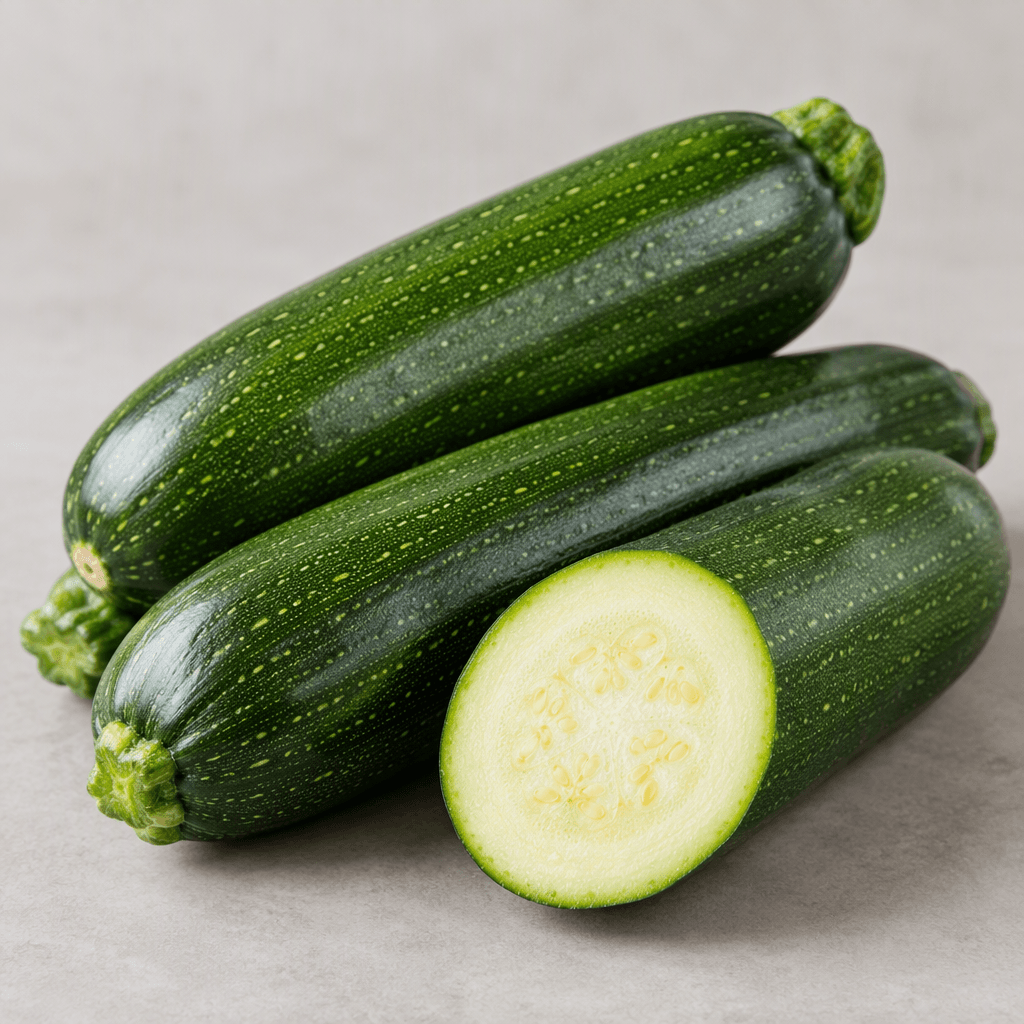
Zucchini Calories
Low calorie, good fiber source, contains vitamin C and potassium
In season: Summer
CALORIES
GI
POTASSIUM
FIBER
Quick answer
1 piece (medium) of Zucchini (200 g) has 34 calories. That works out to 17 calories per 100 g. It contains 6.2 g of carbs, 2.4 g of protein, 0.6 g of fat and 2 g of fiber. Its 35.8 mg of Vitamin C covers 40% of the Daily Value. Its glycemic index is 15 (low), so it raises blood sugar slowly.
What is Zucchini?
Zucchini is a tender summer squash, usually picked while young, with smooth green skin and pale flesh dotted with soft seeds. It is used in cuisines around the world, especially Mediterranean cooking, and can be eaten raw or cooked. In Italy it is often called courgette in British English; in North America, zucchini is the usual name.
Its mild, slightly sweet flavour and soft texture when cooked make it easy to pair with herbs, tomatoes, garlic or grains. It is low in calories and provides fibre; 100 g has 17 calories. For a lighter meal, grill or roast it with a little oil, or add it raw in ribbons to a salad.
Zucchini Nutrition Facts
Selected: 100 g
17
KCAL / 100G
Carbs
3.1g
· 1% DV
Protein
1.2g
· 2% DV
Fat
0.3g
· 0% DV
Fiber
1g
· 4% DV
DV is the share of the daily value covered, on a 2,000 kcal reference diet.
Calories come from: Carbs 62% · Protein 24% · Fat 14%
Zucchini Vitamins & Minerals
Vitamins
Vitamin C
17.9mg · 20% DV
B6
0.16mg · 9% DV
B2
0.09mg · 7% DV
Folate
24µg · 6% DV
Minerals
Potassium ⭐
261mg · 8% DV
Phosphorus
38mg · 5% DV
Magnesium
18mg · 4% DV
Calcium
16mg · 2% DV
How Nutritious Is Zucchini?
Nutrient density
High
How many vitamins, minerals and how much fiber this food carries per calorie. A high score means a lot of nutrition for few calories.
Satiety score
Medium
An EatBetter score computed from fiber, protein and calorie density. A high score means staying full longer on the same calories.
Both scores are calculated per 100 g and do not change with the selected portion. The satiety score is EatBetter's own calculation, not a clinical measure.
Zucchini Glycemic Index
GLYCEMIC INDEX
GLYCEMIC LOAD
Accounts for portion size — a more realistic measure than GI alone.
How to Burn Off Zucchini
To burn the 17 calories in 100 g:
🚶
Walking (5 km/h)
🏃
Running (8 km/h)
🚴
Cycling
🏊
Swimming
Times are calculated with the MET equation for a 70 kg adult. Actual burn varies with your weight, age and pace.
Is Zucchini Processed?
NOVA 1
Unprocessed
1. Unprocessed
2. Minimally Processed
3. Processed
4. Ultra-Processed
NOVA classifies foods into 4 groups by industrial processing. NOVA 1 (unprocessed) is the healthiest.
Does Zucchini Contain Allergens?
No known major allergens
Which Diets Is Zucchini Good For?
Vegan
✓ Suitable
Vegetarian
✓ Suitable
Gluten-Free
✓ Suitable
Dairy-Free
— Not suitable
Mediterranean
✓ Suitable
Paleo
✓ Suitable
Whole30
— Not suitable
DASH
— Not suitable
Keto
✓ Suitable
Low FODMAP
— Not suitable
Zucchini Fat Profile
SATURATED
0.06g
MONOUNSATURATED
0.03g
POLYUNSATURATED
0.07g
Omega 6:3 ratio 1.7:1
Below the ideal 4:1 — a good omega balance.
Compare Zucchini
Foods Similar to Zucchini
Frequently Asked Questions About Zucchini
How do you cook zucchini?
Zucchini can be roasted, sautéed, grilled, steamed, or added to soups and stews. For browned slices rather than soft, watery ones, cook them in a single layer over fairly high heat and avoid overcrowding the pan.
Can you eat zucchini raw?
Yes, zucchini can be eaten raw. Wash it well, then shave or slice it into salads, or serve it with a dip. If a zucchini tastes distinctly bitter, spit it out and discard the whole vegetable.
Should you peel zucchini before cooking it?
No, peeling zucchini is usually unnecessary. Its thin skin softens as it cooks and helps the slices hold their shape. Wash it thoroughly and trim the ends; peel it only if a recipe specifically calls for a very smooth texture.
How do you keep zucchini from getting soggy?
To keep zucchini from turning soggy, cook it briefly in a hot pan without crowding the pieces. Salt it near the end, since salt draws out moisture; for baked dishes, roasting the slices first can also help.
How long does zucchini last in the fridge?
Whole zucchini generally keeps for about a week in the refrigerator’s crisper drawer. Leave it unwashed and dry, and store it in a ventilated bag. Use cut zucchini promptly, keeping it covered in the fridge.
Can you freeze zucchini?
Yes, zucchini can be frozen, though it becomes softer after thawing. Blanch slices briefly, cool them in ice water, and dry them well before freezing. Use thawed zucchini in soups, sauces, or casseroles rather than raw salads.
Why does zucchini taste bitter, and is it safe to eat?
No, don’t eat distinctly bitter zucchini. The bitterness can signal cucurbitacins, compounds that may cause nausea, vomiting, or diarrhea; cooking does not reliably remove them. Discard the entire zucchini rather than tasting more of it.
How do you stop zucchini noodles from getting watery?
For less watery zucchini noodles, spiralize the zucchini shortly before serving and cook the noodles only briefly in a hot pan. Don’t cover the pan, and drain any liquid before tossing them with sauce.
How do you choose a good zucchini?
Choose zucchini that feel firm and heavy for their size, with smooth, glossy skin and no soft spots or wrinkles. Smaller to medium zucchini tend to have fewer, softer seeds than oversized ones.
Can you use large zucchini in zucchini bread?
Yes, large zucchini works well in zucchini bread, but its center may be seedy and watery. Cut it lengthwise, scoop out any tough seeds, then grate the flesh and squeeze out excess moisture if the recipe’s batter is already wet.
Have another question about Zucchini?
Ask the AI nutrition coach — calories, portions, alternatives and more, answered in seconds in the app.

Scan calories with your camera
Instant AI nutrition analysis

Nutrition data compiled from USDA FoodData Central and scientific sources.