

Ready & Packaged Foods
All →Vegetables & Legumes
All →Desserts & Confectionery
All →Meat & Protein
All →Grains & Bakery
All →Beverages
All →Milk & Dairy
All →

Potato Calories
Starchy vegetable, Source of vitamin C, Low fat
In season: Spring · Summer · Autumn · Winter
CALORIES
GI
POTASSIUM
FIBER
Quick answer
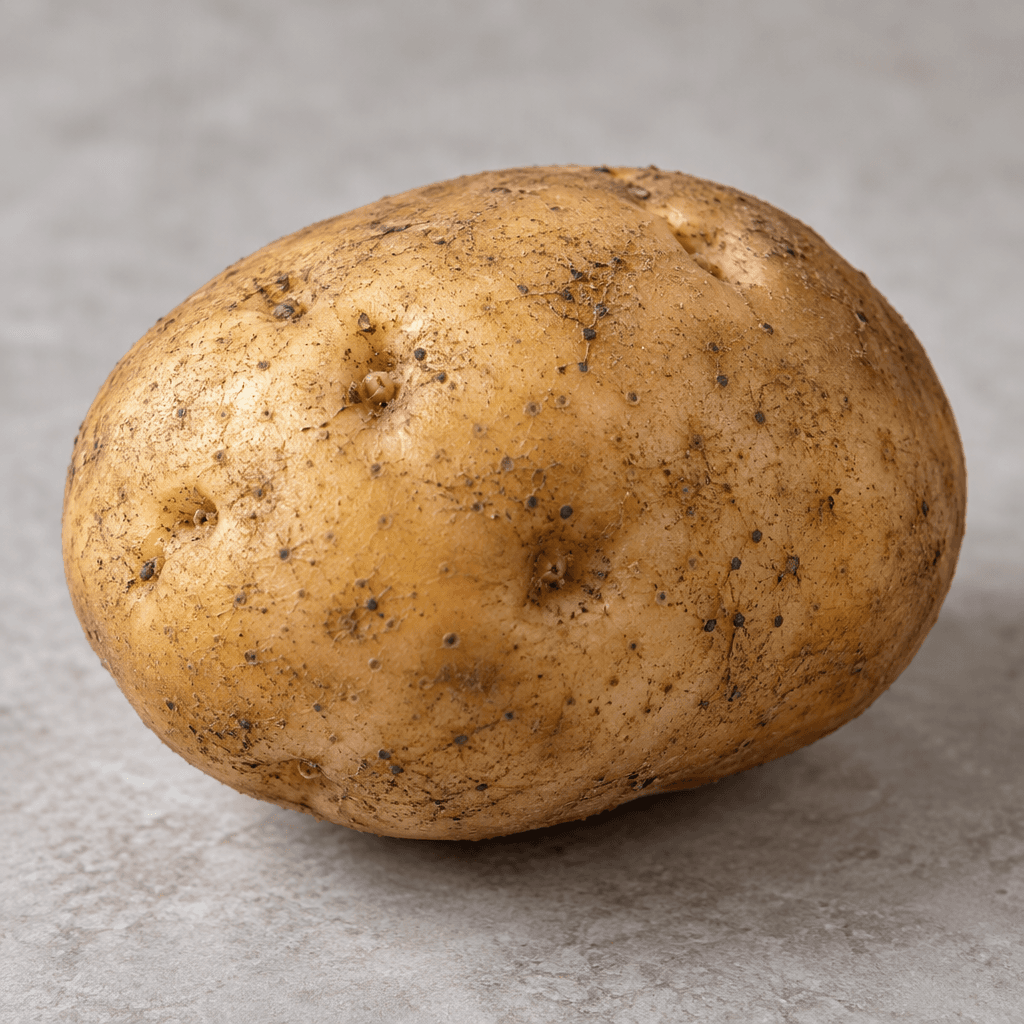
1 piece (medium) of Potato (150 g) has 116 calories. That works out to 77 calories per 100 g. It contains 25.5 g of carbs, 3 g of protein, 0.2 g of fat and 3.3 g of fiber. Its 29.6 mg of Vitamin C covers 33% of the Daily Value. Its glycemic index is 78 (high), so it raises blood sugar quickly.
What is Potato?
The potato is a starchy tuber native to the Andes, now grown and cooked around the world. It can be boiled, roasted, mashed or fried, and its mild flavour makes it a natural fit for everything from soups to hearty main dishes.
In many English-speaking kitchens, it appears as a baked potato, mash, chips or a side with meat, fish or vegetables; it is also a familiar ingredient in curries and stews. Plain potatoes are low in fat and provide mostly carbohydrate, along with some fibre. For a lighter meal, bake or boil one and pair it with vegetables, herbs or a spoonful of yoghurt rather than deep-frying it.
Potato Nutrition Facts
Selected: 100 g
77
KCAL / 100G
Carbs
17g
· 6% DV
Protein
2g
· 4% DV
Fat
0.1g
· 0% DV
Fiber
2.2g
· 8% DV
DV is the share of the daily value covered, on a 2,000 kcal reference diet.
Calories come from: Carbs 88% · Protein 10% · Fat 2%

Log this food in EatBetter
100,000+ people use it
- Get your daily calorie target
- Snap your meal, log it in seconds
- See every vitamin and mineral

📸 Scan the code to get the app free.

Potato Vitamins & Minerals
Vitamins
Vitamin C
19.7mg · 22% DV
B6
0.3mg · 18% DV
B3
1.1mg · 7% DV
B1
0.08mg · 7% DV
Minerals
Potassium ⭐
429mg · 13% DV
Phosphorus
57mg · 8% DV
Copper
0mg · 0% DV
Manganese
0mg · 0% DV
How Nutritious Is Potato?
Nutrient density
Medium
How many vitamins, minerals and how much fiber this food carries per calorie. A high score means a lot of nutrition for few calories.
Satiety score
Medium
An EatBetter score computed from fiber, protein and calorie density. A high score means staying full longer on the same calories.
Both scores are calculated per 100 g and do not change with the selected portion. The satiety score is EatBetter's own calculation, not a clinical measure.
Potato Glycemic Index
GLYCEMIC INDEX
GLYCEMIC LOAD
Accounts for portion size — a more realistic measure than GI alone.
How to Burn Off Potato
To burn the 77 calories in 100 g:
🚶
Walking (5 km/h)
🏃
Running (8 km/h)
🚴
Cycling
🏊
Swimming
Times are calculated with the MET equation for a 70 kg adult. Actual burn varies with your weight, age and pace.
Is Potato Processed?
NOVA 1
Unprocessed
1. Unprocessed
2. Minimally Processed
3. Processed
4. Ultra-Processed
NOVA classifies foods into 4 groups by industrial processing. NOVA 1 (unprocessed) is the healthiest.
Does Potato Contain Allergens?
No known major allergens
Which Diets Is Potato Good For?
Vegan
✓ Suitable
Vegetarian
✓ Suitable
Gluten-Free
✓ Suitable
Dairy-Free
— Not suitable
Mediterranean
✓ Suitable
Paleo
✓ Suitable
Whole30
— Not suitable
DASH
— Not suitable
Keto
— Not suitable
Low FODMAP
— Not suitable
Potato Fat Profile
SATURATED
0.03g
MONOUNSATURATED
0g
POLYUNSATURATED
0.04g
Omega 6:3 ratio 1.5:1
Below the ideal 4:1 — a good omega balance.
Compare Potato
Foods Similar to Potato
Frequently Asked Questions About Potato
Are potatoes healthy to eat?
Yes, potatoes can be part of a healthy diet, especially when boiled or baked rather than deep-fried. Keep the skin on after washing if you like, and pair potatoes with vegetables and a protein-rich food for a more balanced meal.
Can people with diabetes eat potatoes?
Yes, people with diabetes can eat potatoes, but potatoes can raise blood glucose quickly. A moderate serving alongside protein- and fiber-rich foods may help make the meal more balanced; individual glucose responses vary.
Can you eat sprouted potatoes?
You can use a firm potato with only a few small sprouts after cutting out the sprouts and their eyes generously. Discard potatoes that are soft, shriveled, heavily sprouted, or green, as natural toxins can build up in those parts.
Can you eat green potatoes?
It is safest not to eat noticeably green potatoes. The green color can signal increased levels of solanine and related natural toxins; removing the green areas may not be enough if much of the potato is affected.
How should you store potatoes?
Store potatoes unwashed in a cool, dry, dark, well-ventilated place, such as a pantry. A paper or mesh bag helps limit moisture buildup, while light and damp conditions encourage greening, sprouting, and spoilage.
Should potatoes be refrigerated?
Raw potatoes are generally better kept out of the refrigerator. Cold temperatures can turn some of their starch into sugar, which may make them brown more quickly when fried; choose a cool, dark cupboard instead.
Do you need to wash potatoes before cooking them?
Yes, scrub potatoes under running water before cooking, even if you plan to peel them. Washing removes soil and debris from the skin; avoid washing potatoes before storage because trapped moisture can encourage spoilage.
Can you freeze raw potatoes?
Raw potatoes do not freeze well because thawing can leave them watery and grainy. For better texture, briefly blanch cut potatoes or cook them first, cool them promptly, then freeze them in an airtight container.
Can you eat potato skins?
Yes, potato skins are edible once scrubbed clean under running water. Do not eat a potato with extensive greening or rot; peeling it does not reliably make a badly affected potato safe.
Why do cut potatoes turn brown, and how can you stop it?
Cut potatoes turn brown when their exposed surfaces react with oxygen. Keep peeled or chopped pieces submerged in cold water in the refrigerator until cooking, then drain them; avoid soaking them for longer than needed.
Have another question about Potato?
Ask the AI nutrition coach — calories, portions, alternatives and more, answered in seconds in the app.

Scan calories with your camera
Instant AI nutrition analysis

Nutrition data compiled from USDA FoodData Central and scientific sources.