

Ready & Packaged Foods
All →Vegetables & Legumes
All →Desserts & Confectionery
All →Meat & Protein
All →Grains & Bakery
All →Beverages
All →Milk & Dairy
All →

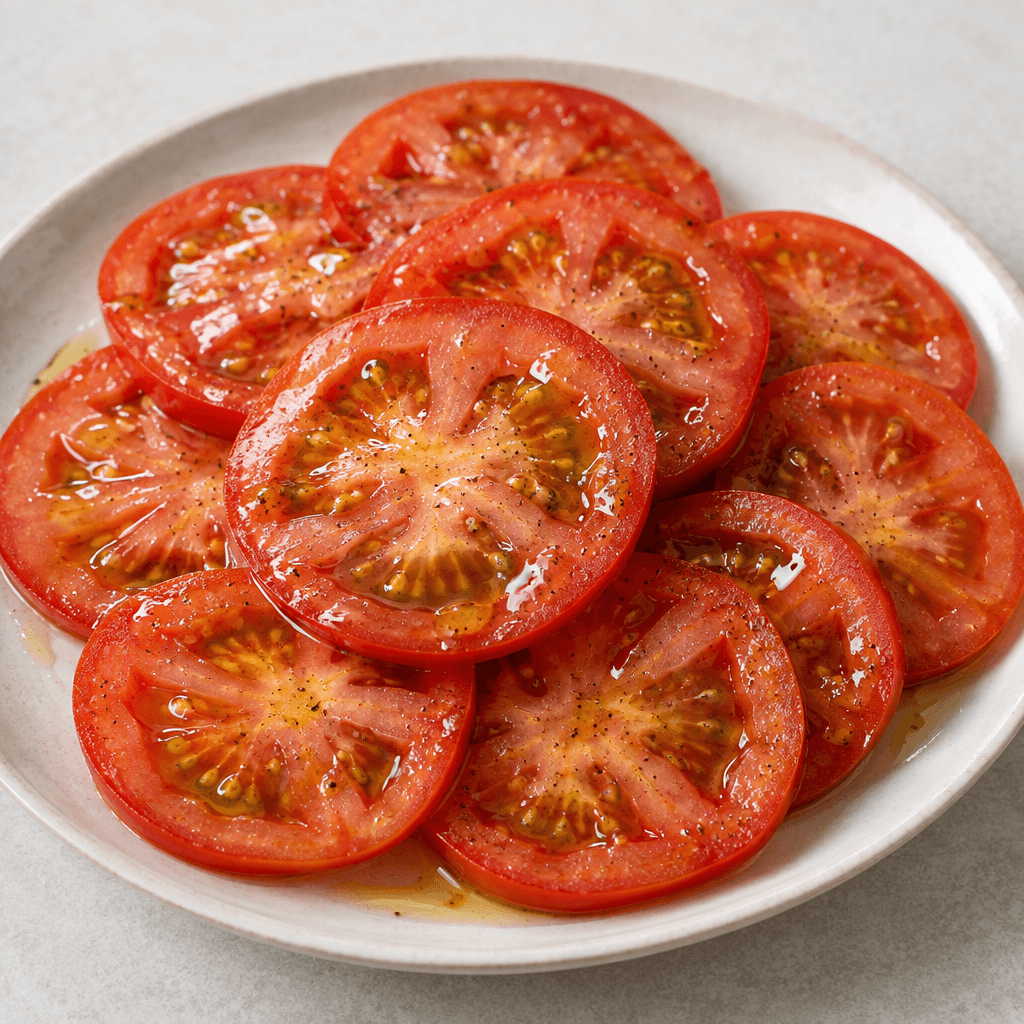
Tomato salad with olive oil Calories
Rich in lycopene and healthy fats
In season: Summer · Autumn
CALORIES
GI
POTASSIUM
FIBER
Quick answer
1 serving (medium) of Tomato salad with olive oil (150 g) has 132 calories. That works out to 88 calories per 100 g. It contains 6.5 g of carbs, 1.7 g of protein, 11 g of fat and 2.1 g of fiber. Its 2.8 mg of Vitamin E covers 19% of the Daily Value. Its glycemic index is 15 (low), so it raises blood sugar slowly.
What is Tomato salad with olive oil?
Tomato salad with olive oil is a simple dish of ripe tomatoes, sliced and dressed with olive oil. It is common in Turkish home cooking and fits naturally into the wider Mediterranean table. Depending on the cook, a little salt, pepper or onion may be added, but tomatoes and oil are the essentials.
The tomatoes are juicy and lightly tart, while the oil brings a smooth, fruity richness. It is often served as a side with a meal, alongside grilled foods, or with bread to mop up the dressing; in many places it also makes an easy summer lunch. Most of its substance comes from the tomatoes, while the oil contributes much of the fat; it is low in protein. Use ripe, flavourful tomatoes and pair it with beans or another protein-rich dish for a more filling meal.
Tomato salad with olive oil Nutrition Facts
Selected: 100 g
88
KCAL / 100G
Carbs
4.3g
· 2% DV
Protein
1.1g
· 2% DV
Fat
7.3g
· 9% DV
Fiber
1.4g
· 5% DV
DV is the share of the daily value covered, on a 2,000 kcal reference diet.
Calories come from: Carbs 20% · Protein 5% · Fat 75%
Tomato salad with olive oil Vitamins & Minerals
Vitamins
Vitamin E
1.9mg · 13% DV
Vitamin C
11mg · 12% DV
Vitamin K
8.5µg · 7% DV
Vitamin A
42µg · 5% DV
Minerals
Potassium ⭐
250mg · 7% DV
Phosphorus
24mg · 3% DV
Magnesium
10mg · 2% DV
Calcium
11mg · 1% DV
How Nutritious Is Tomato salad with olive oil?
Nutrient density
High
How many vitamins, minerals and how much fiber this food carries per calorie. A high score means a lot of nutrition for few calories.
Satiety score
Medium
An EatBetter score computed from fiber, protein and calorie density. A high score means staying full longer on the same calories.
Both scores are calculated per 100 g and do not change with the selected portion. The satiety score is EatBetter's own calculation, not a clinical measure.
Tomato salad with olive oil Glycemic Index
GLYCEMIC INDEX
GLYCEMIC LOAD
Accounts for portion size — a more realistic measure than GI alone.
How to Burn Off Tomato salad with olive oil
To burn the 88 calories in 100 g:
🚶
Walking (5 km/h)
🏃
Running (8 km/h)
🚴
Cycling
🏊
Swimming
Times are calculated with the MET equation for a 70 kg adult. Actual burn varies with your weight, age and pace.
Is Tomato salad with olive oil Processed?
NOVA 2
Minimally Processed
1. Unprocessed
2. Minimally Processed
3. Processed
4. Ultra-Processed
NOVA classifies foods into 4 groups by industrial processing. NOVA 1 (unprocessed) is the healthiest.
Does Tomato salad with olive oil Contain Allergens?
No known major allergens
Which Diets Is Tomato salad with olive oil Good For?
Vegan
✓ Suitable
Vegetarian
✓ Suitable
Gluten-Free
✓ Suitable
Dairy-Free
— Not suitable
Mediterranean
✓ Suitable
Paleo
✓ Suitable
Whole30
— Not suitable
DASH
— Not suitable
Keto
— Not suitable
Low FODMAP
— Not suitable
Tomato salad with olive oil Fat Profile
SATURATED
1.02g
MONOUNSATURATED
5.1g
POLYUNSATURATED
0.67g
Omega 6:3 ratio 12.4:1
Above the ideal 4:1 (12.4:1).
Compare Tomato salad with olive oil
Foods Similar to Tomato salad with olive oil
Frequently Asked Questions About Tomato salad with olive oil
How do you make tomato salad with olive oil?
To make tomato salad with olive oil, slice ripe tomatoes and dress them with olive oil, salt, and black pepper. Add fresh herbs, red onion, or a little vinegar if you like, then serve soon after seasoning.
What tomatoes are best for tomato salad with olive oil?
Choose ripe, fragrant tomatoes that still feel firm enough to slice cleanly. Heirloom or vine-ripened tomatoes bring plenty of flavor, while very soft tomatoes can collapse and leave the tomato salad with olive oil watery.
Is tomato salad with olive oil the same as a Caprese salad?
No. Tomato salad with olive oil is a simple dressed tomato dish, while a Caprese salad specifically pairs tomato with fresh mozzarella and basil, usually with olive oil. Adding mozzarella and basil makes a variation, but the two names are not interchangeable.
Should you peel tomatoes for tomato salad with olive oil?
No, tomatoes do not need to be peeled for tomato salad with olive oil. The skin helps slices hold their shape. If you dislike the texture, score each tomato, briefly blanch it, and slip off the loosened skin before slicing.
How do you keep tomato salad with olive oil from getting watery?
Salt the tomatoes just before serving to limit the time they release liquid. If you are preparing tomato salad with olive oil ahead, keep the dressing separate and drain any pooled juice before serving.
Can you make tomato salad with olive oil ahead of time?
Yes, you can prep the tomatoes and herbs ahead, but dress tomato salad with olive oil shortly before serving. Early salting and dressing draw out juice and soften the slices, so store the components separately in the refrigerator.
How long does tomato salad with olive oil last in the fridge?
Keep leftover tomato salad with olive oil covered in the refrigerator and eat it within a day for the best texture. It may remain usable longer when kept cold, but the tomatoes become softer and release more liquid as they sit.
What can you serve with tomato salad with olive oil?
Tomato salad with olive oil goes well with grilled fish, chicken, meat, or beans, and it can brighten a sandwich or grain bowl. Serve it with crusty bread to soak up the seasoned tomato juices.
Is tomato salad with olive oil healthy?
Yes, tomato salad with olive oil provides tomatoes’ lycopene alongside olive oil’s unsaturated fats. The oil may also help your body absorb lycopene, a compound found in tomatoes; herbs and vinegar add flavor without needing a heavy dressing.
Can you use extra-virgin olive oil for tomato salad with olive oil?
Yes, extra-virgin olive oil is a good choice because its fruity, peppery flavor complements fresh tomatoes. Since tomato salad with olive oil is served uncooked, the oil’s aroma remains noticeable; use a fresh-tasting oil rather than one that smells stale.
Have another question about Tomato salad with olive oil?
Ask the AI nutrition coach — calories, portions, alternatives and more, answered in seconds in the app.

Scan calories with your camera
Instant AI nutrition analysis

Nutrition data compiled from USDA FoodData Central and scientific sources.