

Ready & Packaged Foods
All →Vegetables & Legumes
All →Desserts & Confectionery
All →Meat & Protein
All →Grains & Bakery
All →Beverages
All →Milk & Dairy
All →

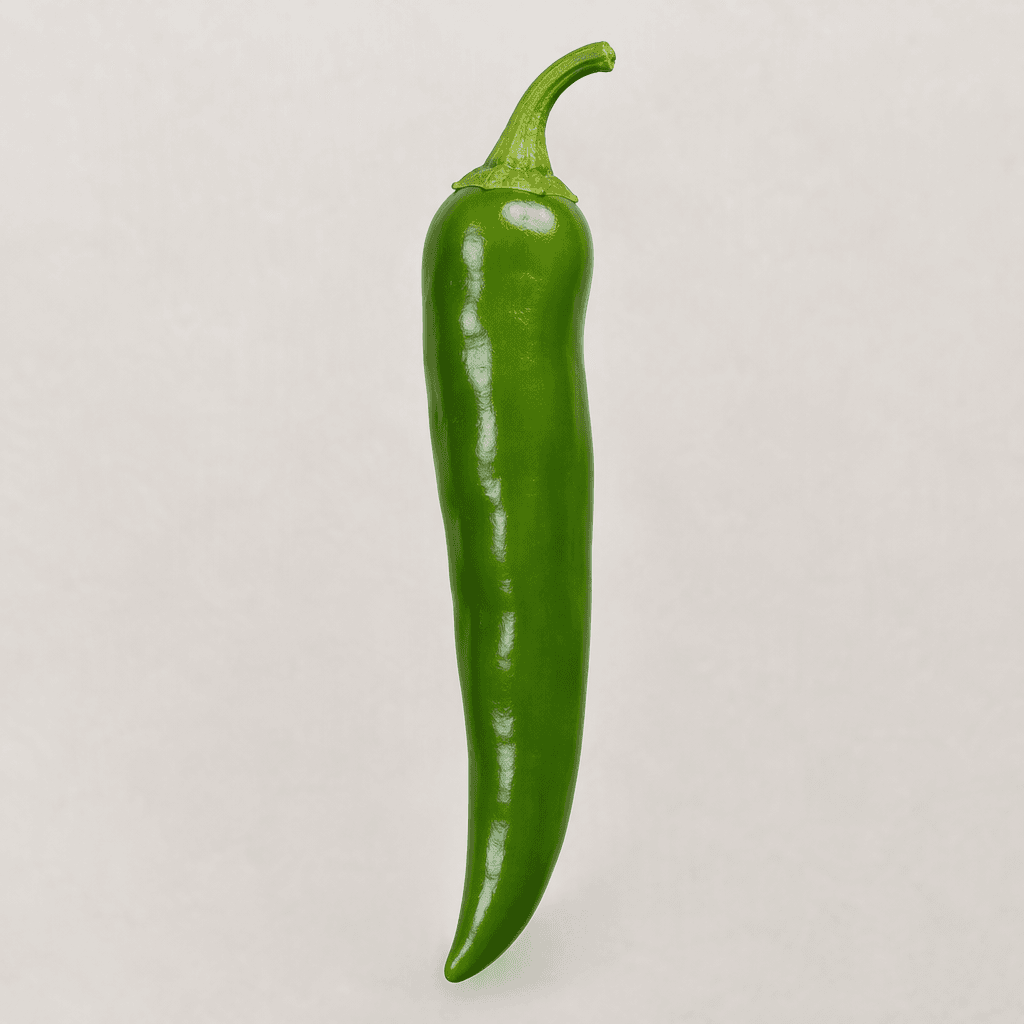
Green hot pepper Calories
Rich in vitamin C and antioxidants, low-calorie, spicy vegetable
In season: Summer · Autumn
CALORIES
GI
POTASSIUM
FIBER
Quick answer
1 piece (medium) of Green hot pepper (15 g) has 4 calories. That works out to 28 calories per 100 g. It contains 1 g of carbs, 0.2 g of protein, 0 g of fat and 0.4 g of fiber. Its 18 mg of Vitamin C covers 20% of the Daily Value. Its glycemic index is 15 (low), so it raises blood sugar slowly.
What is Green hot pepper?
Green hot pepper is an immature green chilli, usually slender and glossy, with heat that ranges from mild to fiery depending on the variety. Peppers originated in the Americas, but green chillies are now grown and used in cuisines around the world. They can be eaten raw, cooked into dishes or preserved as pickles.
In Turkey, they often appear alongside cheese, olives and tomatoes at breakfast, and are served with salads and other mezze. Grilling or pan-frying brings out their aroma; chopped peppers also add a lively kick to soups, stews and sauces. They are low in calories and provide fibre and vitamin C; 100 g contains 28 calories. For a gentler flavour, remove the pale inner ribs and serve with yoghurt or another cooling accompaniment.
Green hot pepper Nutrition Facts
Selected: 100 g
28
KCAL / 100G
Carbs
6.5g
· 2% DV
Protein
1.2g
· 2% DV
Fat
0.3g
· 0% DV
Fiber
2.8g
· 10% DV
DV is the share of the daily value covered, on a 2,000 kcal reference diet.
Calories come from: Carbs 78% · Protein 14% · Fat 8%
Green hot pepper Vitamins & Minerals
Vitamins
Vitamin C
120mg · 133% DV
B6
0.22mg · 13% DV
Vitamin K
14µg · 12% DV
Biotin
2.5µg · 8% DV
Minerals
Iron
1mg · 6% DV
Potassium ⭐
220mg · 6% DV
Magnesium
16mg · 4% DV
Phosphorus
26mg · 4% DV
How Nutritious Is Green hot pepper?
Nutrient density
Very high
How many vitamins, minerals and how much fiber this food carries per calorie. A high score means a lot of nutrition for few calories.
Satiety score
Medium
An EatBetter score computed from fiber, protein and calorie density. A high score means staying full longer on the same calories.
Both scores are calculated per 100 g and do not change with the selected portion. The satiety score is EatBetter's own calculation, not a clinical measure.
Green hot pepper Glycemic Index
GLYCEMIC INDEX
GLYCEMIC LOAD
Accounts for portion size — a more realistic measure than GI alone.
How to Burn Off Green hot pepper
To burn the 28 calories in 100 g:
🚶
Walking (5 km/h)
🏃
Running (8 km/h)
🚴
Cycling
🏊
Swimming
Times are calculated with the MET equation for a 70 kg adult. Actual burn varies with your weight, age and pace.
Is Green hot pepper Processed?
NOVA 1
Unprocessed
1. Unprocessed
2. Minimally Processed
3. Processed
4. Ultra-Processed
NOVA classifies foods into 4 groups by industrial processing. NOVA 1 (unprocessed) is the healthiest.
Does Green hot pepper Contain Allergens?
No known major allergens
Which Diets Is Green hot pepper Good For?
Vegan
✓ Suitable
Vegetarian
✓ Suitable
Gluten-Free
✓ Suitable
Dairy-Free
— Not suitable
Mediterranean
✓ Suitable
Paleo
✓ Suitable
Whole30
— Not suitable
DASH
— Not suitable
Keto
✓ Suitable
Low FODMAP
— Not suitable
Green hot pepper Fat Profile
SATURATED
0.04g
MONOUNSATURATED
0.02g
POLYUNSATURATED
0.07g
Omega 6:3 ratio 1.7:1
Below the ideal 4:1 — a good omega balance.
Compare Green hot pepper
Foods Similar to Green hot pepper
Frequently Asked Questions About Green hot pepper
How hot is a green hot pepper?
A green hot pepper can range from mildly warm to very spicy, depending on its variety and growing conditions. The green color alone does not tell you its heat level, so taste a small piece before adding it to a dish.
Are green hot peppers hotter than red peppers?
Not necessarily. A red pepper is often simply a riper version of a green pepper, but ripeness does not reliably predict heat. The variety matters most, so a green pepper can be hotter than a red one.
Can you freeze green hot peppers whole?
Yes, you can freeze green hot peppers whole after washing and drying them thoroughly. Their texture becomes softer once thawed, so frozen peppers work best added straight to cooked dishes rather than used raw.
How do you roast a green hot pepper?
Roast a green hot pepper under a broiler, over a gas flame, or on a grill, turning it until the skin is blistered and charred. Cover it briefly afterward to loosen the skin, then peel if desired.
What part of a green hot pepper is the hottest?
The pale inner ribs, or placenta, hold most of a green hot pepper’s capsaicin. The seeds are not usually the main source of heat, but they can taste spicy because they touch those ribs.
Can you pickle green hot peppers?
Yes, green hot peppers are commonly pickled. Wash and dry them, pack them into a clean jar, and cover them with a vinegar-based brine. Slitting or piercing each pepper helps the brine reach the inside.
Why does a green hot pepper turn red?
A green hot pepper turns red as it ripens. The change is normal and usually brings a different flavor, but it does not guarantee that the pepper will be hotter; heat varies by variety.
Can you eat green hot peppers raw?
Yes, green hot peppers can be eaten raw after you wash them well and remove the stem. Slice a small amount into salads or serve it alongside a meal, tasting first to judge its heat.
How do you make a green hot pepper less spicy?
Remove the white inner ribs and seeds to make a green hot pepper less spicy. The ribs contain most of the capsaicin, and seeds can pick up heat from them; cooking may soften the flavor but will not remove all the heat.
Do green hot peppers upset your stomach?
They can upset the stomach or trigger heartburn in people who are sensitive to spicy foods. Try a smaller portion and remove the inner ribs; if discomfort continues, avoid the pepper.
Have another question about Green hot pepper?
Ask the AI nutrition coach — calories, portions, alternatives and more, answered in seconds in the app.

Scan calories with your camera
Instant AI nutrition analysis

Nutrition data compiled from USDA FoodData Central and scientific sources.