

Ready & Packaged Foods
All →Vegetables & Legumes
All →Desserts & Confectionery
All →Meat & Protein
All →Grains & Bakery
All →Beverages
All →Milk & Dairy
All →

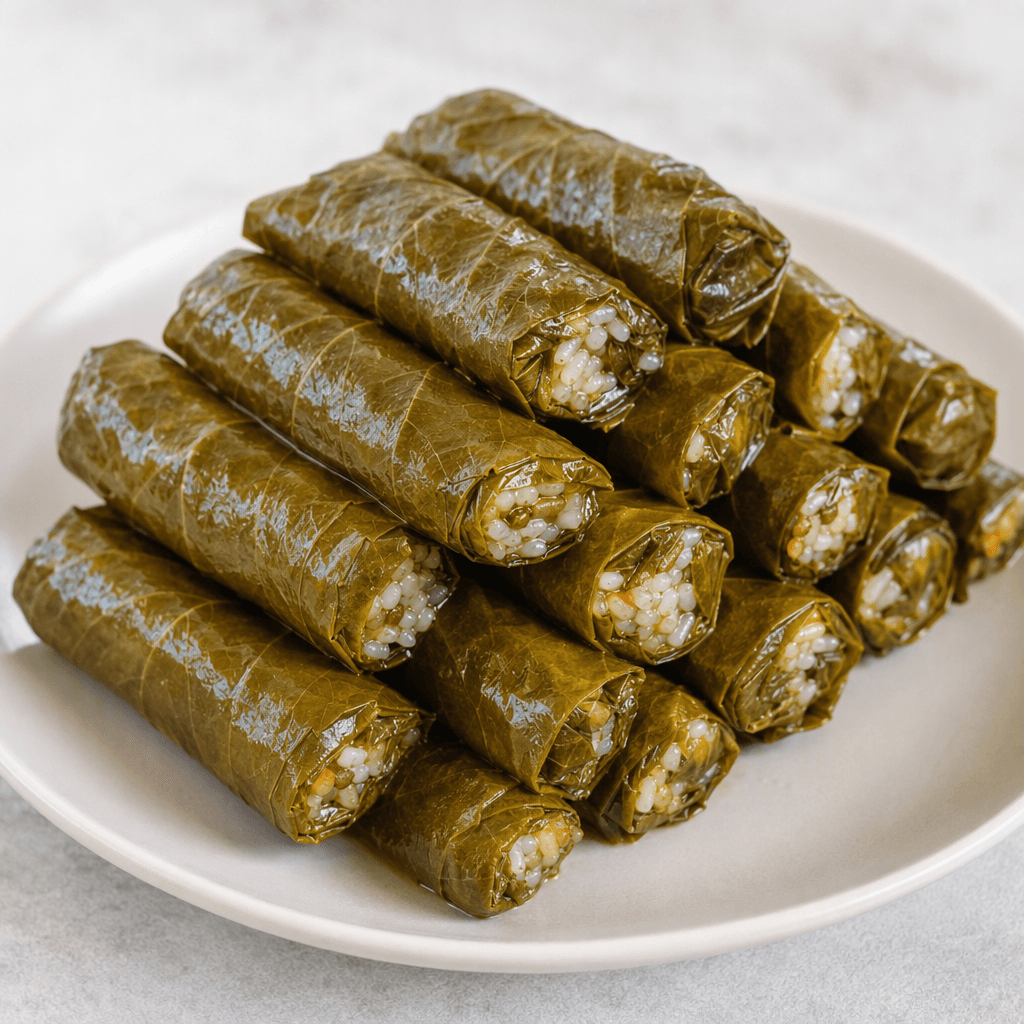
Stuffed Grape Leaves Calories
Rice, herbs, olive oil stuffed grape leaves
In season: Spring · Summer
CALORIES
GI
POTASSIUM
FIBER
Quick answer
5 piece (medium) of Stuffed Grape Leaves (120 g) has 180 calories. That works out to 150 calories per 100 g. It contains 27 g of carbs, 3.8 g of protein, 6.2 g of fat and 4.3 g of fiber. Its 504 mg of Sodium covers 22% of the Daily Value. Its glycemic index is 55 (medium), so it raises blood sugar at a moderate pace.
What is Stuffed Grape Leaves?
Stuffed grape leaves are made by wrapping grape leaves around a filling, commonly rice, onion, herbs and olive oil. The dish is found across the Eastern Mediterranean and Middle East; Turkish versions include both meatless olive-oil preparations and fillings with meat.
The rice-and-herb version is usually served cool or at room temperature, often with lemon as part of a mezze spread. It is also an easy small plate to share, alongside salads, dips or grilled foods. Its nutrition is led by carbohydrates from the rice, with a modest amount of fibre and protein. For a lighter meal, pair a few rolls with a fresh salad rather than richer sides.
Stuffed Grape Leaves Nutrition Facts
Selected: 100 g
150
KCAL / 100G
Carbs
22.5g
· 8% DV
Protein
3.2g
· 6% DV
Fat
5.2g
· 7% DV
Fiber
3.6g
· 13% DV
DV is the share of the daily value covered, on a 2,000 kcal reference diet.
Calories come from: Carbs 60% · Protein 9% · Fat 31%
Stuffed Grape Leaves Vitamins & Minerals
Vitamins
Folate
38µg · 10% DV
B1
0.09mg · 8% DV
B6
0.13mg · 8% DV
Vitamin A
60µg · 7% DV
Minerals
Sodium
420mg · 18% DV
Iron
2mg · 11% DV
Zinc
1mg · 9% DV
Calcium
68mg · 7% DV
How Nutritious Is Stuffed Grape Leaves?
Nutrient density
Medium
How many vitamins, minerals and how much fiber this food carries per calorie. A high score means a lot of nutrition for few calories.
Satiety score
Medium
An EatBetter score computed from fiber, protein and calorie density. A high score means staying full longer on the same calories.
Both scores are calculated per 100 g and do not change with the selected portion. The satiety score is EatBetter's own calculation, not a clinical measure.
Stuffed Grape Leaves Glycemic Index
GLYCEMIC INDEX
GLYCEMIC LOAD
Accounts for portion size — a more realistic measure than GI alone.
How to Burn Off Stuffed Grape Leaves
To burn the 150 calories in 100 g:
🚶
Walking (5 km/h)
🏃
Running (8 km/h)
🚴
Cycling
🏊
Swimming
Times are calculated with the MET equation for a 70 kg adult. Actual burn varies with your weight, age and pace.
Is Stuffed Grape Leaves Processed?
NOVA 2
Minimally Processed
1. Unprocessed
2. Minimally Processed
3. Processed
4. Ultra-Processed
NOVA classifies foods into 4 groups by industrial processing. NOVA 1 (unprocessed) is the healthiest.
Does Stuffed Grape Leaves Contain Allergens?
No known major allergens
Which Diets Is Stuffed Grape Leaves Good For?
Vegan
✓ Suitable
Vegetarian
✓ Suitable
Gluten-Free
✓ Suitable
Dairy-Free
— Not suitable
Mediterranean
✓ Suitable
Paleo
— Not suitable
Whole30
— Not suitable
DASH
— Not suitable
Keto
— Not suitable
Low FODMAP
— Not suitable
Stuffed Grape Leaves Fat Profile
SATURATED
0.8g
MONOUNSATURATED
3.2g
POLYUNSATURATED
1.1g
Omega 6:3 ratio 15:1
Above the ideal 4:1 (15:1).
Compare Stuffed Grape Leaves
Foods Similar to Stuffed Grape Leaves
Frequently Asked Questions About Stuffed Grape Leaves
What are stuffed grape leaves made of?
Stuffed grape leaves are usually filled with rice, onion, olive oil, and herbs such as dill, mint, or parsley. Recipes vary: some include currants or pine nuts, while meat-filled versions use ground meat and are served differently from the olive-oil version.
Are stuffed grape leaves served hot or cold?
Stuffed grape leaves can be served either hot or cold. The rice-and-herb version made with olive oil is commonly served chilled or at room temperature, while meat-filled versions are more often served warm as part of a meal.
How do you eat stuffed grape leaves?
Eat stuffed grape leaves whole, including the leaf, using your fingers or a fork. They are often served as a small appetizer with lemon; if the filling is hot, let the rolls cool briefly before taking a bite.
How do you make stuffed grape leaves?
To make stuffed grape leaves, place a small amount of rice-and-herb filling on each leaf, fold in the sides, and roll it tightly. Arrange the rolls seam-side down in a pot, add liquid, and cook gently until the rice is tender.
Can you eat the leaves in stuffed grape leaves?
Yes, the grape leaves are meant to be eaten along with the filling. If using brined leaves, rinse them first to remove excess salt; tender leaves roll more easily and are more pleasant to eat than thick, tough ones.
What is the difference between stuffed grape leaves and dolmas?
Stuffed grape leaves are one type of dolma: “dolma” broadly refers to vegetables or leaves filled with a mixture. The word can also describe stuffed peppers or other vegetables, so not every dolma is wrapped in grape leaves.
What should you serve with stuffed grape leaves?
Serve stuffed grape leaves with lemon wedges, plain yogurt, or a crisp salad. They work well as part of a mezze spread; warm meat-filled rolls can also be served with rice or another simple side.
How long do stuffed grape leaves last in the fridge?
Keep cooked stuffed grape leaves in a covered container in the refrigerator and eat them within three days. Refrigerate leftovers promptly rather than leaving them out on a serving table for an extended meal.
Can you freeze stuffed grape leaves?
Yes, stuffed grape leaves can be frozen, though the leaves may soften slightly after thawing. Cool them first, freeze in a sealed container, and thaw in the refrigerator; reheat meat-filled rolls thoroughly before serving.
Why do stuffed grape leaves unravel while cooking?
Stuffed grape leaves often unravel because they are loosely rolled, overfilled, or moved around in the pot. Use a modest amount of filling, tuck in the sides, place each roll seam-side down, and keep the cooking liquid at a gentle simmer.
Have another question about Stuffed Grape Leaves?
Ask the AI nutrition coach — calories, portions, alternatives and more, answered in seconds in the app.

Scan calories with your camera
Instant AI nutrition analysis

Nutrition data compiled from USDA FoodData Central and scientific sources.