

Ready & Packaged Foods
All →Vegetables & Legumes
All →Desserts & Confectionery
All →Meat & Protein
All →Grains & Bakery
All →Beverages
All →Milk & Dairy
All →

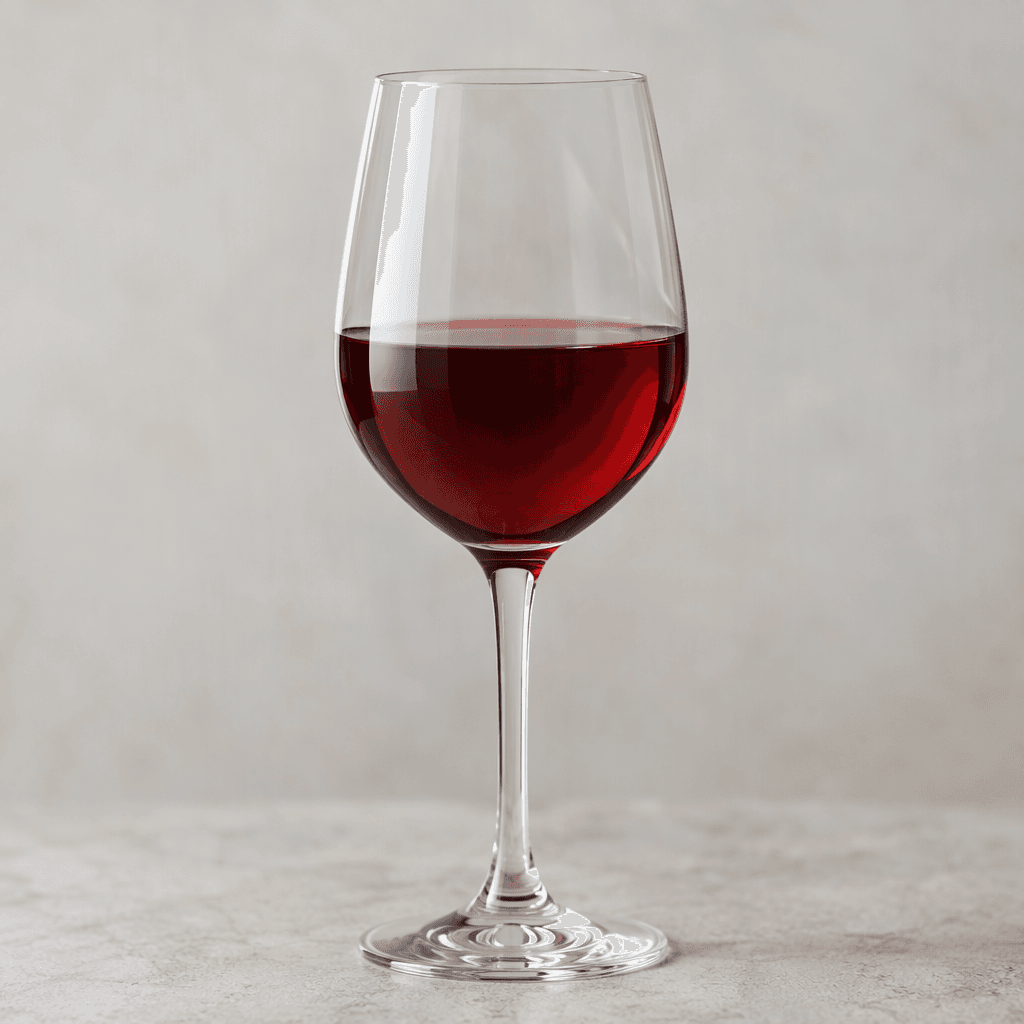
Wine Calories
Alcoholic beverage, contains antioxidants, red/white varieties
In season: Spring · Summer · Autumn · Winter
CALORIES
GI
POTASSIUM
FIBER
Quick answer
1 cup (medium) of Wine (150 g) has 125 calories. That works out to 83 calories per 100 g. It contains 3.9 g of carbs, 0.2 g of protein, 0 g of fat and 0 g of fiber. Its 0.2 mg of Manganese covers 7% of the Daily Value. Its glycemic index is 45 (low), so it raises blood sugar slowly.
What is Wine?
Wine is made by fermenting grape juice. Red, white and rosé styles come from different grapes and winemaking methods, including whether the skins are left in contact with the juice. Its flavour can be crisp, fruity, tart or tannic, and its texture ranges from light and refreshing to fuller-bodied.
Around the world, wine is commonly served with meals; it also pairs well with cheese, vegetables and seafood. It is an alcoholic drink with very little protein or fat, and provides about 83 calories per 100 g. For a lighter accompaniment, choose a smaller pour and serve it with water alongside.
Wine Nutrition Facts
Selected: 100 g
83
KCAL / 100G
Carbs
2.6g
· 1% DV
Protein
0.1g
· 0% DV
Fat
0g
· 0% DV
Fiber
0g
· 0% DV
DV is the share of the daily value covered, on a 2,000 kcal reference diet.
Calories come from: Carbs 96% · Protein 4% · Fat 0%
Wine Vitamins & Minerals
Vitamins
B1
0.02mg · 2% DV
B2
0.03mg · 2% DV
B6
0.03mg · 2% DV
B3
0.2mg · 1% DV
Minerals
Iron
1mg · 6% DV
Magnesium
10mg · 2% DV
Potassium ⭐
75mg · 2% DV
Calcium
8mg · 1% DV
How Nutritious Is Wine?
Nutrient density
Low
How many vitamins, minerals and how much fiber this food carries per calorie. A high score means a lot of nutrition for few calories.
Satiety score
Low
An EatBetter score computed from fiber, protein and calorie density. A high score means staying full longer on the same calories.
Both scores are calculated per 100 g and do not change with the selected portion. The satiety score is EatBetter's own calculation, not a clinical measure.
Wine Glycemic Index
GLYCEMIC INDEX
GLYCEMIC LOAD
Accounts for portion size — a more realistic measure than GI alone.
How to Burn Off Wine
To burn the 83 calories in 100 g:
🚶
Walking (5 km/h)
🏃
Running (8 km/h)
🚴
Cycling
🏊
Swimming
Times are calculated with the MET equation for a 70 kg adult. Actual burn varies with your weight, age and pace.
Is Wine Processed?
NOVA 3
Processed
1. Unprocessed
2. Minimally Processed
3. Processed
4. Ultra-Processed
NOVA classifies foods into 4 groups by industrial processing. NOVA 1 (unprocessed) is the healthiest.
Does Wine Contain Allergens?
No known major allergens
Which Diets Is Wine Good For?
Vegan
✓ Suitable
Vegetarian
✓ Suitable
Gluten-Free
✓ Suitable
Dairy-Free
— Not suitable
Mediterranean
✓ Suitable
Paleo
— Not suitable
Whole30
— Not suitable
DASH
— Not suitable
Keto
— Not suitable
Low FODMAP
— Not suitable
Wine Fat Profile
SATURATED
0g
MONOUNSATURATED
0g
POLYUNSATURATED
0g
Compare Wine
Foods Similar to Wine
Frequently Asked Questions About Wine
Does wine go bad after opening?
Yes, opened wine gradually loses its freshness as it reacts with air. Re-seal the bottle and refrigerate it to slow this process; sparkling wine usually loses its fizz sooner than still wine.
How should you store an unopened bottle of wine?
Store unopened wine in a cool, dark place where the temperature stays fairly steady. If it has a cork, laying the bottle on its side helps keep the cork from drying out; avoid leaving wine in a hot car or sunny window.
Is red wine healthier than white wine?
Red wine can contain more grape-skin antioxidants because it is usually fermented with the skins. That does not make it a healthy choice overall: alcohol carries health risks, and wine is not recommended as a way to gain health benefits.
Does wine contain sugar?
Yes, wine can contain sugar left over from the grapes. The amount depends on the style and fermentation; dry wine generally has less residual sugar than sweet wine.
Does wine help you sleep?
No. Wine may make you feel sleepy at first, but alcohol can disrupt sleep later in the night and reduce its restorative quality. Drinking wine is not a reliable way to improve sleep.
Does wine dehydrate you?
Yes, alcohol in wine can increase urine production and contribute to dehydration. Drinking water alongside wine can help limit dehydration, but it does not cancel out alcohol’s effects.
Should you refrigerate wine after opening it?
Yes, refrigerating opened wine slows the loss of freshness, including red wine. Take red wine out shortly before serving if you prefer it less chilled; keep the bottle sealed between pours.
How is wine made?
Wine is made by fermenting grape juice with yeast, which converts grape sugars into alcohol. Red wine is commonly fermented with grape skins, while white wine is usually made from juice separated from the skins.
Can you cook with wine?
Yes, wine can add acidity and aroma to sauces, stews, and braises. Use a wine you would be willing to drink, and allow it to cook with the food so its raw alcohol aroma softens.
Can you drink wine while pregnant?
No. There is no known safe amount of alcohol during pregnancy, and wine is no exception. Avoid wine and other alcoholic drinks throughout pregnancy.
Have another question about Wine?
Ask the AI nutrition coach — calories, portions, alternatives and more, answered in seconds in the app.

Scan calories with your camera
Instant AI nutrition analysis

Nutrition data compiled from USDA FoodData Central and scientific sources.