

Ready & Packaged Foods
All →Vegetables & Legumes
All →Desserts & Confectionery
All →Meat & Protein
All →Grains & Bakery
All →Beverages
All →Milk & Dairy
All →

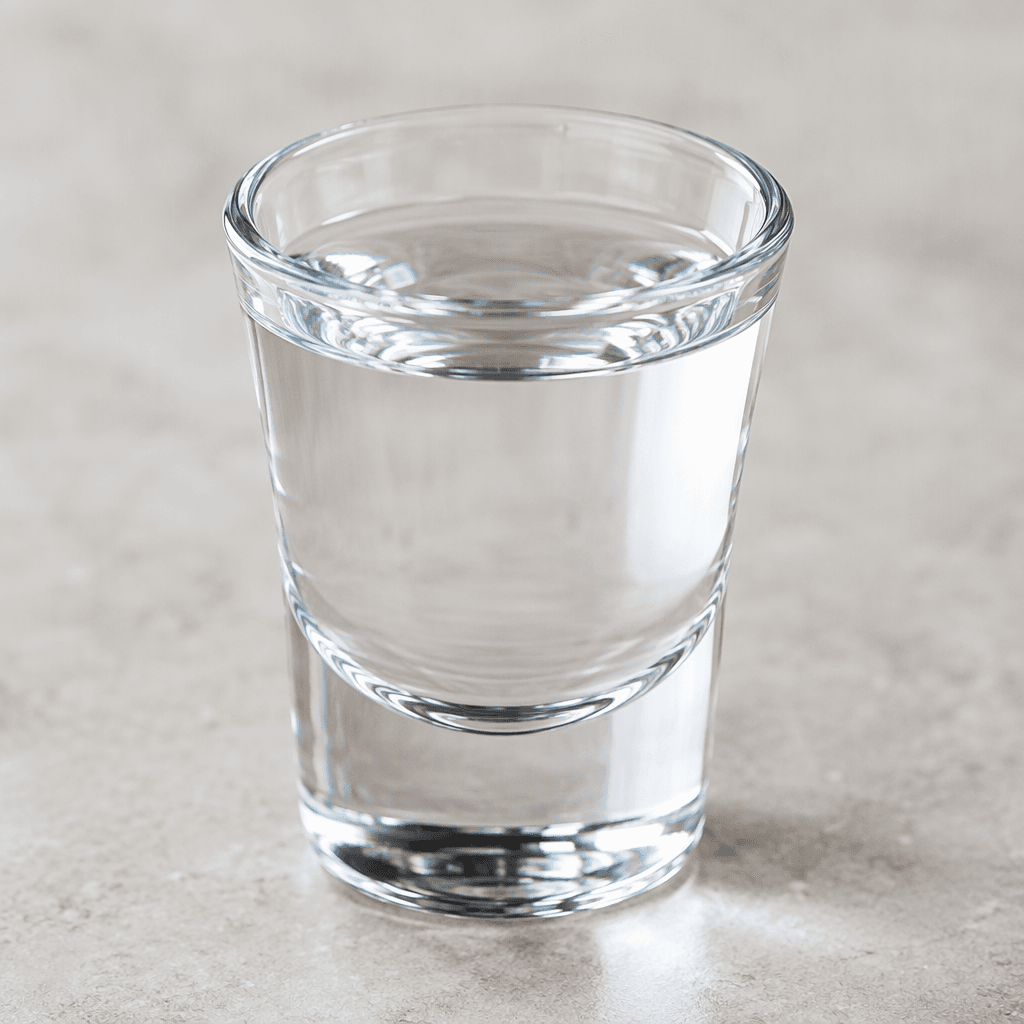
Vodka Calories
Pure alcohol, no carbs, calorie source
In season: Spring · Summer · Autumn · Winter
CALORIES
GI
POTASSIUM
FIBER
Quick answer
1 serving (medium) of Vodka (40 g) has 92 calories. That works out to 231 calories per 100 g. It contains 0 g of carbs, 0 g of protein, 0 g of fat and 0 g of fiber. Its glycemic index is 0 (low), so it raises blood sugar slowly.
What is Vodka?
Vodka is a clear distilled spirit, commonly made from fermented grains or potatoes. Its history is closely associated with Eastern Europe, especially Russia and Poland, though it is now produced and enjoyed worldwide. It is often served chilled and neat, or mixed into cocktails; in many places, it accompanies small savoury bites rather than a full meal.
Its flavour is generally neutral, with a warming, sharp finish. Vodka contains no carbohydrates, but its energy comes from alcohol: 100 g provides 231 calories. For a less sweet drink, pair it with soda water and citrus instead of sugary mixers.
Vodka Nutrition Facts
Selected: 100 g
231
KCAL / 100G
Carbs
0g
· 0% DV
Protein
0g
· 0% DV
Fat
0g
· 0% DV
Fiber
0g
· 0% DV
DV is the share of the daily value covered, on a 2,000 kcal reference diet.
Calories come from: Carbs 0% · Protein 0% · Fat 100%
Vodka Vitamins & Minerals
Vitamins
Vitamin A
0µg · 0% DV
B1
0mg · 0% DV
B2
0mg · 0% DV
B3
0mg · 0% DV
Minerals
Calcium
0mg · 0% DV
Iron
0mg · 0% DV
Magnesium
0mg · 0% DV
Zinc
0mg · 0% DV
How Nutritious Is Vodka?
Satiety score
Low
An EatBetter score computed from fiber, protein and calorie density. A high score means staying full longer on the same calories.
Both scores are calculated per 100 g and do not change with the selected portion. The satiety score is EatBetter's own calculation, not a clinical measure.
Vodka Glycemic Index
GLYCEMIC INDEX
GLYCEMIC LOAD
Accounts for portion size — a more realistic measure than GI alone.
How to Burn Off Vodka
To burn the 231 calories in 100 g:
🚶
Walking (5 km/h)
🏃
Running (8 km/h)
🚴
Cycling
🏊
Swimming
Times are calculated with the MET equation for a 70 kg adult. Actual burn varies with your weight, age and pace.
Is Vodka Processed?
NOVA 4
Ultra-Processed
1. Unprocessed
2. Minimally Processed
3. Processed
4. Ultra-Processed
NOVA classifies foods into 4 groups by industrial processing. NOVA 1 (unprocessed) is the healthiest.
Does Vodka Contain Allergens?
No known major allergens
Which Diets Is Vodka Good For?
Vegan
✓ Suitable
Vegetarian
✓ Suitable
Gluten-Free
✓ Suitable
Dairy-Free
— Not suitable
Mediterranean
✓ Suitable
Paleo
✓ Suitable
Whole30
— Not suitable
DASH
— Not suitable
Keto
✓ Suitable
Low FODMAP
— Not suitable
Vodka Fat Profile
SATURATED
0g
MONOUNSATURATED
0g
POLYUNSATURATED
0g
Compare Vodka
Foods Similar to Vodka
Frequently Asked Questions About Vodka
What is vodka made from?
Vodka is made by fermenting and distilling a source of starch or sugar, such as wheat, rye, corn, potatoes, grapes, or sugar beet. The spirit is then diluted with water to reach its bottled strength.
Why doesn’t vodka freeze in a home freezer?
Most vodka does not freeze in a standard home freezer because its alcohol lowers the liquid’s freezing point. It may become thicker and colder, but putting it in the freezer does not make it less alcoholic.
Does vodka expire after opening?
Plain vodka usually does not spoil quickly after opening if the cap is closed tightly and it is stored away from heat and sunlight. Its flavor can fade over time, and flavored vodka may lose quality sooner.
What is the difference between vodka and gin?
Vodka is usually made to have a relatively neutral flavor, while gin is flavored with juniper and often other botanicals. That difference is especially noticeable in cocktails such as a vodka martini versus a gin martini.
Can you drink vodka straight?
Yes, vodka can be served straight, either at room temperature or chilled. Chilling can make its alcohol bite feel less pronounced, but it does not reduce the alcohol content or change how much alcohol you consume.
What mixes well with vodka?
Vodka mixes well with soda water, tonic, citrus juice, cranberry juice, or tomato juice. A mixer changes the drink’s flavor, but it does not cancel out the effects of the alcohol in the vodka.
Is vodka stronger than whiskey?
Not necessarily; the strength depends on the particular bottle, not just whether it is vodka or whiskey. Many standard versions of both are around 40% alcohol by volume, so compare the alcohol percentage on their labels.
Why can vodka give you a hangover?
Vodka can cause a hangover because it contains alcohol, which can disrupt sleep and affect the body’s fluid balance. Drinking more increases the risk, and symptoms vary between people; vodka is not hangover-proof.
Does vodka evaporate when you cook with it?
No, vodka does not necessarily evaporate completely during cooking. How much alcohol remains depends on the cooking method and duration, so a dish made with vodka may still contain some alcohol when served.
Does vodka help you sleep?
No, vodka is not a reliable way to improve sleep. Alcohol may make you feel sleepy at first, but it can disrupt sleep later in the night and leave you less rested.
Have another question about Vodka?
Ask the AI nutrition coach — calories, portions, alternatives and more, answered in seconds in the app.

Scan calories with your camera
Instant AI nutrition analysis

Nutrition data compiled from USDA FoodData Central and scientific sources.