

Ready & Packaged Foods
All →Vegetables & Legumes
All →Desserts & Confectionery
All →Meat & Protein
All →Grains & Bakery
All →Beverages
All →Milk & Dairy
All →

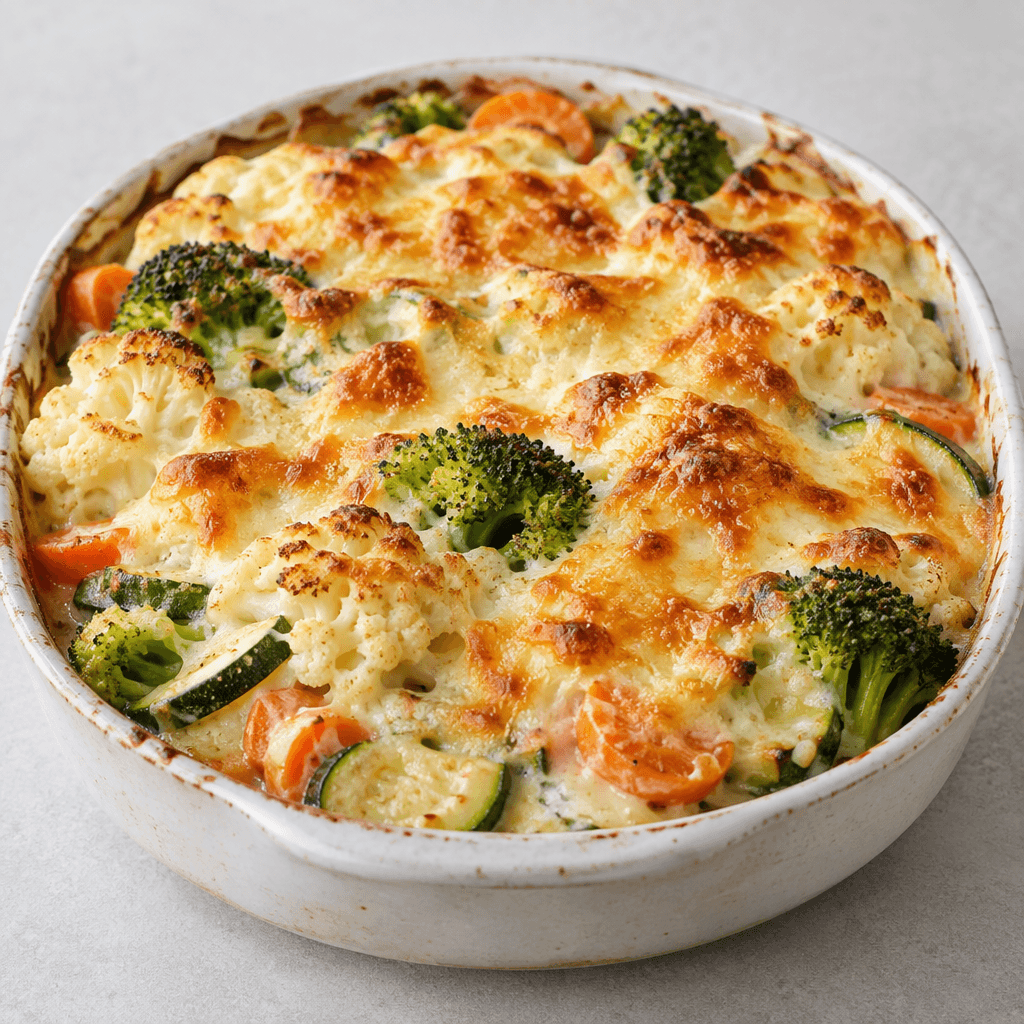
Vegetable Au Gratin Calories
Baked vegetables with cheese and creamy sauce
In season: Spring · Summer · Autumn · Winter
CALORIES
GI
POTASSIUM
FIBER
Quick answer
1 piece (medium) of Vegetable Au Gratin (150 g) has 180 calories. That works out to 120 calories per 100 g. It contains 15 g of carbs, 5.3 g of protein, 10.5 g of fat and 3.3 g of fiber. Its 330 µg of Vitamin A covers 37% of the Daily Value. Its glycemic index is 45 (low), so it raises blood sugar slowly.
What is Vegetable Au Gratin?
Vegetable au gratin brings together vegetables such as cauliflower, broccoli, carrots or courgettes, baked beneath a creamy sauce and a layer of cheese. The name refers to the browned, lightly crisp top; the gratin style has roots in French cooking, though versions are now made in many home kitchens.
The vegetables turn tender under the sauce, while the cheese forms a savoury golden crust. It can be served as a warm side with roasted meat or fish, or as a meat-free main with bread or a simple salad. The vegetables contribute fibre, while the creamy sauce and cheese make the dish more filling and add richness. For a lighter version, use less sauce and cheese, and let the vegetables take centre stage.
Vegetable Au Gratin Nutrition Facts
Selected: 100 g
120
KCAL / 100G
Carbs
10g
· 4% DV
Protein
3.5g
· 7% DV
Fat
7g
· 9% DV
Fiber
2.2g
· 8% DV
DV is the share of the daily value covered, on a 2,000 kcal reference diet.
Calories come from: Carbs 34% · Protein 12% · Fat 54%
Vegetable Au Gratin Vitamins & Minerals
Vitamins
Vitamin A
220µg · 24% DV
Vitamin K
18µg · 15% DV
Vitamin C
10mg · 11% DV
B2
0.11mg · 8% DV
Minerals
Calcium
85mg · 9% DV
Zinc
1mg · 9% DV
Sodium
210mg · 9% DV
Phosphorus
65mg · 9% DV
How Nutritious Is Vegetable Au Gratin?
Nutrient density
Medium
How many vitamins, minerals and how much fiber this food carries per calorie. A high score means a lot of nutrition for few calories.
Satiety score
Medium
An EatBetter score computed from fiber, protein and calorie density. A high score means staying full longer on the same calories.
Both scores are calculated per 100 g and do not change with the selected portion. The satiety score is EatBetter's own calculation, not a clinical measure.
Vegetable Au Gratin Glycemic Index
GLYCEMIC INDEX
GLYCEMIC LOAD
Accounts for portion size — a more realistic measure than GI alone.
How to Burn Off Vegetable Au Gratin
To burn the 120 calories in 100 g:
🚶
Walking (5 km/h)
🏃
Running (8 km/h)
🚴
Cycling
🏊
Swimming
Times are calculated with the MET equation for a 70 kg adult. Actual burn varies with your weight, age and pace.
Is Vegetable Au Gratin Processed?
NOVA 3
Processed
1. Unprocessed
2. Minimally Processed
3. Processed
4. Ultra-Processed
NOVA classifies foods into 4 groups by industrial processing. NOVA 1 (unprocessed) is the healthiest.
Does Vegetable Au Gratin Contain Allergens?
Contains these allergens:
Which Diets Is Vegetable Au Gratin Good For?
Vegan
— Not suitable
Vegetarian
✓ Suitable
Gluten-Free
— Not suitable
Dairy-Free
— Not suitable
Mediterranean
✓ Suitable
Paleo
— Not suitable
Whole30
— Not suitable
DASH
— Not suitable
Keto
— Not suitable
Low FODMAP
— Not suitable
Vegetable Au Gratin Fat Profile
SATURATED
3.2g
MONOUNSATURATED
2.1g
POLYUNSATURATED
0.3g
Omega 6:3 ratio 3.7:1
Below the ideal 4:1 — a good omega balance.
Compare Vegetable Au Gratin
Foods Similar to Vegetable Au Gratin
Frequently Asked Questions About Vegetable Au Gratin
What is Vegetable Au Gratin?
Vegetable Au Gratin is a baked dish of vegetables covered with a creamy sauce and cheese, then cooked until the top is browned. Common versions use cauliflower, broccoli, carrots, or zucchini beneath a golden, crisp cheese crust.
How do you make Vegetable Au Gratin from scratch?
To make Vegetable Au Gratin, briefly cook the vegetables, drain them well, and arrange them in a baking dish with a creamy sauce. Add grated cheese on top and bake until the sauce bubbles and the surface turns golden.
Which vegetables work best in Vegetable Au Gratin?
Cauliflower, broccoli, carrots, and zucchini all work well in Vegetable Au Gratin. Cut them into similarly sized pieces so they cook evenly; firmer vegetables such as carrots benefit from a brief precook before baking.
Should you cook the vegetables before baking Vegetable Au Gratin?
Usually, yes: briefly blanch or steam firm vegetables before assembling Vegetable Au Gratin so they become tender in the oven. Drain them thoroughly, since excess water can thin the sauce and leave the finished gratin watery.
What sauce is used in Vegetable Au Gratin?
A béchamel is the classic sauce for Vegetable Au Gratin. Make it by stirring milk into a butter-and-flour roux until smooth and thick, then season it with salt, pepper, and a little nutmeg if you like.
What cheese is best for Vegetable Au Gratin?
A good melting cheese that browns well is best for Vegetable Au Gratin. Gruyère, cheddar, or a blend can work; grate it yourself for a more even melt, and scatter it over the dish just before baking.
Can you make Vegetable Au Gratin ahead of time?
Yes, you can assemble Vegetable Au Gratin ahead, cover it, and refrigerate it before baking. Add the cheese topping shortly before it goes into the oven, and allow a chilled dish extra time to heat through.
How do you keep Vegetable Au Gratin from turning watery?
Drain the vegetables well and make sure the sauce for Vegetable Au Gratin is thick enough to coat them. Watery vegetables and an overly thin sauce are the main causes of a loose, runny gratin.
What should you serve with Vegetable Au Gratin?
Serve Vegetable Au Gratin with a crisp green salad or a simple soup to balance its creamy, cheesy topping. It also pairs well with roast chicken or fish when you want to make it part of a fuller meal.
How long does leftover Vegetable Au Gratin keep?
Leftover Vegetable Au Gratin keeps for up to three days in a covered container in the refrigerator. Reheat it in the oven for a better browned top, or use a microwave when convenience matters more than keeping the crust crisp.
Have another question about Vegetable Au Gratin?
Ask the AI nutrition coach — calories, portions, alternatives and more, answered in seconds in the app.

Scan calories with your camera
Instant AI nutrition analysis

Nutrition data compiled from USDA FoodData Central and scientific sources.