

Ready & Packaged Foods
All →Vegetables & Legumes
All →Desserts & Confectionery
All →Meat & Protein
All →Grains & Bakery
All →Beverages
All →Milk & Dairy
All →

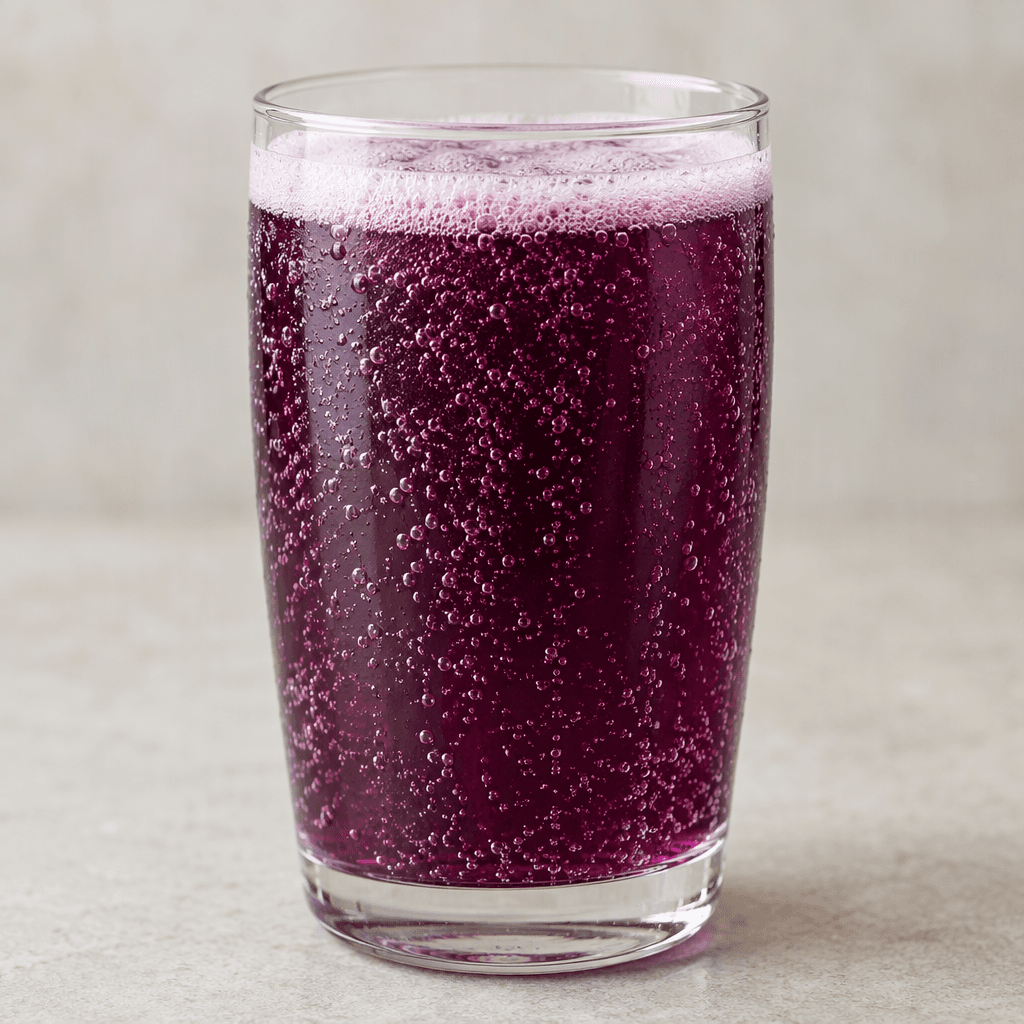
Grape soda Calories
Sugary carbonated grape-flavored soft drink
CALORIES · 100 G
GI
POTASSIUM · 100 G
FIBER · 100 G
Quick answer
1 can (whole) of Grape soda (355 g) has 146 calories. That works out to 41 calories per 100 g. It contains 37.6 g of carbs, 0 g of protein, 0 g of fat and 0 g of fiber. Its glycemic index is 63 (medium), so it raises blood sugar at a moderate pace.
Grape soda Nutrition Facts
Selected: 1 can (whole) · 355 g
146
KCAL / 355G
Carbs
37.6g
· 14% DV
Protein
0g
· 0% DV
Fat
0g
· 0% DV
Fiber
0g
· 0% DV
DV is the share of the daily value covered, on a 2,000 kcal reference diet.
Calories come from: Carbs 100% · Protein 0% · Fat 0%
Grape soda nutrition facts table · 1 can (whole) (355 g)
| Nutrient | Amount | % DV |
|---|---|---|
| Calories | 146 kcal | |
| Total fat | 0 g | 0% |
| Saturated fat | 0 g | 0% |
| Trans fat | 0 g | |
| Sodium | 43 mg | 2% |
| Total carbohydrate | 37.6 g | 14% |
| Fiber | 0 g | 0% |
| Protein | 0 g | 0% |
Calories: Calories measure energy. Average daily need is 2,000 kcal. Excess calories are stored as fat, too few cause weight loss.
Carbs: Your body's primary energy source. The brain runs exclusively on carbs. Daily need: 275g.
Protein: Essential for muscle repair and cell growth. Daily need: 50g. Keeps you full and boosts metabolism.
Fat: Needed for hormone production and vitamin absorption. Daily need: 78g. Limit saturated fats, choose unsaturated.
Fiber: Critical for digestive health and satiety. Daily need: 28g. Stabilizes blood sugar, lowers cholesterol.

Log this food in EatBetter
100,000+ people use it
- Get your daily calorie target
- Snap your meal, log it in seconds
- See every vitamin and mineral

📸 Scan the code to get the app free.

How Many Calories in 1 Can of Grape soda?
| Serving | Amount | Calories |
|---|---|---|
| 1 can (whole) | 355 g | 146 kcal |
| 100 g | 100 g | 41 kcal |
| 1 cup (medium) | 240 g | 98 kcal |
| 1 can (small) | 250 g | 103 kcal |
| 1 can (medium) | 330 g | 135 kcal |
| 12 ounce (whole) | 340 g | 139 kcal |
| 1 bottle (medium) | 500 g | 205 kcal |
| 1 bottle (large) | 1000 g | 410 kcal |
Calculated from 41 calories per 100 g.
Frequently Asked Questions About Grape soda
Is grape soda caffeine-free?
Most grape soda is caffeine-free, but recipes can vary by brand. If you avoid caffeine, check the ingredients or nutrition information for the specific product rather than assuming every grape soda has the same formula.
Does grape soda contain real grape juice?
Usually, grape soda gets its flavor from grape flavoring rather than a meaningful amount of grape juice. Some products may contain a little juice, but grape soda is not the same as drinking grape juice.
Why is grape soda purple?
Grape soda is often purple because manufacturers add food coloring; the color does not necessarily come from grapes. The shade and coloring used vary between products, so some grape sodas look brighter or darker than others.
Does grape soda contain alcohol?
No, ordinary grape soda is a nonalcoholic soft drink. Its grape flavor does not mean it has been fermented, though a separate grape-flavored alcoholic drink would be a different product.
What is grape soda made of?
Grape soda is typically made with carbonated water, a sweetener, grape flavoring, and acids or colorings. The exact ingredients differ by brand, and the grape flavor does not necessarily come from grape juice.
Is grape soda bad for your teeth?
Frequent sipping can be hard on teeth because grape soda is usually both sugary and acidic, which can contribute to tooth decay and enamel erosion. Having it with a meal and rinsing with water afterward can reduce prolonged exposure.
Can you make grape soda at home?
Yes. Mix chilled sparkling water with grape juice or grape syrup, adding the flavoring gradually to suit your taste. Combine them just before serving so the drink keeps more of its fizz.
Can people with diabetes drink grape soda?
Sugary grape soda can raise blood glucose, so it is generally not a good everyday choice for someone managing diabetes. Whether a sugar-free version fits your plan is personal; ask your doctor or dietitian if you are unsure.
Does grape soda hydrate you?
Grape soda provides fluid, but its sugar and carbonation make it a less suitable everyday choice for hydration than water. It can be an occasional drink, while water is the better option when you are thirsty.
How should you store grape soda after opening it?
Close the bottle or can securely and refrigerate leftover grape soda. It will gradually lose carbonation after opening, so drink it soon for the best fizz and flavor.
Grape soda Vitamins & Minerals
Vitamins
Vitamin A
0µg · 0% DV
B1
0mg · 0% DV
B2
0mg · 0% DV
B3
0mg · 0% DV
Minerals
Sodium
43mg · 2% DV
Copper
0.01mg · 1% DV
Magnesium
3.55mg · 1% DV
Manganese
0.01mg · 0% DV
Potassium ⭐
7.1mg · 0% DV
Grape soda Glycemic Index
GLYCEMIC INDEX
GLYCEMIC LOAD
Accounts for portion size — a more realistic measure than GI alone.
How to Burn Off Grape soda
To burn the 146 calories in 1 can (whole) (355 g):
🚶
Walking (5 km/h)
🏃
Running (8 km/h)
🚴
Cycling
🏊
Swimming
Times are calculated with the MET equation for a 70 kg adult. Actual burn varies with your weight, age and pace.
What is Grape soda?
Grape soda is a sweetened, carbonated soft drink flavoured to taste like grapes. It is usually sold in cans or bottles, and its grape flavour does not necessarily mean it contains grape juice. In the United States, it is a familiar choice at casual meals, parties and convenience stores; elsewhere, it is often enjoyed as an occasional chilled soft drink.
Its bright, fruity sweetness and lively fizz suit salty snacks or a simple takeaway meal. Nutritionally, it is mostly carbohydrate from sugars, with no protein, fat or fibre. If you want a less sweet drink, pour a smaller serving over ice or have water alongside it.
How Nutritious Is Grape soda?
Nutrient density
Low
How many vitamins, minerals and how much fiber this food carries per calorie. A high score means a lot of nutrition for few calories.
Satiety score
Medium
An EatBetter score computed from fiber, protein and calorie density. A high score means staying full longer on the same calories.
Both scores are calculated per 100 g and do not change with the selected portion. The satiety score is EatBetter's own calculation, not a clinical measure.
Is Grape soda Processed?
NOVA 4
Ultra-Processed
1. Unprocessed
2. Minimally Processed
3. Processed
4. Ultra-Processed
NOVA classifies foods into 4 groups by industrial processing. NOVA 1 (unprocessed) is the healthiest.
Does Grape soda Contain Allergens?
No known major allergens
Which Diets Is Grape soda Good For?
Vegan
✓ Suitable
Vegetarian
✓ Suitable
Gluten-Free
✓ Suitable
Dairy-Free
— Not suitable
Mediterranean
— Not suitable
Paleo
— Not suitable
Whole30
— Not suitable
DASH
— Not suitable
Keto
— Not suitable
Low FODMAP
— Not suitable
Grape soda Fat Profile
SATURATED
0g
MONOUNSATURATED
0g
POLYUNSATURATED
0g
Compare Grape soda
Foods Similar to Grape soda
Have another question about Grape soda?
Ask the AI nutrition coach — calories, portions, alternatives and more, answered in seconds in the app.

Scan calories with your camera
Instant AI nutrition analysis

Nutrition data compiled from USDA FoodData Central and scientific sources.