

Ready & Packaged Foods
All →Vegetables & Legumes
All →Desserts & Confectionery
All →Meat & Protein
All →Grains & Bakery
All →Beverages
All →Milk & Dairy
All →

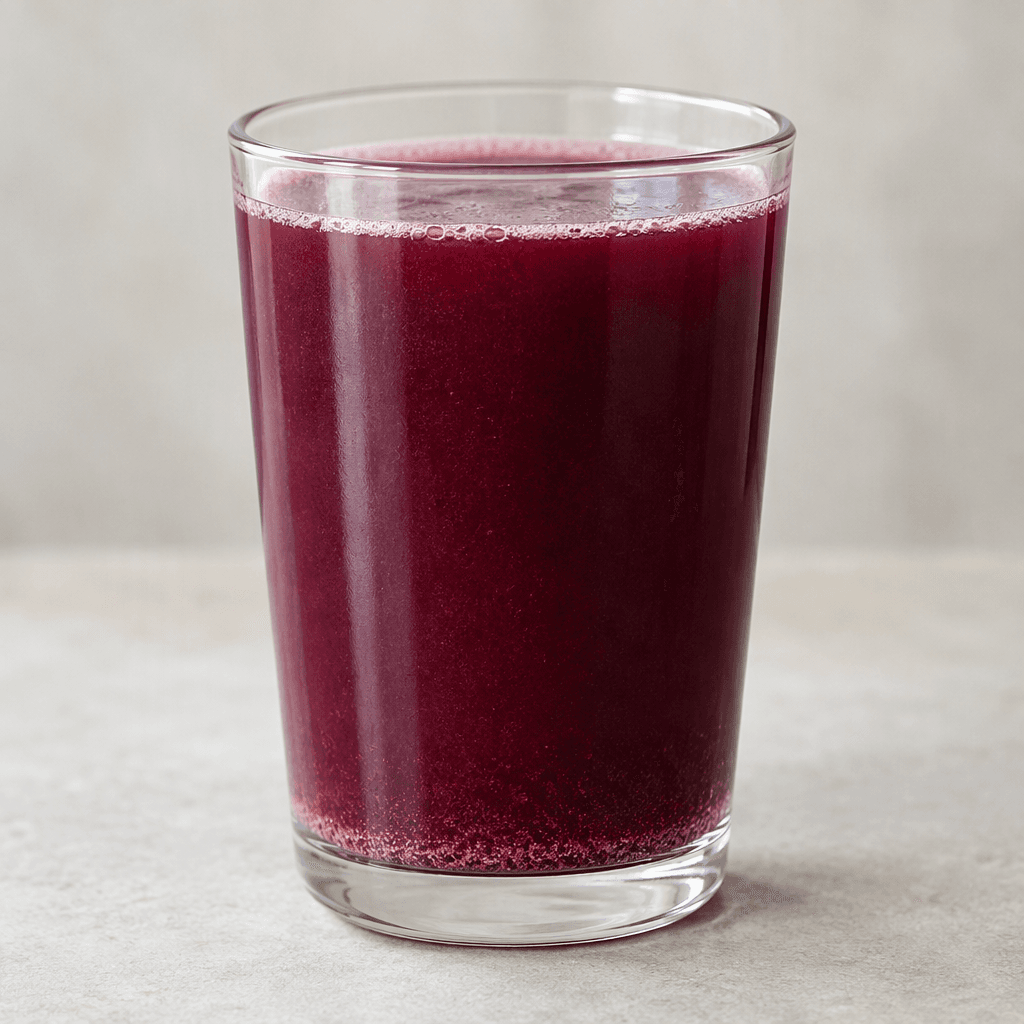
Unsweetened Turnip Juice Calories
Fermented, low-calorie, probiotic source, unsweetened
In season: Winter · Spring
CALORIES
GI
POTASSIUM
FIBER
Quick answer
1 cup (medium) of Unsweetened Turnip Juice (200 g) has 14 calories. That works out to 7 calories per 100 g. It contains 3 g of carbs, 0.4 g of protein, 0.2 g of fat and 0.8 g of fiber. Its 700 mg of Sodium covers 30% of the Daily Value. Its glycemic index is 15 (low), so it raises blood sugar slowly.
What is Unsweetened Turnip Juice?
Şalgam suyu is a Turkish fermented drink, especially associated with Adana. Despite the English label “Unsweetened Turnip Juice,” it is generally made by fermenting purple carrots in salted water; traditional recipes may use bulgur flour or sourdough to start fermentation. “Unsweetened” means no sugar has been added.
It tastes tangy, salty and earthy, and is often served chilled, with spicy versions also popular. In Turkey it commonly accompanies kebabs and other meals. Its calorie and fat content is low, with modest amounts of carbohydrate and fibre. Saltiness can vary by brand or recipe, so check the label if you are watching your salt intake; a small glass makes a refreshing, punchy accompaniment.
Unsweetened Turnip Juice Nutrition Facts
Selected: 100 g
7
KCAL / 100G
Carbs
1.5g
· 1% DV
Protein
0.2g
· 0% DV
Fat
0.1g
· 0% DV
Fiber
0.4g
· 1% DV
DV is the share of the daily value covered, on a 2,000 kcal reference diet.
Calories come from: Carbs 78% · Protein 10% · Fat 12%
Unsweetened Turnip Juice Vitamins & Minerals
Vitamins
Vitamin C
3mg · 3% DV
B1
0.01mg · 1% DV
B2
0.01mg · 1% DV
B3
0.1mg · 1% DV
Minerals
Sodium
350mg · 15% DV
Calcium
15mg · 2% DV
Magnesium
5mg · 1% DV
Phosphorus
8mg · 1% DV
How Nutritious Is Unsweetened Turnip Juice?
Nutrient density
Medium
How many vitamins, minerals and how much fiber this food carries per calorie. A high score means a lot of nutrition for few calories.
Satiety score
Medium
An EatBetter score computed from fiber, protein and calorie density. A high score means staying full longer on the same calories.
Both scores are calculated per 100 g and do not change with the selected portion. The satiety score is EatBetter's own calculation, not a clinical measure.
Unsweetened Turnip Juice Glycemic Index
GLYCEMIC INDEX
GLYCEMIC LOAD
Accounts for portion size — a more realistic measure than GI alone.
How to Burn Off Unsweetened Turnip Juice
To burn the 7 calories in 100 g:
🚶
Walking (5 km/h)
🏃
Running (8 km/h)
🚴
Cycling
🏊
Swimming
Times are calculated with the MET equation for a 70 kg adult. Actual burn varies with your weight, age and pace.
Is Unsweetened Turnip Juice Processed?
NOVA 2
Minimally Processed
1. Unprocessed
2. Minimally Processed
3. Processed
4. Ultra-Processed
NOVA classifies foods into 4 groups by industrial processing. NOVA 1 (unprocessed) is the healthiest.
Does Unsweetened Turnip Juice Contain Allergens?
No known major allergens
Which Diets Is Unsweetened Turnip Juice Good For?
Vegan
✓ Suitable
Vegetarian
✓ Suitable
Gluten-Free
✓ Suitable
Dairy-Free
— Not suitable
Mediterranean
✓ Suitable
Paleo
— Not suitable
Whole30
— Not suitable
DASH
— Not suitable
Keto
— Not suitable
Low FODMAP
— Not suitable
Unsweetened Turnip Juice Fat Profile
SATURATED
0.01g
MONOUNSATURATED
0.01g
POLYUNSATURATED
0.02g
Omega 6:3 ratio 1:1
Below the ideal 4:1 — a good omega balance.
Compare Unsweetened Turnip Juice
Foods Similar to Unsweetened Turnip Juice
Frequently Asked Questions About Unsweetened Turnip Juice
What is şalgam juice made from?
Şalgam juice is a traditional Turkish fermented drink, usually made with black carrots, turnip, water, salt and a fermentation starter such as bulgur flour or sourdough. Recipes vary, and it is not simply fresh-pressed turnip juice.
Does şalgam juice contain probiotics?
It can contain live microorganisms produced during fermentation. Whether a bottle still has live cultures depends on how it was made and whether it was pasteurized, so probiotic content is not guaranteed to be the same across products.
What does şalgam juice taste like?
Şalgam juice tastes tangy, salty and savory, with an earthy flavor from the fermented vegetables. The spicy version adds a noticeable chilli kick, while mild versions are easier to sip on their own or with food.
What is the difference between spicy and mild şalgam juice?
Spicy şalgam juice is made with chilli or another hot pepper, while mild şalgam juice has little or no chilli heat. Both are fermented drinks, but the exact spice level and flavor vary between producers.
How do you drink şalgam juice?
Şalgam juice is usually served cold in a small glass, often alongside kebabs and other grilled foods. Some people drink it plain, while others choose the spicy version or add a pickled chilli for extra heat.
Is şalgam juice good for digestion?
Şalgam juice may provide fermentation-derived microorganisms, but it is not a proven treatment for digestive problems. Its tangy, salty flavor makes it a popular accompaniment to meals; people who find fermented foods irritating can choose a smaller serving.
How is şalgam juice fermented?
Şalgam juice is fermented by keeping vegetables such as black carrots and turnip in salted water with a starter, commonly bulgur flour or sourdough. The mixture develops its sour taste over time, then is strained or bottled.
Does şalgam juice contain alcohol?
Şalgam juice is made as a non-alcoholic fermented drink, not as an alcoholic beverage. Fermentation can sometimes produce trace alcohol, so anyone who must avoid even traces should check with the manufacturer about a specific bottle.
How should you store şalgam juice after opening?
Keep opened şalgam juice tightly closed in the refrigerator and use it within the period stated on the bottle. Pour with a clean glass, and discard it if you notice mold, an unusual smell or a change that seems abnormal.
Why is there sediment in şalgam juice?
Sediment in şalgam juice can come from the fermented vegetables and fermentation process, and a small amount is not automatically a sign that it has spoiled. Gently shake the bottle if you want the settled material mixed through before serving.
Have another question about Unsweetened Turnip Juice?
Ask the AI nutrition coach — calories, portions, alternatives and more, answered in seconds in the app.

Scan calories with your camera
Instant AI nutrition analysis

Nutrition data compiled from USDA FoodData Central and scientific sources.