

Ready & Packaged Foods
All →Vegetables & Legumes
All →Desserts & Confectionery
All →Meat & Protein
All →Grains & Bakery
All →Beverages
All →Milk & Dairy
All →

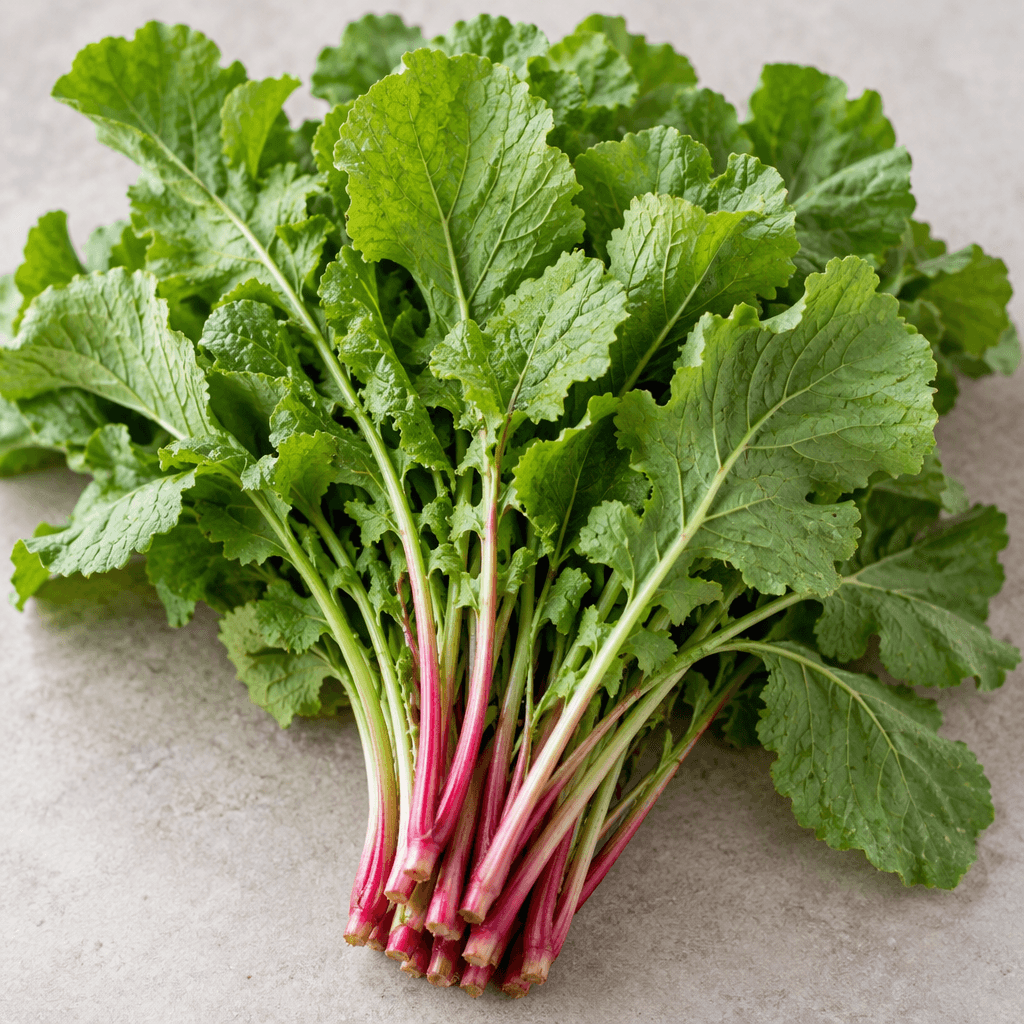
Radish greens Calories
High in vitamin K, vitamin C, and fiber
In season: Spring · Summer · Autumn
CALORIES
GI
POTASSIUM
FIBER
Quick answer
1 cup (chopped) of Radish greens (40 g) has 10 calories. That works out to 25 calories per 100 g. It contains 1.7 g of carbs, 1.5 g of protein, 0.2 g of fat and 1.2 g of fiber. Its 100 µg of Vitamin K covers 83% of the Daily Value. Its glycemic index is 15 (low), so it raises blood sugar slowly.
What is Radish greens?
Radish greens are the edible leaves and slender stems that grow above the familiar radish root. They are often sold attached to radishes, though the leaves can also be cooked on their own. Their flavour is peppery and a little earthy, while cooking softens the leaves and leaves the stems pleasantly firm. Around the world, they are sautéed as a side, stirred into soups, or blended into sauces such as pesto; young, tender leaves can also add a lively bite to salads.
These greens are low in calories and provide fibre and vitamins, making them an easy way to use more of the whole plant. Rinse them well, trim any tough stems, and pair their sharp flavour with lemon, garlic, or a creamy dressing. For a lighter side, cook them briefly with just a little oil.
Radish greens Nutrition Facts
Selected: 100 g
25
KCAL / 100G
Carbs
4.3g
· 2% DV
Protein
3.7g
· 7% DV
Fat
0.4g
· 1% DV
Fiber
3g
· 11% DV
DV is the share of the daily value covered, on a 2,000 kcal reference diet.
Calories come from: Carbs 48% · Protein 42% · Fat 10%
Radish greens Vitamins & Minerals
Vitamins
Vitamin K
250µg · 208% DV
Vitamin C
81mg · 90% DV
Vitamin A
262µg · 29% DV
Vitamin E
2.1mg · 14% DV
Minerals
Calcium
265mg · 27% DV
Iron
3mg · 17% DV
Magnesium
41mg · 10% DV
Zinc
1mg · 9% DV
How Nutritious Is Radish greens?
Nutrient density
Very high
How many vitamins, minerals and how much fiber this food carries per calorie. A high score means a lot of nutrition for few calories.
Satiety score
Medium
An EatBetter score computed from fiber, protein and calorie density. A high score means staying full longer on the same calories.
Both scores are calculated per 100 g and do not change with the selected portion. The satiety score is EatBetter's own calculation, not a clinical measure.
Radish greens Glycemic Index
GLYCEMIC INDEX
GLYCEMIC LOAD
Accounts for portion size — a more realistic measure than GI alone.
How to Burn Off Radish greens
To burn the 25 calories in 100 g:
🚶
Walking (5 km/h)
🏃
Running (8 km/h)
🚴
Cycling
🏊
Swimming
Times are calculated with the MET equation for a 70 kg adult. Actual burn varies with your weight, age and pace.
Is Radish greens Processed?
NOVA 1
Unprocessed
1. Unprocessed
2. Minimally Processed
3. Processed
4. Ultra-Processed
NOVA classifies foods into 4 groups by industrial processing. NOVA 1 (unprocessed) is the healthiest.
Does Radish greens Contain Allergens?
No known major allergens
Which Diets Is Radish greens Good For?
Vegan
✓ Suitable
Vegetarian
✓ Suitable
Gluten-Free
✓ Suitable
Dairy-Free
— Not suitable
Mediterranean
✓ Suitable
Paleo
✓ Suitable
Whole30
— Not suitable
DASH
— Not suitable
Keto
✓ Suitable
Low FODMAP
— Not suitable
Radish greens Fat Profile
SATURATED
0.07g
MONOUNSATURATED
0.03g
POLYUNSATURATED
0.18g
Omega 6:3 ratio 0.8:1
Below the ideal 4:1 — a good omega balance.
Compare Radish greens
Foods Similar to Radish greens
Frequently Asked Questions About Radish greens
Can you eat radish greens?
Yes, radish greens are edible, both raw and cooked. Choose fresh leaves, remove any yellow or damaged parts, and wash them carefully because soil often clings around the stems and leaf folds.
What do radish greens taste like?
Radish greens taste peppery and slightly bitter, somewhat like a sharper leafy green. Younger leaves tend to be more tender; larger ones can taste stronger, so briefly blanch them if you prefer a milder flavor.
How do you cook radish greens?
Sauté radish greens with garlic or onion until just wilted. Add the stems to the pan first because they take longer to soften, then add the leaves; overcooking can make them limp and dull.
Can you eat radish greens raw?
Yes, you can eat radish greens raw after washing them thoroughly. Tender young leaves work best in salads or sandwiches; if the leaves seem tough or too peppery, chop them finely or cook them instead.
How do you wash radish greens?
Separate the radish greens and swish them in a large bowl of cold water to loosen grit. Lift them out rather than pouring the water through a strainer, then rinse again if sediment remains and dry before storing or cooking.
How should you store radish greens?
Store radish greens unwashed and dry in a loosely closed bag in the refrigerator. If they are attached to the radishes, cut them off first so they do not draw moisture from the roots; wash just before use.
Can you freeze radish greens?
Yes, radish greens freeze well for cooked dishes. Wash and trim them, blanch briefly, cool them in cold water, and squeeze out excess moisture before packing portions in a freezer-safe container. They will be too soft for salads after thawing.
Can radish greens replace spinach in recipes?
Yes, radish greens can replace spinach in cooked recipes such as soups, pasta, and savory pies. Their peppery taste is stronger, so start with a little less and add more after tasting the dish.
Can you use radish greens to make pesto?
Yes, radish greens make a peppery pesto. Blend the washed leaves with olive oil, garlic, nuts or seeds, and cheese if you like; remove thick stems first for a smoother texture and adjust the seasoning to balance their bite.
Why are my radish greens bitter?
Radish greens can taste bitter when the leaves are mature or naturally pungent. Remove any yellowing leaves, then blanch the greens briefly and drain them, or balance their flavor in a cooked dish with lemon, yogurt, or a little sweetness.
Have another question about Radish greens?
Ask the AI nutrition coach — calories, portions, alternatives and more, answered in seconds in the app.

Scan calories with your camera
Instant AI nutrition analysis

Nutrition data compiled from USDA FoodData Central and scientific sources.