

Ready & Packaged Foods
All →Vegetables & Legumes
All →Desserts & Confectionery
All →Meat & Protein
All →Grains & Bakery
All →Beverages
All →Milk & Dairy
All →

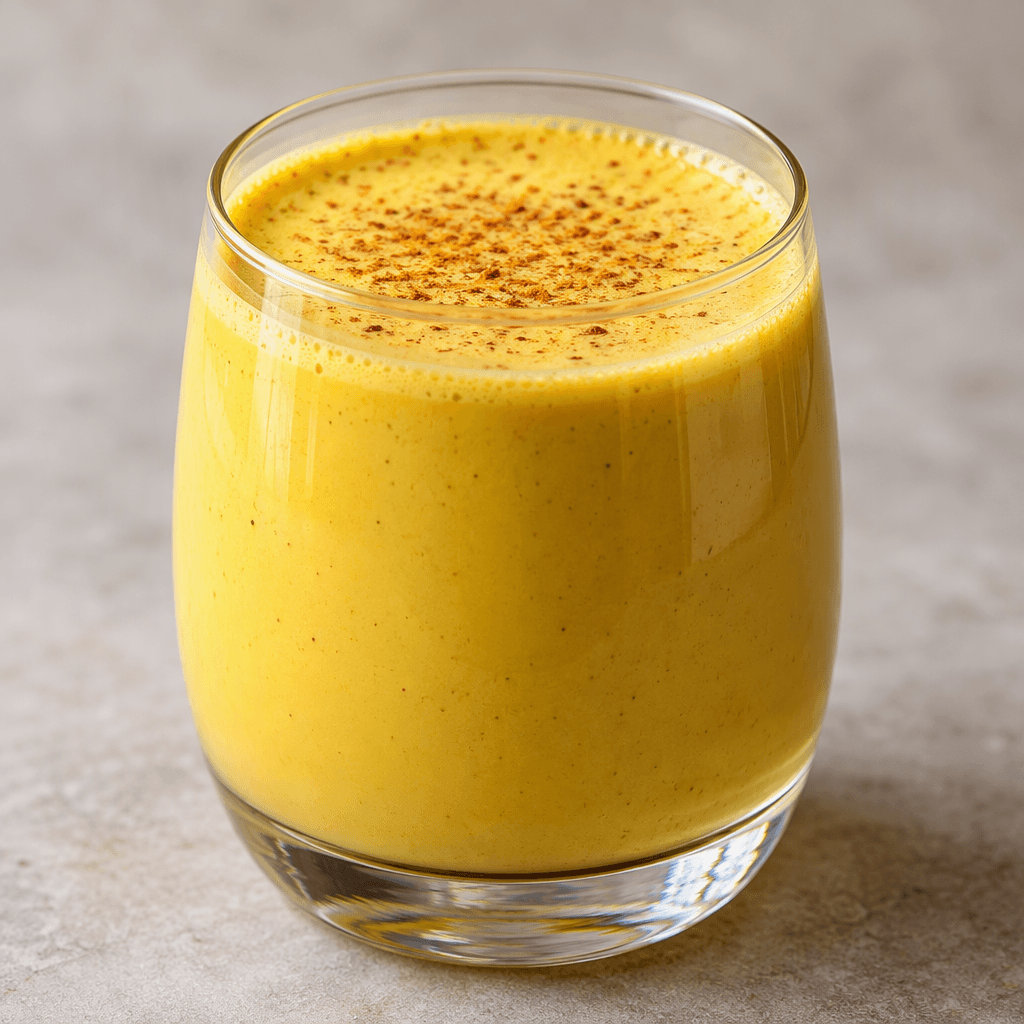
Turmeric drink Calories
Antioxidant, immune booster, anti-inflammatory
In season: Spring · Summer · Autumn · Winter
CALORIES
GI
POTASSIUM
FIBER
Quick answer
1 cup (medium) of Turmeric drink (200 g) has 90 calories. That works out to 45 calories per 100 g. It contains 20.4 g of carbs, 1.2 g of protein, 1.4 g of fat and 1.2 g of fiber. Its 0.1 mg of B6 covers 5% of the Daily Value. Its glycemic index is 35 (low), so it raises blood sugar slowly.
What is Turmeric drink?
Turmeric drink is made by mixing ground or fresh turmeric with milk, a plant-based alternative or water. Recipes may also include ginger, cinnamon or black pepper. It is part of a broad family of spiced drinks; in South Asia, a familiar version is haldi doodh, or turmeric milk. The flavour is earthy and gently bitter, while milk makes the drink creamy and water keeps it lighter. It is usually served warm, though chilled versions are also possible.
Enjoy it as a soothing-tasting evening drink or alongside breakfast, and leave out added sweetener if you prefer a less sweet cup. Its nutritional profile depends on the liquid and additions: the provided values give 45 calories per 100 g, with little protein. It pairs well with a simple snack or a lightly spiced meal.
Turmeric drink Nutrition Facts
Selected: 100 g
45
KCAL / 100G
Carbs
10.2g
· 4% DV
Protein
0.6g
· 1% DV
Fat
0.7g
· 1% DV
Fiber
0.6g
· 2% DV
DV is the share of the daily value covered, on a 2,000 kcal reference diet.
Calories come from: Carbs 82% · Protein 5% · Fat 13%
Turmeric drink Vitamins & Minerals
Vitamins
B2
0.02mg · 2% DV
B6
0.04mg · 2% DV
B1
0.01mg · 1% DV
B3
0.09mg · 1% DV
Minerals
Magnesium
7mg · 2% DV
Phosphorus
11mg · 2% DV
Calcium
13mg · 1% DV
Selenium
0.3µg · 1% DV
How Nutritious Is Turmeric drink?
Nutrient density
Medium
How many vitamins, minerals and how much fiber this food carries per calorie. A high score means a lot of nutrition for few calories.
Satiety score
Medium
An EatBetter score computed from fiber, protein and calorie density. A high score means staying full longer on the same calories.
Both scores are calculated per 100 g and do not change with the selected portion. The satiety score is EatBetter's own calculation, not a clinical measure.
Turmeric drink Glycemic Index
GLYCEMIC INDEX
GLYCEMIC LOAD
Accounts for portion size — a more realistic measure than GI alone.
How to Burn Off Turmeric drink
To burn the 45 calories in 100 g:
🚶
Walking (5 km/h)
🏃
Running (8 km/h)
🚴
Cycling
🏊
Swimming
Times are calculated with the MET equation for a 70 kg adult. Actual burn varies with your weight, age and pace.
Is Turmeric drink Processed?
NOVA 2
Minimally Processed
1. Unprocessed
2. Minimally Processed
3. Processed
4. Ultra-Processed
NOVA classifies foods into 4 groups by industrial processing. NOVA 1 (unprocessed) is the healthiest.
Does Turmeric drink Contain Allergens?
No known major allergens
Which Diets Is Turmeric drink Good For?
Vegan
✓ Suitable
Vegetarian
✓ Suitable
Gluten-Free
✓ Suitable
Dairy-Free
— Not suitable
Mediterranean
✓ Suitable
Paleo
✓ Suitable
Whole30
— Not suitable
DASH
— Not suitable
Keto
— Not suitable
Low FODMAP
— Not suitable
Turmeric drink Fat Profile
SATURATED
0.18g
MONOUNSATURATED
0.15g
POLYUNSATURATED
0.12g
Omega 6:3 ratio 3:1
Below the ideal 4:1 — a good omega balance.
Compare Turmeric drink
Foods Similar to Turmeric drink
Frequently Asked Questions About Turmeric drink
How do you make a turmeric drink?
A turmeric drink is made by whisking ground turmeric or finely grated fresh turmeric into warm water or milk. Ginger, cinnamon, black pepper, or a little honey are optional additions; stir well because turmeric can settle at the bottom.
Is a turmeric drink the same as golden milk?
Golden milk is one kind of turmeric drink, usually made with milk or a plant-based alternative and warming spices. Turmeric drinks can also be made with water, tea, or other bases, so the terms are not interchangeable.
Should you add black pepper to a turmeric drink?
Black pepper is optional in a turmeric drink, but its piperine can increase the absorption of curcumin, turmeric’s main active compound. A small pinch is enough; a drink without pepper is still fine if you dislike its taste.
What does a turmeric drink taste like, and how can you make it less bitter?
A turmeric drink tastes earthy, warm, and slightly bitter. Ginger and cinnamon complement it, while a small amount of honey or another sweetener can soften the bitterness; using too much turmeric often makes the flavor harsh.
Can a turmeric drink reduce inflammation?
A turmeric drink contains curcumin, which has been studied for anti-inflammatory effects, but drinking it has not been shown to treat inflammatory conditions. The amount in a homemade drink is usually much lower than doses used in some studies.
Is it safe to drink turmeric drinks every day?
Most people can drink a turmeric drink made with ordinary culinary amounts regularly. Large amounts may cause nausea, reflux, or other stomach upset, so avoid turning a drink into a high-dose turmeric supplement without medical advice.
When is the best time to drink a turmeric drink?
There is no proven best time to drink a turmeric drink. Have it when it suits your routine; if spices irritate your stomach, drink it with food, and if a sweetened version affects your sleep, choose an earlier time.
Can a turmeric drink prevent a cold or boost immunity?
A turmeric drink cannot be relied on to prevent colds or boost immunity in a proven way. Turmeric contributes plant compounds to the drink, but it is not a substitute for vaccination, sleep, or other established ways to reduce infection risk.
What are the side effects of drinking too much turmeric drink?
Too much turmeric drink can cause nausea, stomach discomfort, or reflux, especially when it is very concentrated. Large turmeric doses may also interact with medicines, so keep homemade drinks moderate rather than using them like supplements.
How long does a homemade turmeric drink keep in the fridge?
A homemade turmeric drink is best refrigerated promptly in a covered container and used within a few days. Shake or stir it before serving because turmeric settles; discard it if it smells sour, changes unusually, or was left out for hours.
Have another question about Turmeric drink?
Ask the AI nutrition coach — calories, portions, alternatives and more, answered in seconds in the app.

Scan calories with your camera
Instant AI nutrition analysis

Nutrition data compiled from USDA FoodData Central and scientific sources.