

Ready & Packaged Foods
All →Vegetables & Legumes
All →Desserts & Confectionery
All →Meat & Protein
All →Grains & Bakery
All →Beverages
All →Milk & Dairy
All →

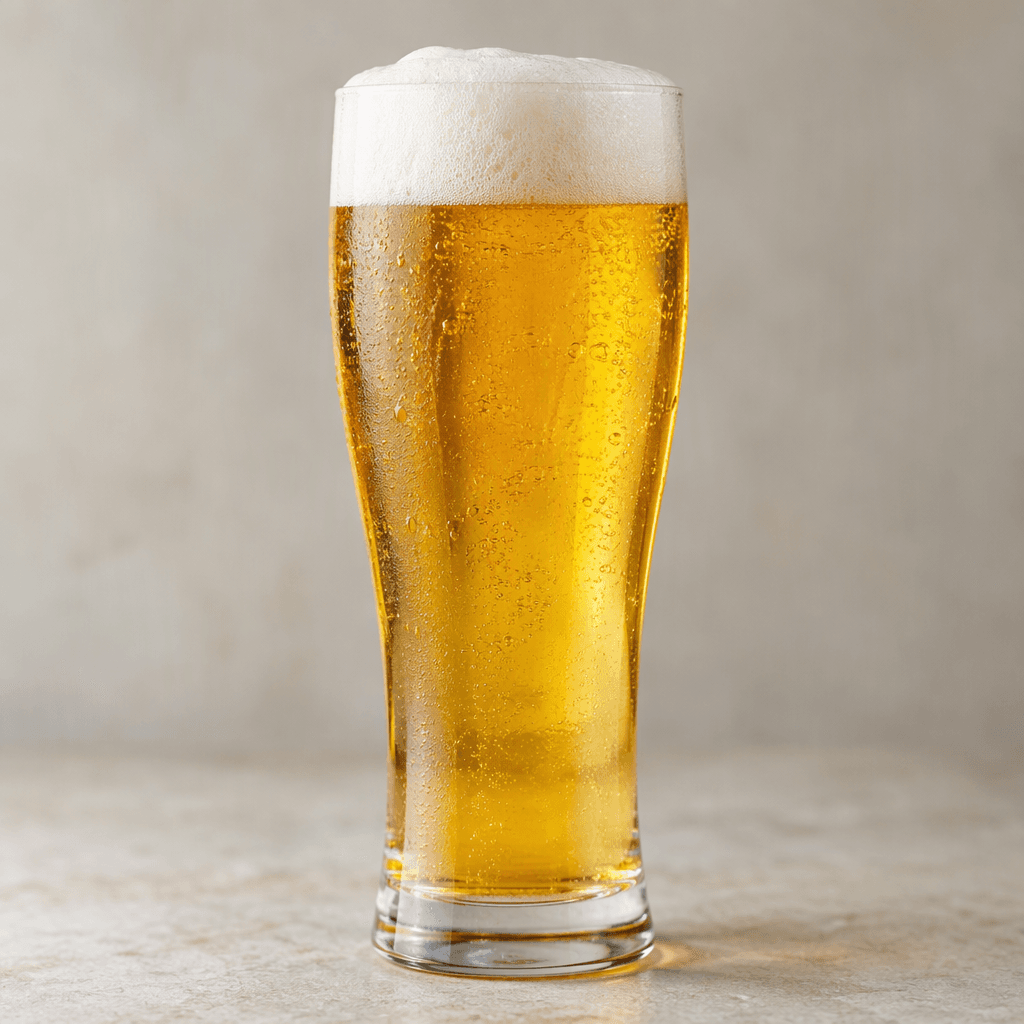
Tuborg beer (50 cl) Calories
Alcoholic beverage, moderate calories, low protein
In season: Spring · Summer · Autumn · Winter
CALORIES · 100 G
GI
POTASSIUM · 100 G
FIBER · 100 G
Quick answer
1 bottle (medium) of Tuborg beer (50 cl) (500 g) has 210 calories. That works out to 42 calories per 100 g. It contains 16 g of carbs, 2 g of protein, 0 g of fat and 0 g of fiber. Its 2.5 mg of B3 covers 16% of the Daily Value. Its glycemic index is 100 (high), so it raises blood sugar quickly.
Tuborg beer (50 cl) Nutrition Facts
Selected: 1 bottle (medium) · 500 g
210
KCAL / 500G
Carbs
16g
· 6% DV
Protein
2g
· 4% DV
Fat
0g
· 0% DV
Fiber
0g
· 0% DV
DV is the share of the daily value covered, on a 2,000 kcal reference diet.
Calories come from: Carbs 89% · Protein 11% · Fat 0%
Tuborg beer (50 cl) nutrition facts table · 1 bottle (medium) (500 g)
| Nutrient | Amount | % DV |
|---|---|---|
| Calories | 210 kcal | |
| Total fat | 0 g | 0% |
| Saturated fat | 0 g | 0% |
| Trans fat | 0 g | |
| Sodium | 15 mg | 1% |
| Total carbohydrate | 16 g | 6% |
| Fiber | 0 g | 0% |
| Protein | 2 g | 4% |
Calories: Calories measure energy. Average daily need is 2,000 kcal. Excess calories are stored as fat, too few cause weight loss.
Carbs: Your body's primary energy source. The brain runs exclusively on carbs. Daily need: 275g.
Protein: Essential for muscle repair and cell growth. Daily need: 50g. Keeps you full and boosts metabolism.
Fat: Needed for hormone production and vitamin absorption. Daily need: 78g. Limit saturated fats, choose unsaturated.
Fiber: Critical for digestive health and satiety. Daily need: 28g. Stabilizes blood sugar, lowers cholesterol.

Log this food in EatBetter
100,000+ people use it
- Get your daily calorie target
- Snap your meal, log it in seconds
- See every vitamin and mineral

📸 Scan the code to get the app free.

How Many Calories in 1 Bottle of Tuborg beer (50 cl)?
| Serving | Amount | Calories |
|---|---|---|
| 1 bottle (medium) | 500 g | 210 kcal |
| 100 g | 100 g | 42 kcal |
| 1 cup (medium) | 250 g | 105 kcal |
| 1 bottle (small) | 330 g | 139 kcal |
| 1 can (small) | 330 g | 139 kcal |
| 1 can (medium) | 500 g | 210 kcal |
| 1 cup (large) | 500 g | 210 kcal |
| 1 bottle (jumbo) | 1000 g | 420 kcal |
Calculated from 42 calories per 100 g.
Frequently Asked Questions About Tuborg beer (50 cl)
What is the alcohol percentage of Tuborg beer (50 cl)?
The alcohol percentage of Tuborg beer (50 cl) varies by product. Check the label on your bottle or can for the exact figure, since Tuborg sells different beers and their strengths are not necessarily the same.
What is the difference between Tuborg beer (50 cl) Green and Gold?
Tuborg beer (50 cl) Green and Gold are distinct varieties, so their taste and alcohol strength may differ. Check the name on the packaging to identify which one you have rather than treating the two as interchangeable.
What is Tuborg beer (50 cl) made from?
Tuborg beer (50 cl) is brewed using the ingredients typical of beer: water, malted grain, hops and yeast. The grain and proportions can vary between varieties, so consult the packaging for details about a specific product.
How do you pour Tuborg beer (50 cl) without too much foam?
To pour Tuborg beer (50 cl) with a moderate head, tilt a clean glass and pour slowly down its inner side. Straighten the glass as it fills to control the foam.
Should Tuborg beer (50 cl) be served cold?
Yes, Tuborg beer (50 cl) is generally served chilled. Pour it into a clean glass, and adjust the angle of the glass to create the amount of foam you prefer.
How long does Tuborg beer (50 cl) last after opening?
Tuborg beer (50 cl) loses its carbonation and fresh taste quickly once opened, so drink it soon after opening for the best quality. If you need to keep it briefly, cover it and refrigerate it, but expect it to go flat.
Can you put Tuborg beer (50 cl) in the freezer?
You can briefly chill Tuborg beer (50 cl) in a freezer, but do not leave it there until it freezes. Expanding liquid can crack a glass bottle or burst a can; refrigeration is a safer way to chill it.
What food goes well with Tuborg beer (50 cl)?
Tuborg beer (50 cl) commonly pairs well with grilled meat, fried foods and salty snacks. Cheese or spicy dishes are other options; the best match can vary with the particular Tuborg variety.
Does Tuborg beer (50 cl) cause a hangover?
Yes, drinking Tuborg beer (50 cl) can contribute to a hangover because it contains alcohol. The risk rises with the amount consumed, and alcohol can also disrupt sleep and leave you dehydrated.
Can you drink Tuborg beer (50 cl) during pregnancy?
No, avoid Tuborg beer (50 cl) during pregnancy. Alcohol passes to the developing baby, and no safe amount of alcohol during pregnancy has been established.
Tuborg beer (50 cl) Vitamins & Minerals
Vitamins
B3
2.5mg · 16% DV
B2
0.1mg · 8% DV
Folate
25µg · 6% DV
B6
0.1mg · 6% DV
Minerals
Phosphorus
50mg · 7% DV
Magnesium
25mg · 6% DV
Copper
0.05mg · 6% DV
Potassium ⭐
135mg · 4% DV
Sodium
15mg · 1% DV
Tuborg beer (50 cl) Glycemic Index
GLYCEMIC INDEX
GLYCEMIC LOAD
Accounts for portion size — a more realistic measure than GI alone.
How to Burn Off Tuborg beer (50 cl)
To burn the 210 calories in 1 bottle (medium) (500 g):
🚶
Walking (5 km/h)
🏃
Running (8 km/h)
🚴
Cycling
🏊
Swimming
Times are calculated with the MET equation for a 70 kg adult. Actual burn varies with your weight, age and pace.
What is Tuborg beer (50 cl)?
Tuborg beer (50 cl) is a lager from the Danish Tuborg brewery, made with malted barley and hops. It is pale and fizzy, with a clean, refreshing taste, gentle malt notes and a mild bitterness. The brand began in Denmark and is now familiar in many countries.
It is usually served chilled, alongside casual meals or snacks, and pairs well with grilled food. Its nutritional profile is low in protein and moderate in calories for an alcoholic drink: it contains 42 calories per 100 g. For a lighter pairing, serve it with grilled vegetables or a fresh salad rather than a rich, heavy meal.
How Nutritious Is Tuborg beer (50 cl)?
Nutrient density
Low
How many vitamins, minerals and how much fiber this food carries per calorie. A high score means a lot of nutrition for few calories.
Satiety score
Medium
An EatBetter score computed from fiber, protein and calorie density. A high score means staying full longer on the same calories.
Both scores are calculated per 100 g and do not change with the selected portion. The satiety score is EatBetter's own calculation, not a clinical measure.
Is Tuborg beer (50 cl) Processed?
NOVA 3
Processed
1. Unprocessed
2. Minimally Processed
3. Processed
4. Ultra-Processed
NOVA classifies foods into 4 groups by industrial processing. NOVA 1 (unprocessed) is the healthiest.
Does Tuborg beer (50 cl) Contain Allergens?
No known major allergens
Which Diets Is Tuborg beer (50 cl) Good For?
Vegan
✓ Suitable
Vegetarian
✓ Suitable
Gluten-Free
— Not suitable
Dairy-Free
— Not suitable
Mediterranean
— Not suitable
Paleo
— Not suitable
Whole30
— Not suitable
DASH
— Not suitable
Keto
— Not suitable
Low FODMAP
— Not suitable
Tuborg beer (50 cl) Fat Profile
SATURATED
0g
MONOUNSATURATED
0g
POLYUNSATURATED
0g
Compare Tuborg beer (50 cl)
Foods Similar to Tuborg beer (50 cl)
Have another question about Tuborg beer (50 cl)?
Ask the AI nutrition coach — calories, portions, alternatives and more, answered in seconds in the app.

Scan calories with your camera
Instant AI nutrition analysis

Nutrition data compiled from USDA FoodData Central and scientific sources.