

Ready & Packaged Foods
All →Vegetables & Legumes
All →Desserts & Confectionery
All →Meat & Protein
All →Grains & Bakery
All →Beverages
All →Milk & Dairy
All →

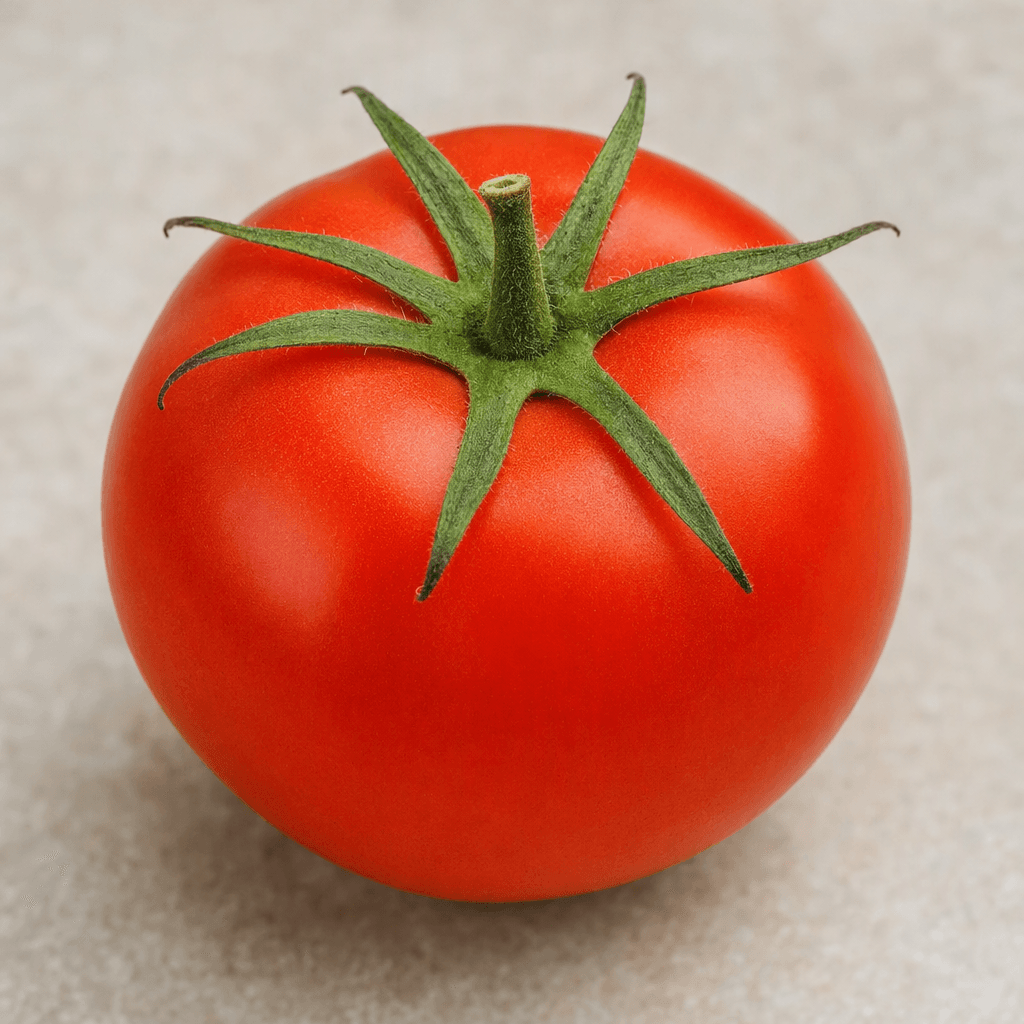
Tomato (Medium) Calories
Vitamin C, low calorie, source of lycopene
In season: Spring · Summer · Autumn
CALORIES · 100 G
GI
POTASSIUM · 100 G
FIBER · 100 G
Quick answer
1 piece (medium) of Tomato (Medium) (123 g) has 22 calories. That works out to 18 calories per 100 g. It contains 4.8 g of carbs, 1.1 g of protein, 0.2 g of fat and 1.5 g of fiber. Its 16.9 mg of Vitamin C covers 19% of the Daily Value. Its glycemic index is 15 (low), so it raises blood sugar slowly.
Tomato (Medium) Nutrition Facts
Selected: 1 piece (medium) · 123 g
22
KCAL / 123G
Carbs
4.8g
· 2% DV
Protein
1.1g
· 2% DV
Fat
0.2g
· 0% DV
Fiber
1.5g
· 5% DV
DV is the share of the daily value covered, on a 2,000 kcal reference diet.
Calories come from: Carbs 76% · Protein 17% · Fat 7%
Tomato (Medium) nutrition facts table · 1 piece (medium) (123 g)
| Nutrient | Amount | % DV |
|---|---|---|
| Calories | 22 kcal | |
| Total fat | 0.2 g | 0% |
| Saturated fat | 0.04 g | 0% |
| Trans fat | 0 g | |
| Sodium | 6.15 mg | 0% |
| Total carbohydrate | 4.8 g | 2% |
| Fiber | 1.5 g | 5% |
| Protein | 1.1 g | 2% |
Calories: Calories measure energy. Average daily need is 2,000 kcal. Excess calories are stored as fat, too few cause weight loss.
Carbs: Your body's primary energy source. The brain runs exclusively on carbs. Daily need: 275g.
Protein: Essential for muscle repair and cell growth. Daily need: 50g. Keeps you full and boosts metabolism.
Fat: Needed for hormone production and vitamin absorption. Daily need: 78g. Limit saturated fats, choose unsaturated.
Fiber: Critical for digestive health and satiety. Daily need: 28g. Stabilizes blood sugar, lowers cholesterol.

Log this food in EatBetter
100,000+ people use it
- Get your daily calorie target
- Snap your meal, log it in seconds
- See every vitamin and mineral

📸 Scan the code to get the app free.

How Many Calories in 1 Tomato (Medium)?
| Serving | Amount | Calories |
|---|---|---|
| 1 piece (medium) | 123 g | 22 kcal |
| 1 slice (thin) | 20 g | 4 kcal |
| 1 slice (thick) | 35 g | 6 kcal |
| 1 piece (small) | 80 g | 14 kcal |
| 100 g | 100 g | 18 kcal |
| 1 serving (medium) | 100 g | 18 kcal |
| 1 piece (large) | 170 g | 31 kcal |
| 1 cup (chopped) | 180 g | 32 kcal |
| 1 cup (diced) | 240 g | 43 kcal |
Calculated from 18 calories per 100 g.
Frequently Asked Questions About Tomato (Medium)
Should a medium tomato be stored in the fridge?
A ripe medium tomato can be refrigerated to slow spoilage, but cold temperatures may dull its flavor and texture. For the best taste, let it return to room temperature before eating; leave unripe tomatoes on the counter.
How can you tell if a medium tomato is ripe?
A ripe medium tomato has an even red color, a fresh tomato aroma, and gives slightly when gently pressed without feeling mushy. If it is firm and has little smell, leave it at room temperature to ripen.
Can you eat the skin of a medium tomato?
Yes, the skin of a medium tomato is edible, so peeling it is optional. Keep it on for salads and everyday cooking; for a smoother soup or sauce, briefly blanch the tomato and slip off the skin.
Can you freeze a medium tomato?
Yes, you can freeze a medium tomato whole or chopped in a freezer-safe container. It will become soft after thawing, so use it in cooked dishes such as sauces, soups, or stews rather than fresh salads.
Is a medium tomato a fruit or a vegetable?
A medium tomato is botanically a fruit because it develops from a flower and contains seeds. In cooking, it is treated as a vegetable because it is usually used in savory dishes rather than desserts.
Do you need to wash a medium tomato before eating it?
Yes, rinse a medium tomato under clean running water before cutting or eating it, and rub the surface gently. Washing first also helps prevent dirt on the skin from being transferred inside by a knife.
Does cooking a medium tomato make its lycopene easier to absorb?
Yes, cooking a medium tomato can make its lycopene easier for the body to absorb by breaking down the tomato’s cell structure. Having it with a little oil, as in a tomato sauce, can further support absorption.
Can a medium tomato trigger acid reflux?
Yes, the acidity of a medium tomato can trigger heartburn or reflux symptoms in some people. If you notice a consistent reaction, try a smaller serving or avoid tomatoes when symptoms are active.
Why does a medium tomato taste mealy?
A medium tomato may taste mealy if it was stored too cold, harvested before fully ripening, or kept for too long. Letting it come to room temperature can improve its aroma, though it will not restore a spoiled or badly textured tomato.
Can dogs eat a medium tomato?
Yes, dogs can have a small piece of ripe red medium tomato, plain and without seasoning. Do not give them green tomatoes, leaves, or stems, which contain tomato plant compounds that can be harmful in larger amounts.
Tomato (Medium) Vitamins & Minerals
Vitamins
Vitamin C
16.85mg · 19% DV
Vitamin K
9.72µg · 8% DV
Biotin
1.85µg · 6% DV
B6
0.1mg · 6% DV
Minerals
Potassium ⭐
292mg · 9% DV
Copper
0.07mg · 8% DV
Manganese
0.14mg · 6% DV
Phosphorus
30mg · 4% DV
Sodium
6.15mg · 0% DV
Tomato (Medium) Glycemic Index
GLYCEMIC INDEX
GLYCEMIC LOAD
Accounts for portion size — a more realistic measure than GI alone.
How to Burn Off Tomato (Medium)
To burn the 22 calories in 1 piece (medium) (123 g):
🚶
Walking (5 km/h)
🏃
Running (8 km/h)
🚴
Cycling
🏊
Swimming
Times are calculated with the MET equation for a 70 kg adult. Actual burn varies with your weight, age and pace.
What is Tomato (Medium)?
A medium tomato is a juicy, seed-filled fruit treated as a vegetable in cooking. Tomatoes originated in South America and were domesticated in Mexico; today they are grown and eaten around the world. Their smooth skin gives way to tender flesh with a fresh, gently sweet and tangy flavour. Cooking makes the taste richer and softer.
Enjoy one sliced in a salad or sandwich, or add it to sauces, soups and other cooked dishes. It is mostly water and naturally low in calories, while providing vitamin C and lycopene. Pair it with olive oil, herbs and a little salt for a simple side, or add beans or eggs to make a more filling meal.
How Nutritious Is Tomato (Medium)?
Nutrient density
Very high
How many vitamins, minerals and how much fiber this food carries per calorie. A high score means a lot of nutrition for few calories.
Satiety score
Medium
An EatBetter score computed from fiber, protein and calorie density. A high score means staying full longer on the same calories.
Both scores are calculated per 100 g and do not change with the selected portion. The satiety score is EatBetter's own calculation, not a clinical measure.
Is Tomato (Medium) Processed?
NOVA 1
Unprocessed
1. Unprocessed
2. Minimally Processed
3. Processed
4. Ultra-Processed
NOVA classifies foods into 4 groups by industrial processing. NOVA 1 (unprocessed) is the healthiest.
Does Tomato (Medium) Contain Allergens?
No known major allergens
Which Diets Is Tomato (Medium) Good For?
Vegan
✓ Suitable
Vegetarian
✓ Suitable
Gluten-Free
✓ Suitable
Dairy-Free
— Not suitable
Mediterranean
✓ Suitable
Paleo
✓ Suitable
Whole30
— Not suitable
DASH
— Not suitable
Keto
✓ Suitable
Low FODMAP
— Not suitable
Tomato (Medium) Fat Profile
SATURATED
0.04g
MONOUNSATURATED
0.04g
POLYUNSATURATED
0.06g
Omega 6:3 ratio 4:1
Below the ideal 4:1 — a good omega balance.
Compare Tomato (Medium)
Foods Similar to Tomato (Medium)
Have another question about Tomato (Medium)?
Ask the AI nutrition coach — calories, portions, alternatives and more, answered in seconds in the app.

Scan calories with your camera
Instant AI nutrition analysis

Nutrition data compiled from USDA FoodData Central and scientific sources.