

Ready & Packaged Foods
All →Vegetables & Legumes
All →Desserts & Confectionery
All →Meat & Protein
All →Grains & Bakery
All →Beverages
All →Milk & Dairy
All →

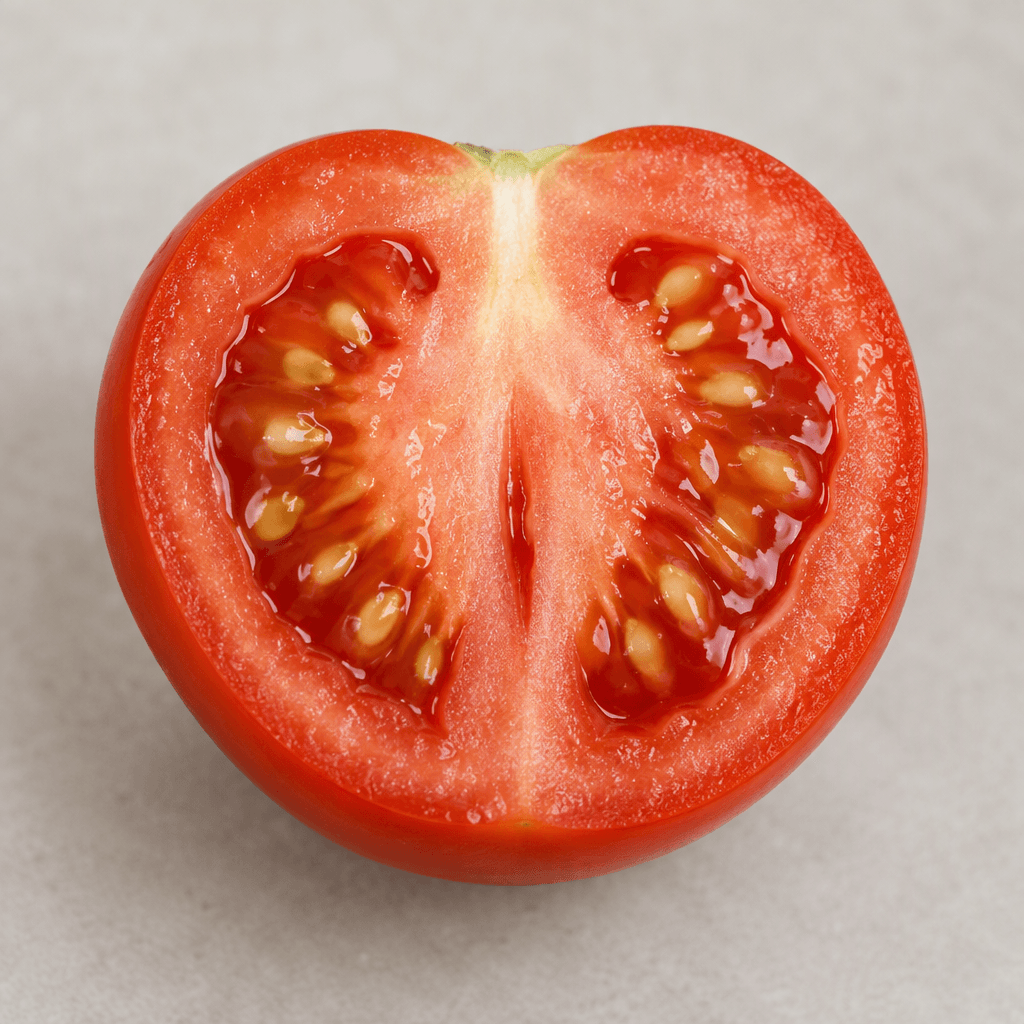
Tomato (Half) Calories
Vitamin C, low calorie, source of lycopene
In season: Spring · Summer · Autumn
CALORIES
GI
POTASSIUM
FIBER
Quick answer
1 piece (half) of Tomato (Half) (60 g) has 11 calories. That works out to 18 calories per 100 g. It contains 2.3 g of carbs, 0.5 g of protein, 0.1 g of fat and 0.7 g of fiber. Its 8.2 mg of Vitamin C covers 9% of the Daily Value. Its glycemic index is 15 (low), so it raises blood sugar slowly.
What is Tomato (Half)?
A half tomato is simply a ripe tomato cut in two, with juicy pink-red flesh and soft chambers holding pale seeds. Tomatoes are eaten raw in salads and sandwiches, or cooked into sauces and everyday dishes. Their gently sweet, tangy flavour and refreshing, juicy texture make them an easy addition to meals across many cuisines.
Tomato (Half) is low in calories and provides vitamin C, lycopene and some fibre. Serve it alongside eggs or toast at breakfast, slice it into a salad, or add it to a sandwich. For a more filling meal, pair it with beans, grains or another source of protein.
Tomato (Half) Nutrition Facts
Selected: 100 g
18
KCAL / 100G
Carbs
3.9g
· 1% DV
Protein
0.9g
· 2% DV
Fat
0.2g
· 0% DV
Fiber
1.2g
· 4% DV
DV is the share of the daily value covered, on a 2,000 kcal reference diet.
Calories come from: Carbs 74% · Protein 17% · Fat 9%
Tomato (Half) Vitamins & Minerals
Vitamins
Vitamin C
13.7mg · 15% DV
Vitamin K
7.9µg · 7% DV
Vitamin A
42µg · 5% DV
B6
0.08mg · 5% DV
Minerals
Potassium ⭐
237mg · 7% DV
Magnesium
11mg · 3% DV
Phosphorus
24mg · 3% DV
Calcium
10mg · 1% DV
How Nutritious Is Tomato (Half)?
Nutrient density
High
How many vitamins, minerals and how much fiber this food carries per calorie. A high score means a lot of nutrition for few calories.
Satiety score
Medium
An EatBetter score computed from fiber, protein and calorie density. A high score means staying full longer on the same calories.
Both scores are calculated per 100 g and do not change with the selected portion. The satiety score is EatBetter's own calculation, not a clinical measure.
Tomato (Half) Glycemic Index
GLYCEMIC INDEX
GLYCEMIC LOAD
Accounts for portion size — a more realistic measure than GI alone.
How to Burn Off Tomato (Half)
To burn the 18 calories in 100 g:
🚶
Walking (5 km/h)
🏃
Running (8 km/h)
🚴
Cycling
🏊
Swimming
Times are calculated with the MET equation for a 70 kg adult. Actual burn varies with your weight, age and pace.
Is Tomato (Half) Processed?
NOVA 1
Unprocessed
1. Unprocessed
2. Minimally Processed
3. Processed
4. Ultra-Processed
NOVA classifies foods into 4 groups by industrial processing. NOVA 1 (unprocessed) is the healthiest.
Does Tomato (Half) Contain Allergens?
No known major allergens
Which Diets Is Tomato (Half) Good For?
Vegan
✓ Suitable
Vegetarian
✓ Suitable
Gluten-Free
✓ Suitable
Dairy-Free
— Not suitable
Mediterranean
✓ Suitable
Paleo
✓ Suitable
Whole30
— Not suitable
DASH
— Not suitable
Keto
— Not suitable
Low FODMAP
— Not suitable
Tomato (Half) Fat Profile
SATURATED
0.03g
MONOUNSATURATED
0.03g
POLYUNSATURATED
0.05g
Omega 6:3 ratio 3:1
Below the ideal 4:1 — a good omega balance.
Compare Tomato (Half)
Foods Similar to Tomato (Half)
Frequently Asked Questions About Tomato (Half)
Are tomatoes a fruit or a vegetable?
Botanically, a tomato is a fruit because it develops from a flower and contains seeds. In cooking, tomatoes are treated as vegetables because they are usually used in savory dishes rather than desserts.
Should tomatoes be refrigerated?
Keep ripe, whole tomatoes at room temperature if you plan to eat them soon; refrigeration can dull their flavor and make their texture mealy. If they are very ripe, refrigerate them to slow spoilage and let them warm up before serving.
How do you ripen tomatoes faster?
Leave tomatoes at room temperature, out of direct sunlight, to ripen naturally. To speed things up, place them in a paper bag with a ripe banana or apple, then check them regularly so they do not become overripe.
Can you freeze tomatoes?
Yes, tomatoes freeze well for later use in cooked dishes, though they become soft after thawing and are not ideal for fresh salads. Wash and dry them, then freeze them whole or chopped in an airtight freezer-safe container.
Can you eat tomato seeds?
Yes, tomato seeds are edible and usually do not need to be removed. You might scoop them out when a recipe calls for a thicker, less watery sauce or filling, but doing so is a texture choice rather than a safety requirement.
Do you need to peel tomatoes?
No, tomato skin is edible and does not need to be removed. For a smoother soup or sauce, peel the tomatoes by briefly dipping them in boiling water and then cooling them; the skin should come away easily.
Are cooked tomatoes healthier than raw tomatoes?
Neither form is universally better: raw tomatoes retain more vitamin C, while cooking can make lycopene easier for the body to use. Cooking tomatoes with a little oil can further help the body absorb lycopene.
Should you wash tomatoes before eating them?
Yes, rinse tomatoes under clean running water before cutting or eating them, even if you plan to peel them. Rub the surface gently with your hands to remove dirt, then dry the tomatoes with a clean cloth.
How should you store half a tomato?
Put the leftover half tomato in an airtight container with the cut side covered, then refrigerate it. Use it soon, ideally the next day, to limit drying and unwanted odor transfer; discard it if it becomes moldy or smells off.
Why do tomatoes split on the vine?
Tomatoes split when the fruit takes up water faster than its skin can stretch, often after heavy rain or uneven watering. Keep watering steady and harvest ripe tomatoes promptly; split fruit can be used if it is otherwise clean and sound.
Have another question about Tomato (Half)?
Ask the AI nutrition coach — calories, portions, alternatives and more, answered in seconds in the app.

Scan calories with your camera
Instant AI nutrition analysis

Nutrition data compiled from USDA FoodData Central and scientific sources.