

Ready & Packaged Foods
All →Vegetables & Legumes
All →Desserts & Confectionery
All →Meat & Protein
All →Grains & Bakery
All →Beverages
All →Milk & Dairy
All →

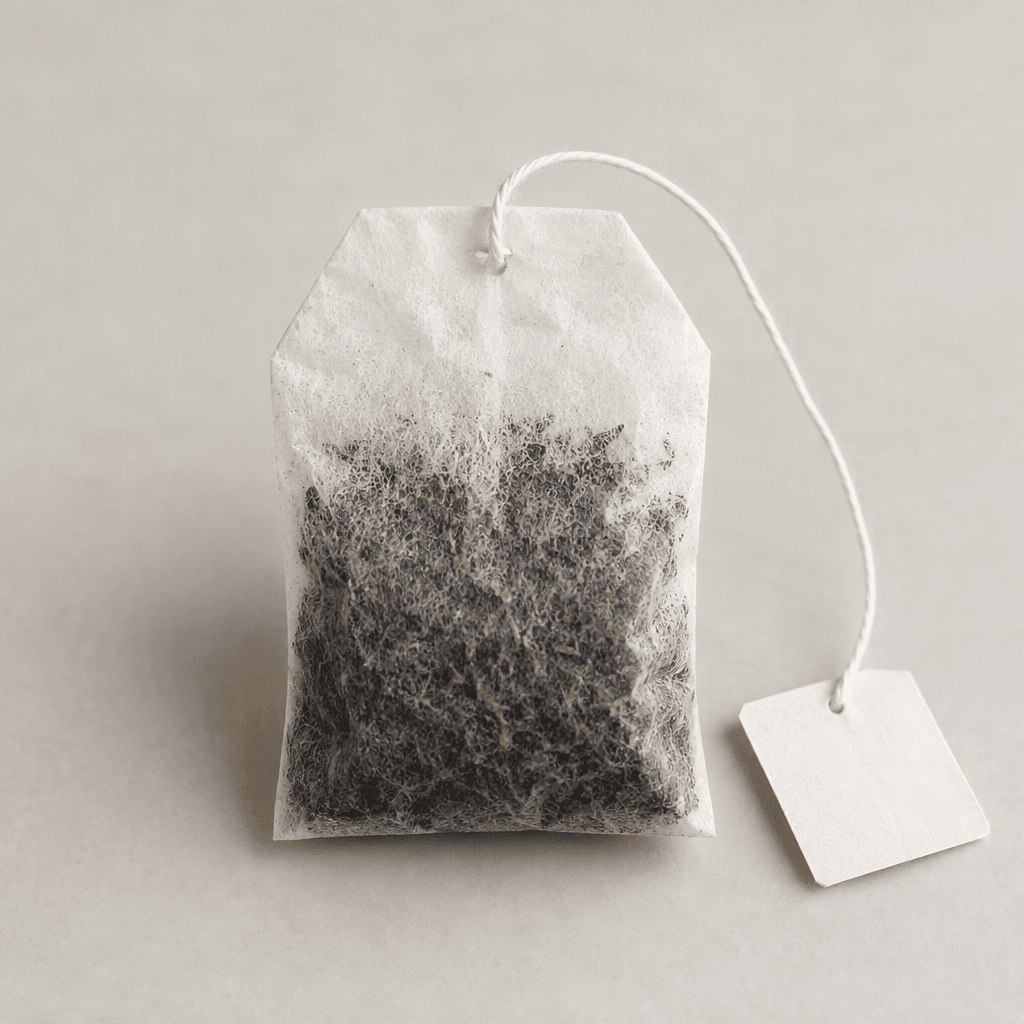
Tea bag Calories
Zero calories, antioxidant source, contains caffeine
In season: Spring · Summer · Autumn · Winter
CALORIES
GI
POTASSIUM
FIBER
Quick answer
1 piece (medium) of Tea bag (2 g) has 0 calories. That works out to 1 calories per 100 g. It contains 0 g of carbs, 0 g of protein, 0 g of fat and 0 g of fiber. Its glycemic index is 0 (low), so it raises blood sugar slowly.
What is Tea bag?
A tea bag holds dried tea leaves in a porous pouch, ready to steep in hot water. Tea itself has a long history in China, while the bag format offers a quick way to make a single cup at home, at work or while travelling. The flavour depends on the tea inside: black tea is common, but green and herbal varieties are also widely available.
Steep it briefly for a lighter cup or leave it longer for a stronger, sometimes more astringent taste. People drink it plain or add milk, lemon or sugar, depending on local custom and personal preference. Unsweetened tea contributes almost no calories, but brewed tea contains caffeine. For a simple, lighter cup, skip the sugar and remove the bag once it has reached the strength you like.
Tea bag Nutrition Facts
Selected: 100 g
1
KCAL / 100G
Carbs
0.1g
· 0% DV
Protein
0.2g
· 0% DV
Fat
0g
· 0% DV
Fiber
0g
· 0% DV
DV is the share of the daily value covered, on a 2,000 kcal reference diet.
Calories come from: Carbs 33% · Protein 67% · Fat 0%
Tea bag Vitamins & Minerals
Vitamins
B2
0.02mg · 2% DV
B1
0.01mg · 1% DV
B3
0.1mg · 1% DV
B6
0.01mg · 1% DV
Minerals
Potassium ⭐
20mg · 1% DV
Calcium
3mg · 0% DV
Iron
0mg · 0% DV
Magnesium
2mg · 0% DV
How Nutritious Is Tea bag?
Nutrient density
Low
How many vitamins, minerals and how much fiber this food carries per calorie. A high score means a lot of nutrition for few calories.
Satiety score
Medium
An EatBetter score computed from fiber, protein and calorie density. A high score means staying full longer on the same calories.
Both scores are calculated per 100 g and do not change with the selected portion. The satiety score is EatBetter's own calculation, not a clinical measure.
Tea bag Glycemic Index
GLYCEMIC INDEX
GLYCEMIC LOAD
Accounts for portion size — a more realistic measure than GI alone.
How to Burn Off Tea bag
To burn the 1 calories in 100 g:
🚶
Walking (5 km/h)
🏃
Running (8 km/h)
🚴
Cycling
🏊
Swimming
Times are calculated with the MET equation for a 70 kg adult. Actual burn varies with your weight, age and pace.
Is Tea bag Processed?
NOVA 2
Minimally Processed
1. Unprocessed
2. Minimally Processed
3. Processed
4. Ultra-Processed
NOVA classifies foods into 4 groups by industrial processing. NOVA 1 (unprocessed) is the healthiest.
Does Tea bag Contain Allergens?
No known major allergens
Which Diets Is Tea bag Good For?
Vegan
✓ Suitable
Vegetarian
✓ Suitable
Gluten-Free
✓ Suitable
Dairy-Free
— Not suitable
Mediterranean
✓ Suitable
Paleo
✓ Suitable
Whole30
— Not suitable
DASH
— Not suitable
Keto
— Not suitable
Low FODMAP
— Not suitable
Tea bag Fat Profile
SATURATED
0g
MONOUNSATURATED
0g
POLYUNSATURATED
0g
Compare Tea bag
Foods Similar to Tea bag
Frequently Asked Questions About Tea bag
How long should you steep a tea bag?
Steep a tea bag for about 3–5 minutes for a typical cup of black tea. A shorter brew tastes lighter, while a longer one becomes stronger and more bitter; green tea often tastes better with cooler-than-boiling water.
Can you use a tea bag twice?
Yes, you can steep a tea bag a second time, but the next cup will usually be weaker and less aromatic. Reuse it promptly rather than leaving a wet tea bag at room temperature for hours.
Are tea bags worse than loose-leaf tea?
Not necessarily: tea bags are convenient and easy to portion, while loose-leaf tea has more room to unfurl and may produce a fuller aroma. The quality of the tea and the way you brew it matter more than the format alone.
Do tea bags contain microplastics?
Some tea bags contain plastic or plastic-based sealants, while others are made from paper or alternative materials. The material varies by product, so choose tea bags explicitly labeled plastic-free if you want to avoid plastic in the bag.
Does a tea bag have caffeine?
A tea bag filled with black or green tea contains caffeine. The amount varies with the tea type and brewing time; herbal tea bags made from ingredients such as peppermint or chamomile are generally caffeine-free.
Can you drink tea made from a tea bag every day?
Yes, most people can enjoy tea made from a tea bag daily. Black and green tea contribute caffeine, so reduce or avoid them if they make you feel jittery, give you palpitations, or interfere with sleep.
Should you squeeze a tea bag after steeping?
You can squeeze a tea bag, but pressing it hard may release more tannins and make the tea taste bitter or astringent. For a smoother cup, lift it out and let it drip briefly instead.
How should you store tea bags?
Store tea bags in a sealed container in a cool, dry place away from strong smells. Tea readily absorbs moisture and odors, so an open box beside spices or a kettle can diminish its flavor.
Can you drink tea made from an expired tea bag?
Usually, a tea bag past its best-by date has mainly lost freshness and flavor if it stayed dry and sealed. Do not use it if the bag or tea shows mold, dampness, or an unusual smell.
Will tea from a tea bag keep you awake at night?
It can, if the tea bag contains caffeinated black or green tea and you are sensitive to caffeine. Choose a caffeine-free herbal tea bag in the evening if tea tends to disrupt your sleep.
Have another question about Tea bag?
Ask the AI nutrition coach — calories, portions, alternatives and more, answered in seconds in the app.

Scan calories with your camera
Instant AI nutrition analysis

Nutrition data compiled from USDA FoodData Central and scientific sources.