

Ready & Packaged Foods
All →Vegetables & Legumes
All →Desserts & Confectionery
All →Meat & Protein
All →Grains & Bakery
All →Beverages
All →Milk & Dairy
All →

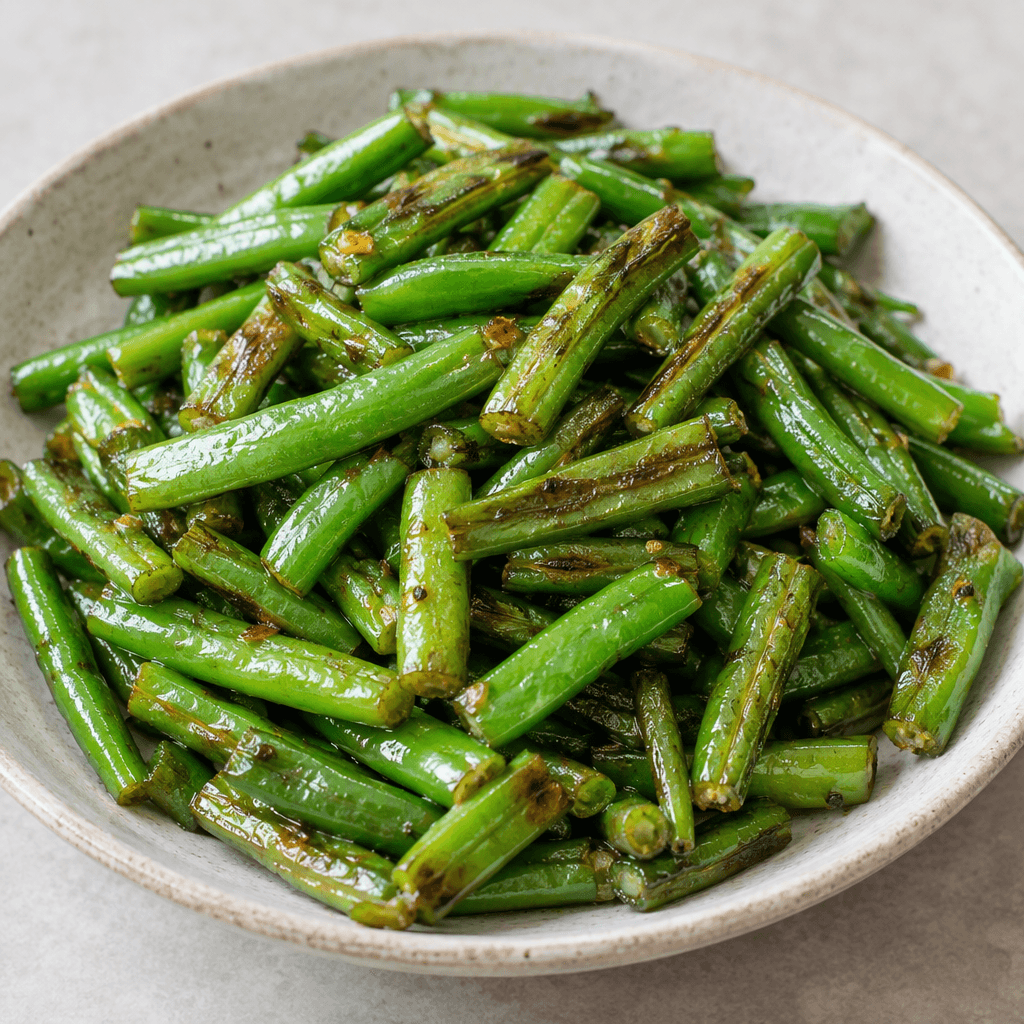
Sauteed green beans Calories
Fiber-rich, low-calorie, provides vitamins A-C-K and folate
In season: Summer · Autumn
CALORIES
GI
POTASSIUM
FIBER
Quick answer
1 cup (chopped) of Sauteed green beans (125 g) has 90 calories. That works out to 72 calories per 100 g. It contains 10.8 g of carbs, 2.4 g of protein, 4.5 g of fat and 4.3 g of fiber. Its 40 µg of Vitamin K covers 33% of the Daily Value. Its glycemic index is 15 (low), so it raises blood sugar slowly.
What is Sauteed green beans?
Sauteed green beans are fresh beans cooked in a pan until tender, often with onion, tomato or garlic; the exact additions vary. This preparation is at home in many cuisines, including Turkish home cooking, where green beans are commonly paired with olive oil and tomato.
The beans should stay bright and slightly firm, with lightly browned edges. Serve them warm as a vegetable side, or at room temperature alongside a larger meal; they also pair well with rice, bread or a spoonful of yogurt. They make a fibre-rich, vegetable-forward choice without feeling heavy. For a lighter version, use just enough oil to coat the pan and avoid cooking the beans until they lose their freshness.
Sauteed green beans Nutrition Facts
Selected: 100 g
72
KCAL / 100G
Carbs
8.6g
· 3% DV
Protein
1.9g
· 4% DV
Fat
3.6g
· 5% DV
Fiber
3.4g
· 12% DV
DV is the share of the daily value covered, on a 2,000 kcal reference diet.
Calories come from: Carbs 46% · Protein 10% · Fat 44%
Sauteed green beans Vitamins & Minerals
Vitamins
Vitamin K
32µg · 27% DV
Vitamin C
9.5mg · 11% DV
Folate
38µg · 10% DV
B2
0.1mg · 8% DV
Minerals
Iron
1mg · 6% DV
Magnesium
26mg · 6% DV
Phosphorus
39mg · 6% DV
Potassium ⭐
165mg · 5% DV
How Nutritious Is Sauteed green beans?
Nutrient density
High
How many vitamins, minerals and how much fiber this food carries per calorie. A high score means a lot of nutrition for few calories.
Satiety score
Medium
An EatBetter score computed from fiber, protein and calorie density. A high score means staying full longer on the same calories.
Both scores are calculated per 100 g and do not change with the selected portion. The satiety score is EatBetter's own calculation, not a clinical measure.
Sauteed green beans Glycemic Index
GLYCEMIC INDEX
GLYCEMIC LOAD
Accounts for portion size — a more realistic measure than GI alone.
How to Burn Off Sauteed green beans
To burn the 72 calories in 100 g:
🚶
Walking (5 km/h)
🏃
Running (8 km/h)
🚴
Cycling
🏊
Swimming
Times are calculated with the MET equation for a 70 kg adult. Actual burn varies with your weight, age and pace.
Is Sauteed green beans Processed?
NOVA 2
Minimally Processed
1. Unprocessed
2. Minimally Processed
3. Processed
4. Ultra-Processed
NOVA classifies foods into 4 groups by industrial processing. NOVA 1 (unprocessed) is the healthiest.
Does Sauteed green beans Contain Allergens?
No known major allergens
Which Diets Is Sauteed green beans Good For?
Vegan
✓ Suitable
Vegetarian
✓ Suitable
Gluten-Free
✓ Suitable
Dairy-Free
— Not suitable
Mediterranean
✓ Suitable
Paleo
✓ Suitable
Whole30
— Not suitable
DASH
— Not suitable
Keto
— Not suitable
Low FODMAP
— Not suitable
Sauteed green beans Fat Profile
SATURATED
0.52g
MONOUNSATURATED
2g
POLYUNSATURATED
0.82g
Omega 6:3 ratio 26:1
Above the ideal 4:1 (26:1).
Compare Sauteed green beans
Foods Similar to Sauteed green beans
Frequently Asked Questions About Sauteed green beans
How do you make sauteed green beans?
Sauteed green beans are made by cooking trimmed, cut beans in a skillet with oil until tender. Stir them occasionally so they cook evenly, and add a splash of water and cover the pan if you prefer softer beans rather than a crisp-tender bite.
What ingredients go in sauteed green beans?
Sauteed green beans need green beans, oil, and seasoning; garlic is a common addition. Shallots or onion, lemon, and black pepper also work well. Add lemon near the end so its fresh flavor does not disappear during cooking.
Do you need to blanch green beans before making sauteed green beans?
No, you do not need to blanch green beans before making sauteed green beans. Cooking them directly in the skillet gives them a firmer texture and browned edges. Blanching first is useful if you want a softer result or need to shorten skillet cooking.
How do you keep sauteed green beans crisp?
To keep sauteed green beans crisp, dry them thoroughly after washing and avoid crowding the skillet. Cook over medium-high heat, stir as needed, and stop as soon as they are bright and tender-crisp; a crowded pan steams the beans instead of browning them.
Can you make sauteed green beans with frozen green beans?
Yes, you can make sauteed green beans with frozen green beans. Add them to the pan frozen or thaw and drain them first; either way, cook off excess water before adding seasonings so the beans sauté rather than steam.
Why are my sauteed green beans tough?
Sauteed green beans can be tough if the beans are mature, fibrous, or undercooked. Trim any stringy ends, cut thick beans into smaller pieces, and continue cooking with a little water and the lid on until they reach the texture you want.
How do you stop sauteed green beans from getting soggy?
Keep sauteed green beans from getting soggy by drying them well, using a wide skillet, and cooking in batches if needed. Avoid adding too much liquid, and leave the lid off while sautéing so moisture can escape and the beans can brown.
How long do sauteed green beans keep in the fridge?
Sauteed green beans keep in the refrigerator for a few days when cooled and stored in a sealed container. Reheat only the portion you plan to eat, using a skillet or microwave; adding a small splash of water helps prevent them from drying out.
What should you serve with sauteed green beans?
Sauteed green beans pair well with roasted chicken, fish, tofu, or grains such as rice and quinoa. Their garlicky, lightly browned flavor also makes them an easy side for pasta, potatoes, and other weeknight mains.
Can you make sauteed green beans without garlic?
Yes, sauteed green beans taste good without garlic. Use shallots or onion for savory flavor, or finish the beans with lemon zest, black pepper, and herbs. Add the seasoning near the end to keep the beans’ fresh flavor prominent.
Have another question about Sauteed green beans?
Ask the AI nutrition coach — calories, portions, alternatives and more, answered in seconds in the app.

Scan calories with your camera
Instant AI nutrition analysis

Nutrition data compiled from USDA FoodData Central and scientific sources.