

Ready & Packaged Foods
All →Vegetables & Legumes
All →Desserts & Confectionery
All →Meat & Protein
All →Grains & Bakery
All →Beverages
All →Milk & Dairy
All →

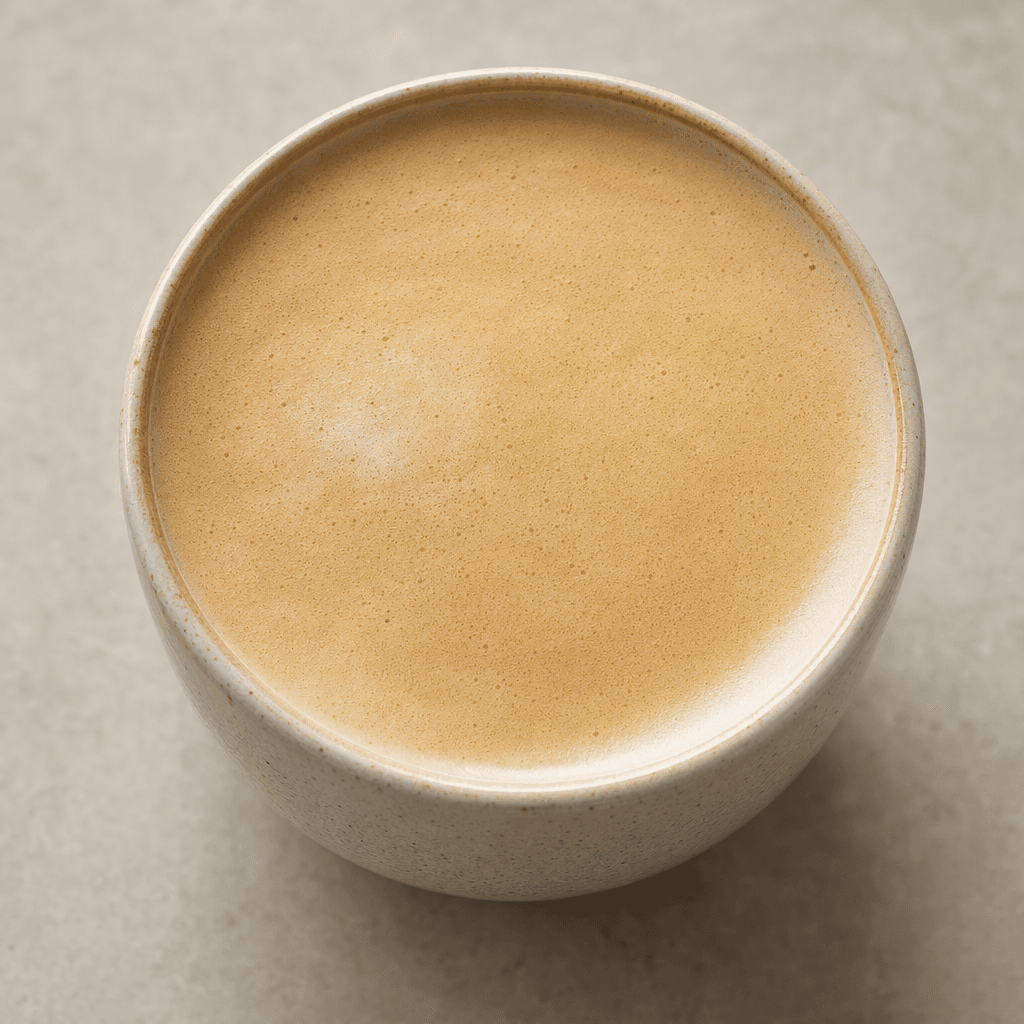
Sugar-free latte with lactose-free milk Calories
Sugar-free espresso drink made with lactose-free milk
CALORIES
GI
POTASSIUM
FIBER
Quick answer
1 cup (medium) of Sugar-free latte with lactose-free milk (240 g) has 91 calories. That works out to 38 calories per 100 g. It contains 9.4 g of carbs, 6.7 g of protein, 3.6 g of fat and 0 g of fiber. Its 0.9 µg of B12 covers 38% of the Daily Value. Its glycemic index is 30 (low), so it raises blood sugar slowly.
What is Sugar-free latte with lactose-free milk?
A sugar-free latte with lactose-free milk is an espresso drink in the Italian latte tradition, made with espresso and steamed, lightly foamed lactose-free milk. “Sugar-free” here means no sugar is added; the milk still contains naturally occurring carbohydrates. It is now a familiar café order around the world, including in places where people choose it as an alternative to a sweetened coffee.
The espresso gives it a roasted, slightly bitter edge, while the milk makes the cup smooth and creamy with a mild sweetness. Enjoy it hot or iced at breakfast, during a coffee break, or alongside a small snack. At 38 calories per 100 g, it is a relatively light café drink. For a stronger coffee flavour, ask for an extra shot rather than adding syrup.
Sugar-free latte with lactose-free milk Nutrition Facts
Selected: 100 g
38
KCAL / 100G
Carbs
3.9g
· 1% DV
Protein
2.8g
· 6% DV
Fat
1.5g
· 2% DV
Fiber
0g
· 0% DV
DV is the share of the daily value covered, on a 2,000 kcal reference diet.
Calories come from: Carbs 39% · Protein 28% · Fat 33%
Sugar-free latte with lactose-free milk Vitamins & Minerals
Vitamins
B12
0.38µg · 16% DV
B2
0.18mg · 14% DV
B5
0.32mg · 6% DV
Biotin
1.2µg · 4% DV
Minerals
Phosphorus
82mg · 12% DV
Calcium
102mg · 10% DV
Iodine
8µg · 5% DV
Selenium
2.1µg · 4% DV
How Nutritious Is Sugar-free latte with lactose-free milk?
Nutrient density
Low
How many vitamins, minerals and how much fiber this food carries per calorie. A high score means a lot of nutrition for few calories.
Satiety score
Medium
An EatBetter score computed from fiber, protein and calorie density. A high score means staying full longer on the same calories.
Both scores are calculated per 100 g and do not change with the selected portion. The satiety score is EatBetter's own calculation, not a clinical measure.
Sugar-free latte with lactose-free milk Glycemic Index
GLYCEMIC INDEX
GLYCEMIC LOAD
Accounts for portion size — a more realistic measure than GI alone.
How to Burn Off Sugar-free latte with lactose-free milk
To burn the 38 calories in 100 g:
🚶
Walking (5 km/h)
🏃
Running (8 km/h)
🚴
Cycling
🏊
Swimming
Times are calculated with the MET equation for a 70 kg adult. Actual burn varies with your weight, age and pace.
Is Sugar-free latte with lactose-free milk Processed?
NOVA 2
Minimally Processed
1. Unprocessed
2. Minimally Processed
3. Processed
4. Ultra-Processed
NOVA classifies foods into 4 groups by industrial processing. NOVA 1 (unprocessed) is the healthiest.
Does Sugar-free latte with lactose-free milk Contain Allergens?
Contains these allergens:
Which Diets Is Sugar-free latte with lactose-free milk Good For?
Vegan
— Not suitable
Vegetarian
✓ Suitable
Gluten-Free
✓ Suitable
Dairy-Free
— Not suitable
Mediterranean
✓ Suitable
Paleo
— Not suitable
Whole30
— Not suitable
DASH
— Not suitable
Keto
— Not suitable
Low FODMAP
— Not suitable
Sugar-free latte with lactose-free milk Fat Profile
SATURATED
0.95g
MONOUNSATURATED
0.42g
POLYUNSATURATED
0.08g
Omega 6:3 ratio 1.7:1
Below the ideal 4:1 — a good omega balance.
Compare Sugar-free latte with lactose-free milk
Foods Similar to Sugar-free latte with lactose-free milk
Frequently Asked Questions About Sugar-free latte with lactose-free milk
What is a sugar-free latte with lactose-free milk made of?
A sugar-free latte with lactose-free milk is made with espresso and lactose-free milk, without added sugar. The milk still contains naturally occurring sugars, so “sugar-free” does not necessarily mean zero sugars.
Does a sugar-free latte with lactose-free milk contain caffeine?
Yes. The espresso provides caffeine, and the amount varies with the number of espresso shots and how the drink is prepared. A medium serving size alone does not tell you its caffeine content.
Can people with lactose intolerance drink a sugar-free latte with lactose-free milk?
Many people with lactose intolerance tolerate lactose-free milk better than regular milk. It is not guaranteed to suit everyone, so pay attention to your own symptoms and tolerance.
Is a sugar-free latte with lactose-free milk dairy-free?
No. Lactose-free milk is still dairy and contains milk proteins. Removing or breaking down lactose does not make it suitable for someone with a milk allergy.
Does a sugar-free latte with lactose-free milk still contain sugar?
It can. Lactose-free milk still has sugars: its lactose is broken down into simpler sugars rather than removed. The drink may have no added sugar, but that is different from having none at all.
Can you order a decaf sugar-free latte with lactose-free milk?
Yes. Ask for decaffeinated espresso and lactose-free milk, with no added sugar or syrup. Decaf coffee may still contain a small amount of caffeine.
Can lactose-free milk foam in a sugar-free latte?
Yes, lactose-free milk can be steamed and frothed for a latte. Its foam and texture can vary by milk brand and steaming technique, just as they do with regular milk.
How should you store a leftover sugar-free latte with lactose-free milk?
Refrigerate it promptly in a covered container and drink it as soon as practical. Milk-based coffee loses its best texture after storage, so stir it well and discard it if it has been left out for a long time.
Does a sugar-free latte with lactose-free milk count toward hydration?
Yes, it contributes fluid. Its caffeine does not erase that contribution, although water is a better choice when you want to hydrate without caffeine.
Can you drink a sugar-free latte with lactose-free milk during pregnancy?
It can fit during pregnancy, but its caffeine counts toward your daily total. The amount varies with the espresso used, so check your overall caffeine intake and follow your healthcare professional’s guidance.
Have another question about Sugar-free latte with lactose-free milk?
Ask the AI nutrition coach — calories, portions, alternatives and more, answered in seconds in the app.

Scan calories with your camera
Instant AI nutrition analysis

Nutrition data compiled from USDA FoodData Central and scientific sources.