

Ready & Packaged Foods
All →Vegetables & Legumes
All →Desserts & Confectionery
All →Meat & Protein
All →Grains & Bakery
All →Beverages
All →Milk & Dairy
All →

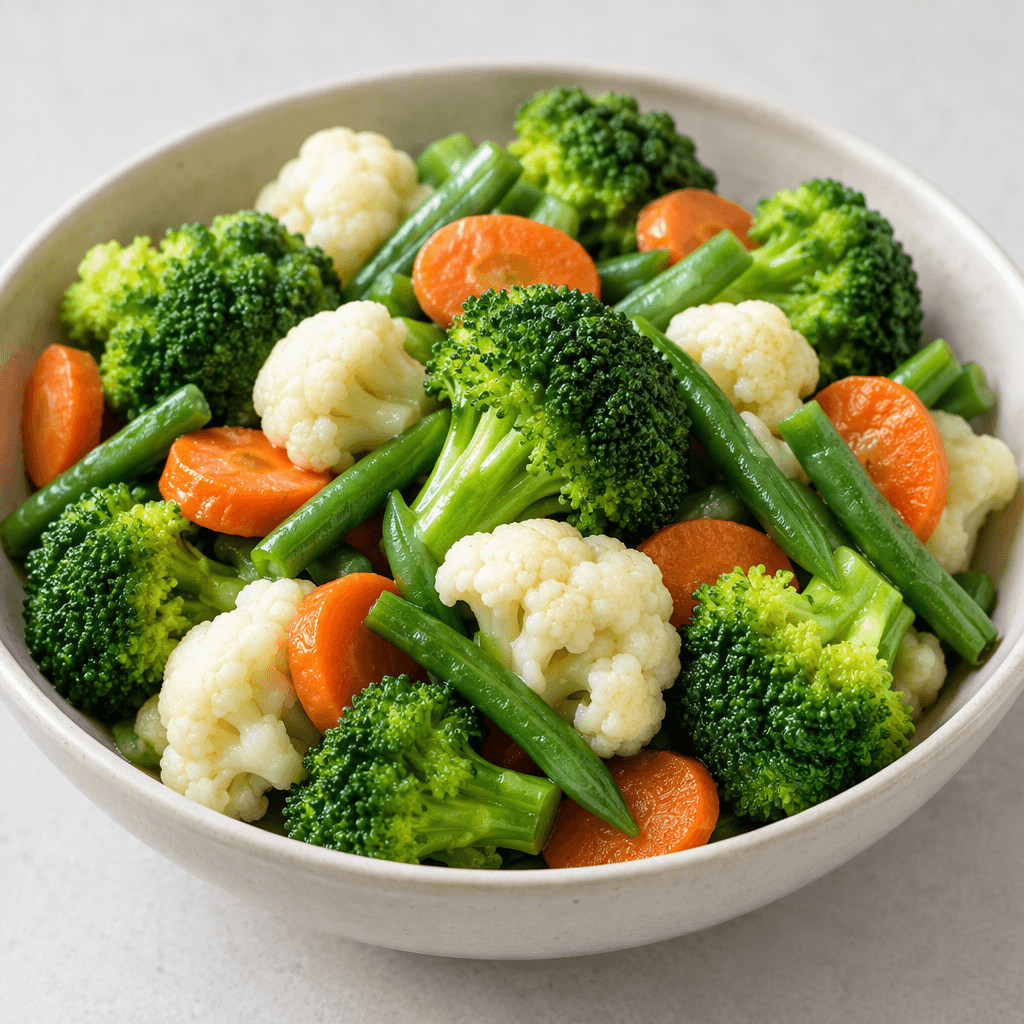
Steamed vegetables Calories
Rich in vitamins and minerals, low calorie, healthy cooking method
In season: Spring · Summer · Autumn · Winter
CALORIES
GI
POTASSIUM
FIBER
Quick answer
1 cup (medium) of Steamed vegetables (120 g) has 46 calories. That works out to 38 calories per 100 g. It contains 8.6 g of carbs, 2.5 g of protein, 0.4 g of fat and 3.8 g of fiber. Its 456 µg of Vitamin A covers 51% of the Daily Value. Its glycemic index is 25 (low), so it raises blood sugar slowly.
What is Steamed vegetables?
Steamed vegetables are a simple mix of vegetables—such as broccoli, carrots, green beans and cauliflower—cooked over hot water until tender. Rather than belonging to one particular cuisine, this is a straightforward way to prepare whatever vegetables are in season or on hand.
Cook them briefly to keep their colour and a little bite. Serve them warm as a side with fish, meat, beans or grains, or let them cool and add them to a salad. A squeeze of lemon, fresh herbs or a little olive oil adds flavour without masking the vegetables. They provide fibre and a range of vitamins and minerals while remaining low in calories; add chickpeas or serve with grains if you’d like a more filling meal.
Steamed vegetables Nutrition Facts
Selected: 100 g
38
KCAL / 100G
Carbs
7.2g
· 3% DV
Protein
2.1g
· 4% DV
Fat
0.3g
· 0% DV
Fiber
3.2g
· 11% DV
DV is the share of the daily value covered, on a 2,000 kcal reference diet.
Calories come from: Carbs 72% · Protein 21% · Fat 7%
Steamed vegetables Vitamins & Minerals
Vitamins
Vitamin A
380µg · 42% DV
Vitamin K
38µg · 32% DV
Vitamin C
22mg · 24% DV
Folate
54µg · 14% DV
Minerals
Iron
1mg · 6% DV
Potassium ⭐
220mg · 6% DV
Phosphorus
38mg · 5% DV
Calcium
44mg · 4% DV
How Nutritious Is Steamed vegetables?
Nutrient density
Very high
How many vitamins, minerals and how much fiber this food carries per calorie. A high score means a lot of nutrition for few calories.
Satiety score
Medium
An EatBetter score computed from fiber, protein and calorie density. A high score means staying full longer on the same calories.
Both scores are calculated per 100 g and do not change with the selected portion. The satiety score is EatBetter's own calculation, not a clinical measure.
Steamed vegetables Glycemic Index
GLYCEMIC INDEX
GLYCEMIC LOAD
Accounts for portion size — a more realistic measure than GI alone.
How to Burn Off Steamed vegetables
To burn the 38 calories in 100 g:
🚶
Walking (5 km/h)
🏃
Running (8 km/h)
🚴
Cycling
🏊
Swimming
Times are calculated with the MET equation for a 70 kg adult. Actual burn varies with your weight, age and pace.
Is Steamed vegetables Processed?
NOVA 2
Minimally Processed
1. Unprocessed
2. Minimally Processed
3. Processed
4. Ultra-Processed
NOVA classifies foods into 4 groups by industrial processing. NOVA 1 (unprocessed) is the healthiest.
Does Steamed vegetables Contain Allergens?
No known major allergens
Which Diets Is Steamed vegetables Good For?
Vegan
✓ Suitable
Vegetarian
✓ Suitable
Gluten-Free
✓ Suitable
Dairy-Free
— Not suitable
Mediterranean
✓ Suitable
Paleo
✓ Suitable
Whole30
— Not suitable
DASH
— Not suitable
Keto
— Not suitable
Low FODMAP
— Not suitable
Steamed vegetables Fat Profile
SATURATED
0.06g
MONOUNSATURATED
0.03g
POLYUNSATURATED
0.05g
Omega 6:3 ratio 0.5:1
Below the ideal 4:1 — a good omega balance.
Compare Steamed vegetables
Foods Similar to Steamed vegetables
Frequently Asked Questions About Steamed vegetables
How do you make steamed vegetables?
To make steamed vegetables, cut the vegetables into similar-sized pieces and place them in a steamer basket above simmering water. Cover the pot and cook until they are tender but still retain some bite; the vegetables should not sit in the water.
How long should you steam vegetables?
Steaming time depends on the vegetables and the size of the pieces. Broccoli florets and green beans usually cook sooner than carrots and cauliflower, so add firmer vegetables first or cut them smaller to help a mixed batch finish evenly.
Can you make steamed vegetables without a steamer?
Yes, you can make steamed vegetables without a dedicated steamer. Set a heatproof colander or metal rack over a pot with a little simmering water, add the vegetables without letting them touch the water, and cover the pot.
Are steamed vegetables healthier than boiled vegetables?
Steaming can keep more water-soluble nutrients in vegetables than boiling, because less of them leach into cooking water. The difference varies by vegetable and cooking time, so avoid overcooking and use the steaming liquid in soups or sauces when practical.
Why do steamed vegetables turn mushy?
Steamed vegetables turn mushy when they cook too long or sit covered in residual heat after cooking. Check them as they cook, remove each type once it is tender, and transfer the vegetables out of the hot steamer promptly.
What can you add to steamed vegetables for flavor?
Add flavor to steamed vegetables after cooking with olive oil, lemon juice, black pepper, garlic, or fresh herbs. A little butter or a sauce also works; adding seasonings at the end lets you taste and adjust the dish without masking the vegetables.
How long do steamed vegetables last in the fridge?
Cooked steamed vegetables generally keep for three to four days in a covered container in the refrigerator. Refrigerate them promptly rather than leaving them out, and take out only the portion you plan to serve.
Can you freeze steamed vegetables?
Yes, you can freeze steamed vegetables, though they may be softer after thawing. Cool them first, pack them in an airtight freezer-safe container, and use thawed vegetables in soups, casseroles, or stir-fries where a softer texture is less noticeable.
Can you reheat steamed vegetables?
Yes, reheat steamed vegetables in a covered microwave-safe dish or briefly in a pan. Heat only until they are hot; prolonged reheating makes them softer and can dull their flavor.
What goes well with steamed vegetables?
Steamed vegetables pair well with rice, potatoes, fish, chicken, tofu, or beans. Add a dressing or sauce—such as lemon and olive oil, tahini, or a light vinaigrette—to bring the vegetables and the rest of the meal together.
Have another question about Steamed vegetables?
Ask the AI nutrition coach — calories, portions, alternatives and more, answered in seconds in the app.

Scan calories with your camera
Instant AI nutrition analysis

Nutrition data compiled from USDA FoodData Central and scientific sources.