

Ready & Packaged Foods
All →Vegetables & Legumes
All →Desserts & Confectionery
All →Meat & Protein
All →Grains & Bakery
All →Beverages
All →Milk & Dairy
All →

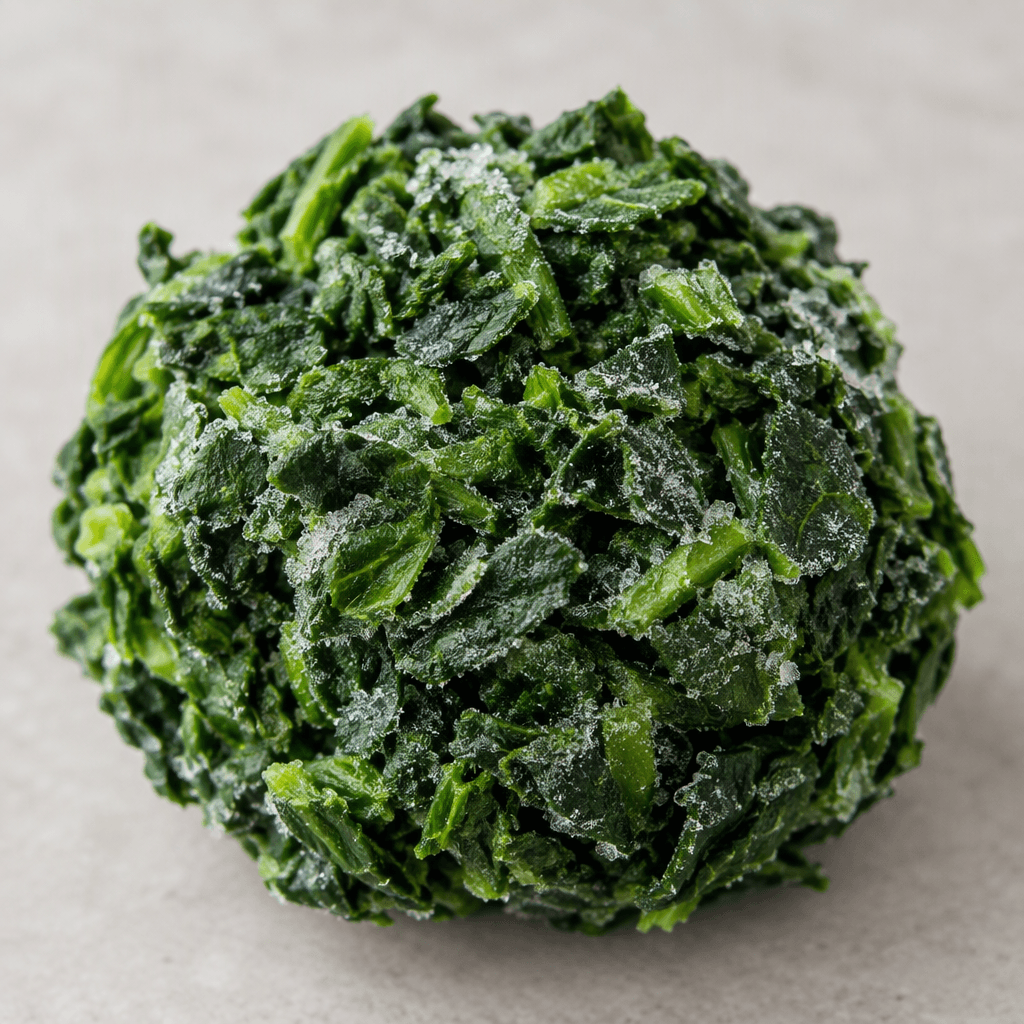
Spinach (frozen) Calories
Rich in iron and folate, low calorie, antioxidants
In season: Spring · Summer · Autumn · Winter
CALORIES
GI
POTASSIUM
FIBER
Quick answer
1 cup (medium) of Spinach (frozen) (150 g) has 35 calories. That works out to 23 calories per 100 g. It contains 3.9 g of carbs, 4.2 g of protein, 0.6 g of fat and 3.3 g of fiber. Its 724.5 µg of Vitamin K covers 604% of the Daily Value. Its glycemic index is 15 (low), so it raises blood sugar slowly.
What is Spinach (frozen)?
Frozen spinach is spinach leaves that have been chopped and frozen for convenient use in cooking. It is an easy way to keep a leafy green on hand when fresh spinach is unavailable, and can usually go straight into a pot or pan; drain off excess liquid if a recipe needs a drier filling.
Its flavour is gently earthy, and the leaves become soft and tender when cooked. It is used in a wide range of dishes, from soups, pasta sauces and omelettes to pies and savoury pastries. Spinach is low in calories and contributes fibre, folate and iron. For a lighter meal, cook it with a little oil and pair it with eggs, beans or plain yoghurt.
Spinach (frozen) Nutrition Facts
Selected: 100 g
23
KCAL / 100G
Carbs
2.6g
· 1% DV
Protein
2.8g
· 6% DV
Fat
0.4g
· 1% DV
Fiber
2.2g
· 8% DV
DV is the share of the daily value covered, on a 2,000 kcal reference diet.
Calories come from: Carbs 41% · Protein 44% · Fat 15%
Spinach (frozen) Vitamins & Minerals
Vitamins
Vitamin K
483µg · 403% DV
Vitamin A
469µg · 52% DV
Folate
146µg · 37% DV
Vitamin C
14mg · 16% DV
Minerals
Manganese
1mg · 43% DV
Magnesium
79mg · 19% DV
Iron
3mg · 17% DV
Potassium ⭐
483mg · 14% DV
How Nutritious Is Spinach (frozen)?
Nutrient density
Very high
How many vitamins, minerals and how much fiber this food carries per calorie. A high score means a lot of nutrition for few calories.
Satiety score
Medium
An EatBetter score computed from fiber, protein and calorie density. A high score means staying full longer on the same calories.
Both scores are calculated per 100 g and do not change with the selected portion. The satiety score is EatBetter's own calculation, not a clinical measure.
Spinach (frozen) Glycemic Index
GLYCEMIC INDEX
GLYCEMIC LOAD
Accounts for portion size — a more realistic measure than GI alone.
How to Burn Off Spinach (frozen)
To burn the 23 calories in 100 g:
🚶
Walking (5 km/h)
🏃
Running (8 km/h)
🚴
Cycling
🏊
Swimming
Times are calculated with the MET equation for a 70 kg adult. Actual burn varies with your weight, age and pace.
Is Spinach (frozen) Processed?
NOVA 2
Minimally Processed
1. Unprocessed
2. Minimally Processed
3. Processed
4. Ultra-Processed
NOVA classifies foods into 4 groups by industrial processing. NOVA 1 (unprocessed) is the healthiest.
Does Spinach (frozen) Contain Allergens?
No known major allergens
Which Diets Is Spinach (frozen) Good For?
Vegan
✓ Suitable
Vegetarian
✓ Suitable
Gluten-Free
✓ Suitable
Dairy-Free
— Not suitable
Mediterranean
✓ Suitable
Paleo
✓ Suitable
Whole30
— Not suitable
DASH
— Not suitable
Keto
✓ Suitable
Low FODMAP
— Not suitable
Spinach (frozen) Fat Profile
SATURATED
0.07g
MONOUNSATURATED
0.01g
POLYUNSATURATED
0.13g
Omega 6:3 ratio 0.2:1
Below the ideal 4:1 — a good omega balance.
Compare Spinach (frozen)
Foods Similar to Spinach (frozen)
Frequently Asked Questions About Spinach (frozen)
Can you cook frozen spinach without thawing it first?
Yes, you can add frozen spinach straight to soups, stews, and many skillet dishes. Cook it until fully hot, then drain any excess liquid if the recipe needs a thicker texture.
Is frozen spinach as nutritious as fresh spinach?
Frozen spinach can retain much of spinach’s nutrients because it is usually frozen soon after harvest. Some water-soluble vitamins may decrease during blanching, while storage time and cooking method also affect nutrient levels.
How do you get water out of frozen spinach?
Thaw frozen spinach in a sieve, then press or squeeze it firmly to remove excess liquid. For a quicker method, warm it in a pan and drain the released water before adding it to a filling or sauce.
Can you eat frozen spinach raw in a smoothie?
No, frozen spinach is generally not sold as a ready-to-eat raw ingredient; it is commonly blanched before freezing, but that does not replace cooking instructions. Cook it first if the package directs you to do so.
Why is frozen spinach watery after cooking?
Frozen spinach releases water as its ice crystals melt, so it can seem wetter than fresh spinach. Let the liquid evaporate in an uncovered pan, or drain and squeeze the spinach before using it in a dry filling.
Can you use frozen spinach in spinach dip?
Yes, frozen spinach works well in spinach dip. Thaw it completely and squeeze out as much water as possible before mixing it with the other ingredients; otherwise the dip can turn runny.
Can frozen spinach replace fresh spinach in a recipe?
Yes, frozen spinach can replace fresh spinach in cooked recipes such as pasta, soup, and casseroles. Use the recipe’s intended amount as a starting point, remembering that frozen spinach is already wilted and needs less cooking time.
How long does frozen spinach last in the freezer after opening?
Opened frozen spinach keeps best when tightly resealed and stored continuously in the freezer. It may lose flavor or develop freezer burn over time, so use the package’s storage guidance and avoid leaving the bag open.
Can you refreeze frozen spinach after it thaws?
Yes, you can refreeze frozen spinach that thawed safely in the refrigerator, although its texture may become softer. If it thawed at room temperature, cook it promptly rather than putting it back in the freezer.
Does frozen spinach need to be cooked before adding it to pasta?
Usually, yes: heat frozen spinach thoroughly before serving it in pasta. You can cook it in the sauce or sauté it separately, then drain excess water so the sauce does not become thin.
Have another question about Spinach (frozen)?
Ask the AI nutrition coach — calories, portions, alternatives and more, answered in seconds in the app.

Scan calories with your camera
Instant AI nutrition analysis

Nutrition data compiled from USDA FoodData Central and scientific sources.