

Ready & Packaged Foods
All →Vegetables & Legumes
All →Desserts & Confectionery
All →Meat & Protein
All →Grains & Bakery
All →Beverages
All →Milk & Dairy
All →

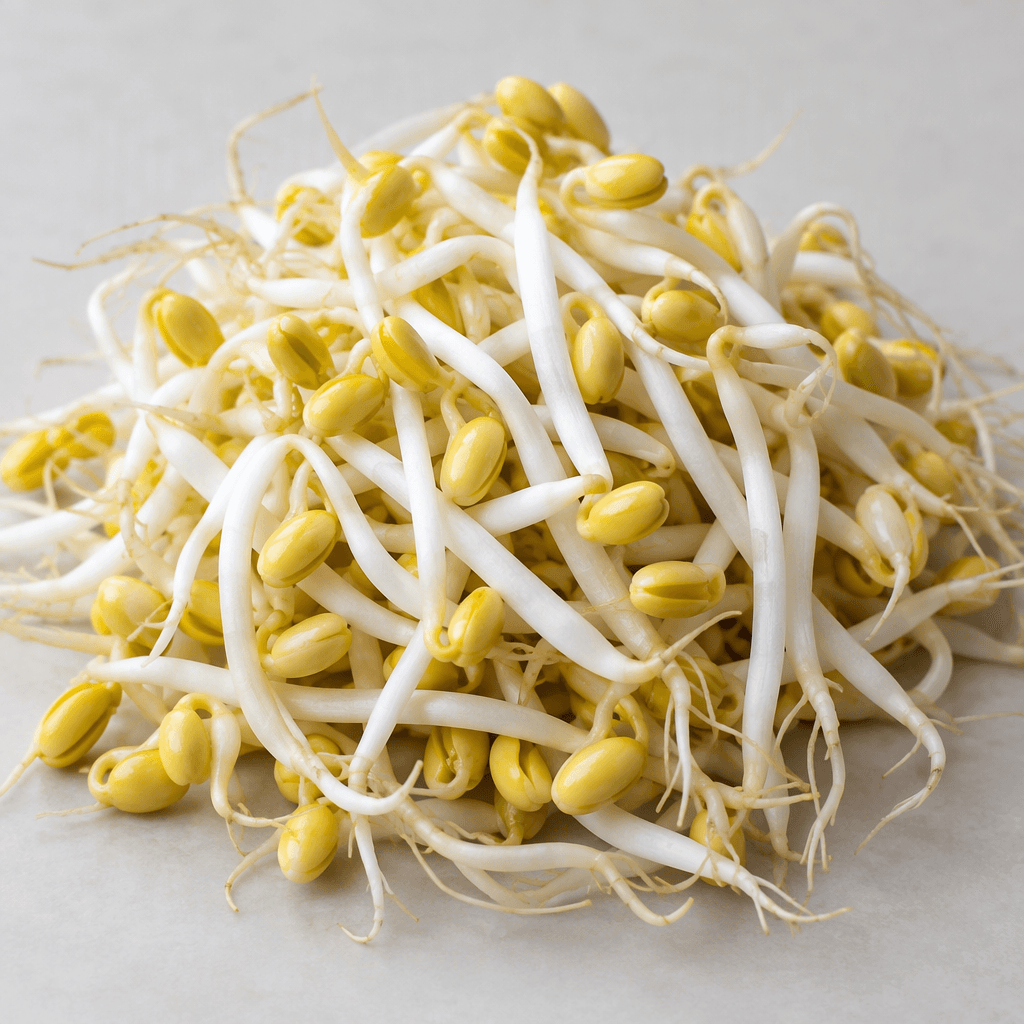
Soy Sprout Calories
High protein, low calorie, rich in vitamins and minerals
In season: Spring · Summer · Autumn · Winter
CALORIES
GI
POTASSIUM
FIBER
Quick answer
1 cup (medium) of Soy Sprout (70 g) has 34 calories. That works out to 49 calories per 100 g. It contains 4.6 g of carbs, 3.9 g of protein, 0.5 g of fat and 1 g of fiber. Its 23.1 µg of Vitamin K covers 19% of the Daily Value. Its glycemic index is 25 (low), so it raises blood sugar slowly.
What is Soy Sprout?
Soy sprouts are the young shoots of germinated soybeans, with crisp, fairly thick stems and small yellow seed heads. They are common in East Asian cooking, especially in Korea, where they are known as kongnamul and used in dishes such as soups and seasoned side salads. They are larger and heartier than the mung bean sprouts often sold in Western supermarkets.
Their mild, fresh taste works well in quick stir-fries, noodle dishes and salads; add them near the end of cooking to keep some crunch. At 5.5 g of protein per 100 g, they bring more protein than many vegetables while staying light. Pair them with garlic, sesame or other vegetables for an easy, balanced dish.
Soy Sprout Nutrition Facts
Selected: 100 g
49
KCAL / 100G
Carbs
6.6g
· 2% DV
Protein
5.5g
· 11% DV
Fat
0.7g
· 1% DV
Fiber
1.5g
· 5% DV
DV is the share of the daily value covered, on a 2,000 kcal reference diet.
Calories come from: Carbs 48% · Protein 40% · Fat 12%
Soy Sprout Vitamins & Minerals
Vitamins
Vitamin K
33µg · 28% DV
Biotin
7µg · 23% DV
Folate
60µg · 15% DV
Vitamin C
13mg · 14% DV
Minerals
Phosphorus
60mg · 9% DV
Iron
1mg · 6% DV
Magnesium
27mg · 6% DV
Calcium
54mg · 5% DV
How Nutritious Is Soy Sprout?
Nutrient density
High
How many vitamins, minerals and how much fiber this food carries per calorie. A high score means a lot of nutrition for few calories.
Satiety score
Medium
An EatBetter score computed from fiber, protein and calorie density. A high score means staying full longer on the same calories.
Both scores are calculated per 100 g and do not change with the selected portion. The satiety score is EatBetter's own calculation, not a clinical measure.
Soy Sprout Glycemic Index
GLYCEMIC INDEX
GLYCEMIC LOAD
Accounts for portion size — a more realistic measure than GI alone.
How to Burn Off Soy Sprout
To burn the 49 calories in 100 g:
🚶
Walking (5 km/h)
🏃
Running (8 km/h)
🚴
Cycling
🏊
Swimming
Times are calculated with the MET equation for a 70 kg adult. Actual burn varies with your weight, age and pace.
Is Soy Sprout Processed?
NOVA 1
Unprocessed
1. Unprocessed
2. Minimally Processed
3. Processed
4. Ultra-Processed
NOVA classifies foods into 4 groups by industrial processing. NOVA 1 (unprocessed) is the healthiest.
Does Soy Sprout Contain Allergens?
Contains these allergens:
Which Diets Is Soy Sprout Good For?
Vegan
✓ Suitable
Vegetarian
✓ Suitable
Gluten-Free
✓ Suitable
Dairy-Free
— Not suitable
Mediterranean
✓ Suitable
Paleo
— Not suitable
Whole30
— Not suitable
DASH
— Not suitable
Keto
✓ Suitable
Low FODMAP
— Not suitable
Soy Sprout Fat Profile
SATURATED
0.13g
MONOUNSATURATED
0.15g
POLYUNSATURATED
0.38g
Omega 6:3 ratio 11.7:1
Above the ideal 4:1 (11.7:1).
Compare Soy Sprout
Foods Similar to Soy Sprout
Frequently Asked Questions About Soy Sprout
Can you eat soy sprouts raw?
It is safer not to eat soy sprouts raw. Bacteria can multiply during sprouting, and rinsing does not reliably remove them; cook soy sprouts thoroughly before eating.
Are soy sprouts the same as mung bean sprouts?
No. Soy sprouts come from soybeans and usually have larger, yellowish seed heads and thicker stems; mung bean sprouts come from mung beans and are typically smaller and milder.
How do you cook soy sprouts?
Boil, steam, or stir-fry soy sprouts until thoroughly cooked. Add them near the end of a soup or stir-fry if you want them to keep some crunch, while still cooking them through.
How do you grow soy sprouts at home?
Soak whole soybeans intended for sprouting, then keep them in a clean, well-drained container and rinse them regularly as they sprout. Good hygiene matters, and homegrown soy sprouts should still be cooked before eating.
How should you store soy sprouts?
Keep soy sprouts refrigerated in a clean, covered container and avoid letting excess moisture collect. Use them promptly, and discard any that smell unpleasant, feel slimy, or look discolored.
Do you need to wash soy sprouts?
Yes, rinse soy sprouts under clean running water before cooking to remove surface dirt. Washing cannot reliably eliminate harmful bacteria, so it does not replace thorough cooking.
Can you freeze soy sprouts?
Yes, you can freeze soy sprouts, but they may turn soft and lose their crisp texture after thawing. Blanching them briefly and draining them first can make them more convenient to add to cooked dishes.
Why do soy sprouts have yellow heads?
The yellow head is the soybean’s seed leaves, so it is a normal part of the sprout. You can cook and eat the head along with the stem; there is no need to remove it.
What can you make with soy sprouts?
Use soy sprouts in stir-fries, noodle soups, and other cooked vegetable dishes. They are also the main ingredient in Korean kongnamul muchim and kongnamul-guk; cook them thoroughly before serving.
Are soy sprouts safe to eat during pregnancy?
Yes, soy sprouts can be eaten during pregnancy if they are cooked thoroughly; avoid them raw or undercooked. Raw sprouts can carry harmful bacteria that pose a greater foodborne illness risk during pregnancy.
Have another question about Soy Sprout?
Ask the AI nutrition coach — calories, portions, alternatives and more, answered in seconds in the app.

Scan calories with your camera
Instant AI nutrition analysis

Nutrition data compiled from USDA FoodData Central and scientific sources.