

Ready & Packaged Foods
All →Vegetables & Legumes
All →Desserts & Confectionery
All →Meat & Protein
All →Grains & Bakery
All →Beverages
All →Milk & Dairy
All →

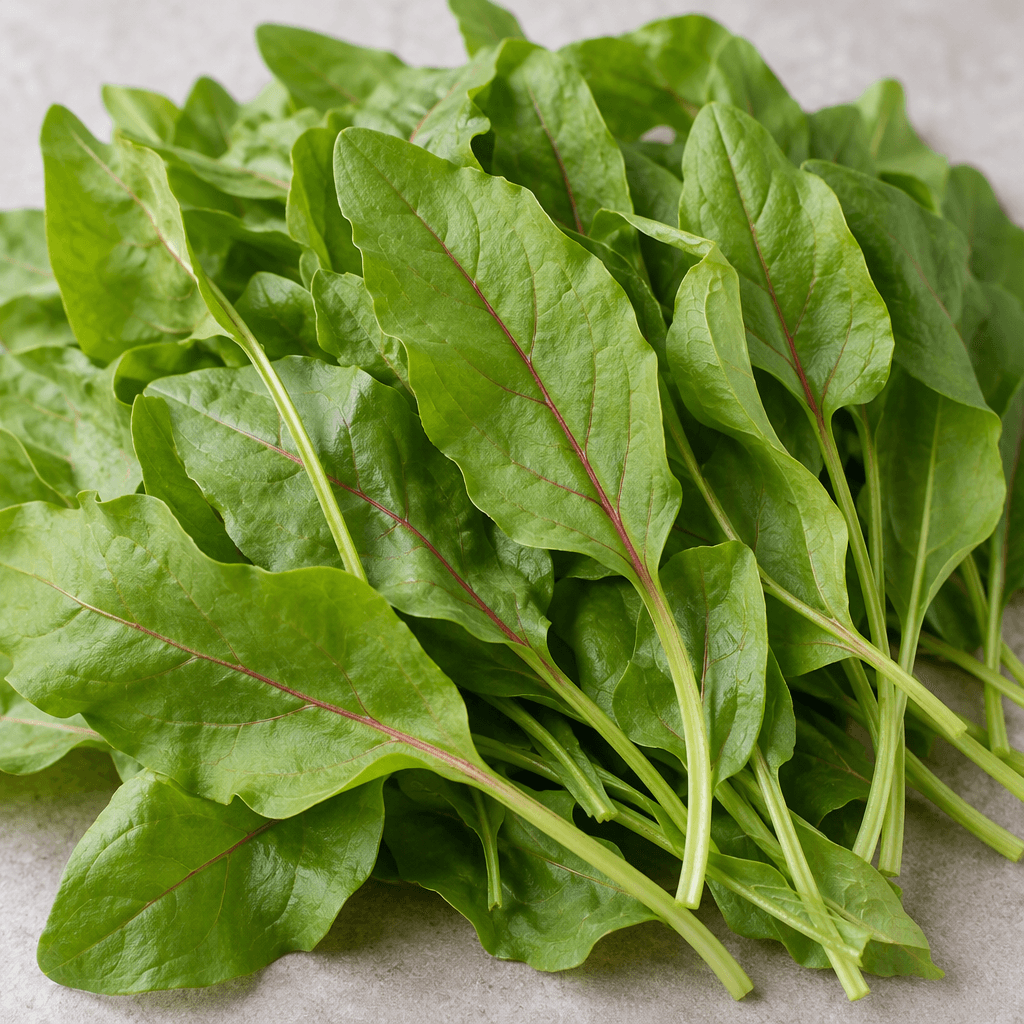
Sorrel Calories
Tangy leafy vegetable rich in vitamin C and antioxidants.
In season: Spring · Summer
CALORIES
GI
POTASSIUM
FIBER
Quick answer
1 cup (medium) of Sorrel (50 g) has 11 calories. That works out to 22 calories per 100 g. It contains 1.6 g of carbs, 1 g of protein, 0.4 g of fat and 1.5 g of fiber. Its 2000 µg of Vitamin A covers 222% of the Daily Value. Its glycemic index is 15 (low), so it raises blood sugar slowly.
What is Sorrel?
Sorrel is a leafy green with a naturally sharp, lemon-like tang. Its tender leaves are gathered or grown for use as a fresh herb and vegetable, and it has a long place in European cooking, especially in soups and sauces. You can also add young leaves raw to salads or sandwiches.
The flavour is bright and refreshing, while the leaves soften quickly when cooked. In its traditional European uses, sorrel is often simmered into soup or stirred into a sauce; elsewhere, it works well as a lively addition to everyday salads and cooked greens. It is low in calories and provides fibre. Pair it with creamy ingredients to soften its acidity, or add it near the end of cooking to preserve its fresh taste.
Sorrel Nutrition Facts
Selected: 100 g
22
KCAL / 100G
Carbs
3.2g
· 1% DV
Protein
2g
· 4% DV
Fat
0.7g
· 1% DV
Fiber
2.9g
· 10% DV
DV is the share of the daily value covered, on a 2,000 kcal reference diet.
Calories come from: Carbs 47% · Protein 30% · Fat 23%
Sorrel Vitamins & Minerals
Vitamins
Vitamin A
4000µg · 444% DV
Vitamin C
48mg · 53% DV
B2
0.25mg · 19% DV
Vitamin E
2mg · 13% DV
Minerals
Manganese
1mg · 43% DV
Magnesium
103mg · 25% DV
Iron
2mg · 11% DV
Potassium ⭐
390mg · 11% DV
How Nutritious Is Sorrel?
Nutrient density
Very high
How many vitamins, minerals and how much fiber this food carries per calorie. A high score means a lot of nutrition for few calories.
Satiety score
Medium
An EatBetter score computed from fiber, protein and calorie density. A high score means staying full longer on the same calories.
Both scores are calculated per 100 g and do not change with the selected portion. The satiety score is EatBetter's own calculation, not a clinical measure.
Sorrel Glycemic Index
GLYCEMIC INDEX
GLYCEMIC LOAD
Accounts for portion size — a more realistic measure than GI alone.
How to Burn Off Sorrel
To burn the 22 calories in 100 g:
🚶
Walking (5 km/h)
🏃
Running (8 km/h)
🚴
Cycling
🏊
Swimming
Times are calculated with the MET equation for a 70 kg adult. Actual burn varies with your weight, age and pace.
Is Sorrel Processed?
NOVA 1
Unprocessed
1. Unprocessed
2. Minimally Processed
3. Processed
4. Ultra-Processed
NOVA classifies foods into 4 groups by industrial processing. NOVA 1 (unprocessed) is the healthiest.
Does Sorrel Contain Allergens?
No known major allergens
Which Diets Is Sorrel Good For?
Vegan
✓ Suitable
Vegetarian
✓ Suitable
Gluten-Free
✓ Suitable
Dairy-Free
— Not suitable
Mediterranean
✓ Suitable
Paleo
✓ Suitable
Whole30
— Not suitable
DASH
— Not suitable
Keto
— Not suitable
Low FODMAP
— Not suitable
Sorrel Fat Profile
SATURATED
0.13g
MONOUNSATURATED
0.08g
POLYUNSATURATED
0.18g
Omega 6:3 ratio 0.4:1
Below the ideal 4:1 — a good omega balance.
Compare Sorrel
Foods Similar to Sorrel
Frequently Asked Questions About Sorrel
What does sorrel taste like?
Sorrel tastes tart and lemony, with a sharpness that can be more pronounced than that of many salad greens. Cooking softens its texture but leaves a tangy flavor, so it can brighten soups, sauces, and rich dishes.
How do you eat sorrel?
You can eat sorrel raw or cooked. Add young leaves to salads and sandwiches, or stir them into soups, sauces, eggs, and vegetable dishes; their tartness pairs especially well with creamy or rich ingredients.
Can you eat sorrel raw?
Yes, sorrel leaves can be eaten raw after washing. Their pronounced tang works well in salads, but mixing them with milder greens makes the flavor less intense. People advised to limit oxalates should also be mindful of their intake.
What is sorrel used for in cooking?
Sorrel is used to add a lemony tang to soups, sauces, salads, and cooked greens. In classic French cooking, it is often made into a sauce for fish; it also pairs nicely with eggs and potatoes.
How do you make sorrel soup?
For sorrel soup, soften onion and potato in a pot, add stock and cook until tender, then stir in the sorrel near the end. The leaves wilt quickly, and adding them late keeps their bright, tart flavor noticeable.
Can you cook sorrel, and does it lose its flavor?
Yes, sorrel cooks quickly and becomes soft, often melting into the dish. Heat mellows its sharpness, but the tang remains; add it near the end if you want a fresher, more noticeable sorrel flavor.
What can I use instead of sorrel?
For a similar tang, use spinach or another mild leafy green with a little lemon juice. The substitute will not have sorrel’s distinctive flavor, so add the lemon gradually and taste as you cook.
How should you store fresh sorrel?
Store unwashed sorrel in the refrigerator, loosely wrapped in a paper towel inside a bag or container. Wash it just before use, or dry it thoroughly after washing, since damp leaves tend to spoil faster.
Can you freeze sorrel?
Yes, sorrel freezes well for cooked dishes, though thawed leaves become too soft for a fresh salad. Wash and dry the leaves, chop them if you like, and pack them in a freezer-safe container.
Is sorrel safe to eat if you have kidney stones?
Sorrel contains oxalates, which can matter for people with certain kinds of kidney stones or an oxalate-restricted diet. Ask your doctor or dietitian about an appropriate amount for your specific stone history and dietary advice.
Have another question about Sorrel?
Ask the AI nutrition coach — calories, portions, alternatives and more, answered in seconds in the app.

Scan calories with your camera
Instant AI nutrition analysis

Nutrition data compiled from USDA FoodData Central and scientific sources.