

Ready & Packaged Foods
All →Vegetables & Legumes
All →Desserts & Confectionery
All →Meat & Protein
All →Grains & Bakery
All →Beverages
All →Milk & Dairy
All →

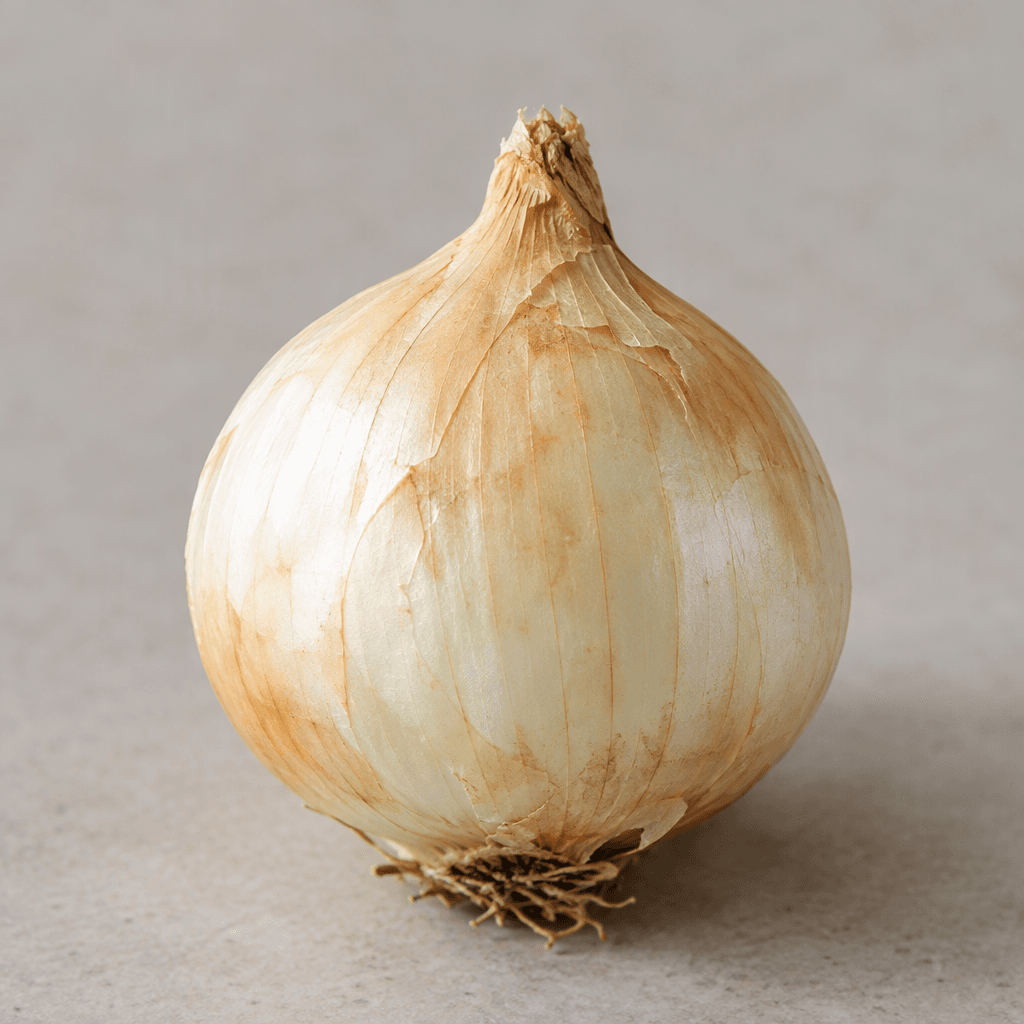
Small onion Calories
Source of vitamin C and fiber, low calorie
In season: Spring · Summer · Autumn · Winter
CALORIES
GI
POTASSIUM
FIBER
Quick answer
1 piece (small) of Small onion (60 g) has 24 calories. That works out to 40 calories per 100 g. It contains 5.6 g of carbs, 0.7 g of protein, 0.1 g of fat and 1 g of fiber. Its 4.4 mg of Vitamin C covers 5% of the Daily Value. Its glycemic index is 15 (low), so it raises blood sugar slowly.
What is Small onion?
A small onion is simply a small bulb of the familiar dry onion, rather than necessarily a distinct variety. Peel it and use it whole in stews, or slice or chop it for salads, sautés and other dishes that begin with an onion base. Small bulbs are also handy for pickling.
Its raw flavour is sharp and juicy; cooking softens it and brings out a mild sweetness. In many kitchens, it is used much like a regular onion, whether cooked into a meal or served raw in a salad or relish. It contributes fibre and vitamin C while remaining low in calories. If you find raw onion too pungent, briefly cook it, or pair it with parsley, lemon and olive oil.
Small onion Nutrition Facts
Selected: 100 g
40
KCAL / 100G
Carbs
9.3g
· 3% DV
Protein
1.1g
· 2% DV
Fat
0.1g
· 0% DV
Fiber
1.7g
· 6% DV
DV is the share of the daily value covered, on a 2,000 kcal reference diet.
Calories come from: Carbs 88% · Protein 10% · Fat 2%
Small onion Vitamins & Minerals
Vitamins
Vitamin C
7.4mg · 8% DV
B6
0.12mg · 7% DV
Folate
19µg · 5% DV
B1
0.05mg · 4% DV
Minerals
Phosphorus
29mg · 4% DV
Potassium ⭐
146mg · 4% DV
Calcium
23mg · 2% DV
Magnesium
10mg · 2% DV
How Nutritious Is Small onion?
Nutrient density
High
How many vitamins, minerals and how much fiber this food carries per calorie. A high score means a lot of nutrition for few calories.
Satiety score
Medium
An EatBetter score computed from fiber, protein and calorie density. A high score means staying full longer on the same calories.
Both scores are calculated per 100 g and do not change with the selected portion. The satiety score is EatBetter's own calculation, not a clinical measure.
Small onion Glycemic Index
GLYCEMIC INDEX
GLYCEMIC LOAD
Accounts for portion size — a more realistic measure than GI alone.
How to Burn Off Small onion
To burn the 40 calories in 100 g:
🚶
Walking (5 km/h)
🏃
Running (8 km/h)
🚴
Cycling
🏊
Swimming
Times are calculated with the MET equation for a 70 kg adult. Actual burn varies with your weight, age and pace.
Is Small onion Processed?
NOVA 1
Unprocessed
1. Unprocessed
2. Minimally Processed
3. Processed
4. Ultra-Processed
NOVA classifies foods into 4 groups by industrial processing. NOVA 1 (unprocessed) is the healthiest.
Does Small onion Contain Allergens?
No known major allergens
Which Diets Is Small onion Good For?
Vegan
✓ Suitable
Vegetarian
✓ Suitable
Gluten-Free
✓ Suitable
Dairy-Free
— Not suitable
Mediterranean
✓ Suitable
Paleo
✓ Suitable
Whole30
— Not suitable
DASH
— Not suitable
Keto
✓ Suitable
Low FODMAP
— Not suitable
Small onion Fat Profile
SATURATED
0.03g
MONOUNSATURATED
0.01g
POLYUNSATURATED
0.02g
Omega 6:3 ratio 2:1
Below the ideal 4:1 — a good omega balance.
Compare Small onion
Foods Similar to Small onion
Frequently Asked Questions About Small onion
How do you peel small onions quickly?
Trim the ends, then blanch small onions briefly in boiling water and transfer them to cold water; the skins should slip off more easily. For a gentler method, soak them in warm water before peeling. Avoid prolonged soaking, which can soften the onion.
Are small onions the same as pearl onions?
Not necessarily. “Small onion” can simply describe the size of an onion, while pearl onions are a distinct small variety commonly sold for cooking whole. A recipe that specifically calls for pearl onions may not work the same with a piece of an ordinary large onion.
How should you store small onions?
Keep unpeeled small onions in a cool, dry, well-ventilated place away from sunlight. Avoid sealed plastic bags, which trap moisture and encourage spoilage. Refrigerate peeled or cut small onions in a covered container and use them within a few days.
Can you eat small onions raw?
Yes, small onions can be eaten raw. Slice or finely chop them for salads, sandwiches, or dips; if their flavor is too sharp, soak the cut pieces briefly in cold water and drain them. Remove the papery skin and wash the onion before use.
Can you cook small onions whole?
Yes, small onions can be cooked whole, especially in stews, roasts, and kebabs where they can hold their shape. Choose similarly sized onions so they cook evenly. For quick sautés, cut them into smaller pieces to help them soften at the same rate.
Can you pickle small onions?
Yes, small onions are well suited to pickling because they can fit into jars whole. Peel and clean them, follow a tested brine recipe, and use clean jars. Store homemade pickles as directed by the recipe rather than assuming they are shelf-stable.
Can you freeze small onions?
Yes, but freezing softens small onions, so they are better for cooked dishes than salads after thawing. Peel them and freeze whole or chopped in a freezer-safe container. You can add frozen pieces directly to a pan or pot without thawing.
Can small onions replace shallots?
They can replace shallots in cooked dishes, but the flavor will be sharper and less delicate. Chop the small onion finely and start with a little less than the recipe’s shallot amount, then adjust to taste. For raw dishes, the difference is more noticeable.
How can you tell if a small onion has gone bad?
Discard a small onion if it is moldy, slimy, unusually soft, or smells unpleasant. A firm onion with dry outer skin is generally in good condition. If only the outer layer is damaged, remove it and check that the inside is sound.
Why do small onions make your eyes water?
Cutting a small onion releases sulfur-containing compounds that can irritate the eyes; its small size does not prevent this. Use a sharp knife, chill the onion briefly before cutting, and improve ventilation. Avoid rubbing your eyes while preparing it.
Have another question about Small onion?
Ask the AI nutrition coach — calories, portions, alternatives and more, answered in seconds in the app.

Scan calories with your camera
Instant AI nutrition analysis

Nutrition data compiled from USDA FoodData Central and scientific sources.