

Ready & Packaged Foods
All →Vegetables & Legumes
All →Desserts & Confectionery
All →Meat & Protein
All →Grains & Bakery
All →Beverages
All →Milk & Dairy
All →

Sinkonta Calories
Wild herb, source of fiber and vitamins
In season: Spring · Summer
CALORIES
GI
POTASSIUM
FIBER
Quick answer
1 cup (medium) of Sinkonta (60 g) has 22 calories. That works out to 36 calories per 100 g. It contains 3.7 g of carbs, 1.6 g of protein, 0.2 g of fat and 2.3 g of fiber. Its 150 µg of Vitamin K covers 125% of the Daily Value. Its glycemic index is 15 (low), so it raises blood sugar slowly.
What is Sinkonta?
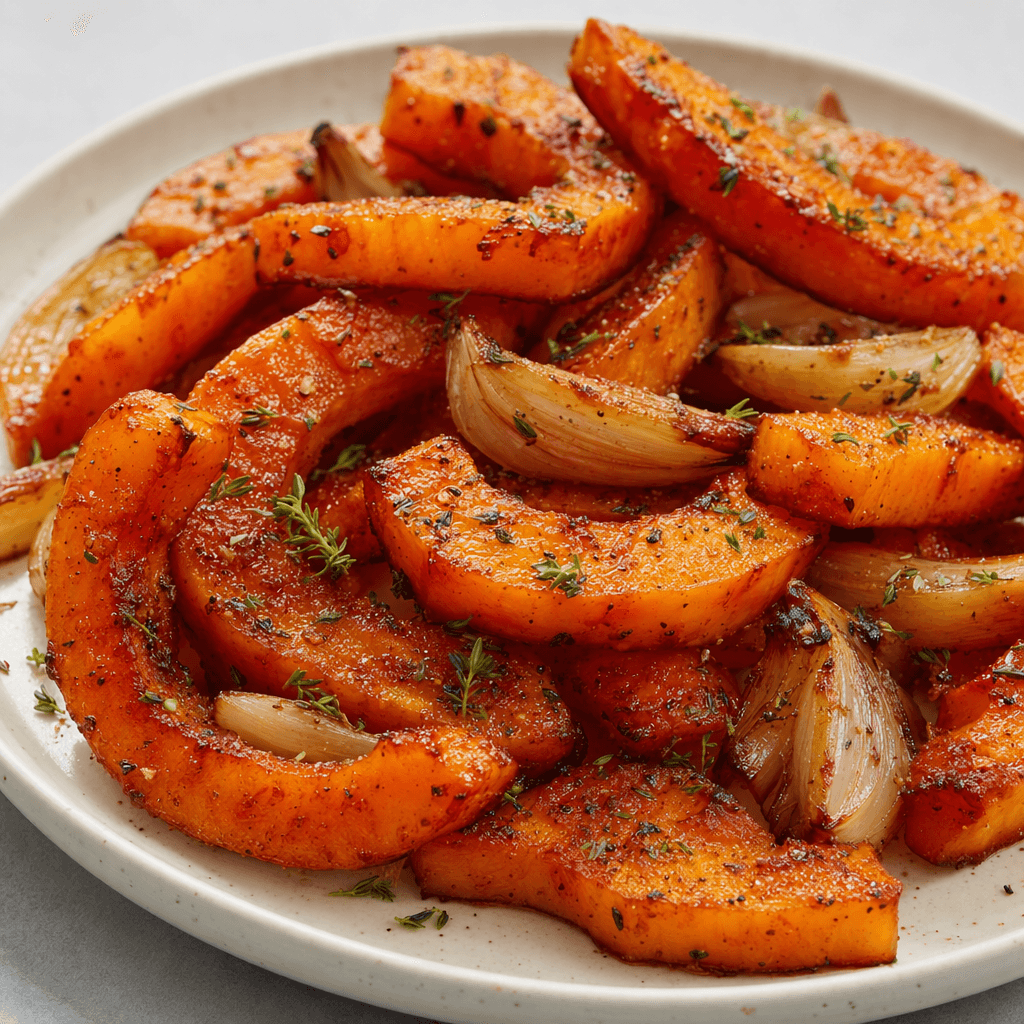
Sinkonta is an Aegean Turkish dish of pumpkin wedges baked with onion, garlic, olive oil and tomato paste. Recipes vary from home to home, with herbs or a little chilli sometimes added to the sauce.
The pumpkin turns tender and keeps a gentle sweetness, balanced by the savoury, softly browned onions and tangy tomato. It is often served warm or at room temperature as part of a meal, with bread or alongside other vegetable dishes. Pumpkin makes Sinkonta a fibre-containing, vegetable-centred choice; it provides 3.8 g of fibre per 100 g. For a lighter plate, use the oil sparingly and serve it with a fresh salad.
Sinkonta Nutrition Facts
Selected: 100 g
36
KCAL / 100G
Carbs
6.1g
· 2% DV
Protein
2.7g
· 5% DV
Fat
0.4g
· 1% DV
Fiber
3.8g
· 14% DV
DV is the share of the daily value covered, on a 2,000 kcal reference diet.
Calories come from: Carbs 63% · Protein 28% · Fat 9%
Sinkonta Vitamins & Minerals
Vitamins
Vitamin K
250µg · 208% DV
Vitamin A
420µg · 47% DV
Vitamin C
30mg · 33% DV
Folate
54µg · 14% DV
Minerals
Calcium
120mg · 12% DV
Iron
2mg · 11% DV
Potassium ⭐
380mg · 11% DV
Magnesium
38mg · 9% DV
How Nutritious Is Sinkonta?
Nutrient density
Very high
How many vitamins, minerals and how much fiber this food carries per calorie. A high score means a lot of nutrition for few calories.
Satiety score
Medium
An EatBetter score computed from fiber, protein and calorie density. A high score means staying full longer on the same calories.
Both scores are calculated per 100 g and do not change with the selected portion. The satiety score is EatBetter's own calculation, not a clinical measure.
Sinkonta Glycemic Index
GLYCEMIC INDEX
GLYCEMIC LOAD
Accounts for portion size — a more realistic measure than GI alone.
How to Burn Off Sinkonta
To burn the 36 calories in 100 g:
🚶
Walking (5 km/h)
🏃
Running (8 km/h)
🚴
Cycling
🏊
Swimming
Times are calculated with the MET equation for a 70 kg adult. Actual burn varies with your weight, age and pace.
Is Sinkonta Processed?
NOVA 1
Unprocessed
1. Unprocessed
2. Minimally Processed
3. Processed
4. Ultra-Processed
NOVA classifies foods into 4 groups by industrial processing. NOVA 1 (unprocessed) is the healthiest.
Does Sinkonta Contain Allergens?
No known major allergens
Which Diets Is Sinkonta Good For?
Vegan
✓ Suitable
Vegetarian
✓ Suitable
Gluten-Free
✓ Suitable
Dairy-Free
— Not suitable
Mediterranean
✓ Suitable
Paleo
✓ Suitable
Whole30
— Not suitable
DASH
— Not suitable
Keto
— Not suitable
Low FODMAP
— Not suitable
Sinkonta Fat Profile
SATURATED
0.06g
MONOUNSATURATED
0.03g
POLYUNSATURATED
0.07g
Omega 6:3 ratio 0.5:1
Below the ideal 4:1 — a good omega balance.
Compare Sinkonta
Foods Similar to Sinkonta
Frequently Asked Questions About Sinkonta
What is Sinkonta?
Sinkonta is a Turkish baked pumpkin dish, commonly made with onion, garlic, olive oil and a seasoned tomato-based sauce. The pumpkin is usually cut into wedges or chunks and cooked until tender, with household recipes varying in seasoning.
How do you make Sinkonta?
To make Sinkonta, arrange pumpkin pieces with sliced onion and garlic, coat them with olive oil and a seasoned sauce, then bake until tender. Keep the pieces in a single layer so they cook evenly and the sauce can reduce.
What does Sinkonta taste like?
Sinkonta tastes savory and gently sweet, with the pumpkin balanced by softened onion and a tangy, spiced sauce. Its texture is soft rather than crisp, especially when the pumpkin is baked until very tender.
Is Sinkonta the same as Turkish pumpkin stew?
Sinkonta is a particular Turkish pumpkin preparation, often baked with onion and sauce, while “pumpkin stew” can describe many unrelated recipes. Some cooks make sinkonta on the stovetop, but the baked version is especially common.
Can you make Sinkonta with butternut squash?
Yes, butternut squash can stand in for the pumpkin in Sinkonta because it holds its shape and has a similarly sweet, orange flesh. Cut it into evenly sized pieces and start checking for tenderness before the sauce dries out.
Why does Sinkonta turn watery?
Sinkonta can turn watery when the pumpkin releases moisture faster than the sauce can reduce, or when the baking dish is crowded. Use a wide dish, avoid adding excess liquid, and uncover it toward the end if the sauce needs thickening.
Is Sinkonta served as a main dish or a side?
Sinkonta can be served either way. It works as a vegetable side alongside grains or another main, and can make a simple meal with bread, yogurt, or beans; Turkish home menus often serve it as part of a shared table.
Can you make Sinkonta without tomato paste?
Yes, Sinkonta can be made without tomato paste. The dish will have a lighter, less tangy sauce, so season the pumpkin and onion well with olive oil, garlic, and spices, and add a little lemon if you want extra brightness.
How should you reheat Sinkonta?
Reheat Sinkonta gently in a covered pan or in the oven until hot throughout. Add a small splash of water if the sauce has thickened too much, and avoid vigorous stirring because the cooked pumpkin can break apart.
Can Sinkonta be frozen?
Sinkonta can be frozen, although the pumpkin may become softer and release extra moisture after thawing. Freeze it in meal-sized airtight containers, thaw it in the refrigerator, and reheat gently; the texture is best when freshly cooked.
Have another question about Sinkonta?
Ask the AI nutrition coach — calories, portions, alternatives and more, answered in seconds in the app.

Scan calories with your camera
Instant AI nutrition analysis

Nutrition data compiled from USDA FoodData Central and scientific sources.