

Ready & Packaged Foods
All →Vegetables & Legumes
All →Desserts & Confectionery
All →Meat & Protein
All →Grains & Bakery
All →Beverages
All →Milk & Dairy
All →

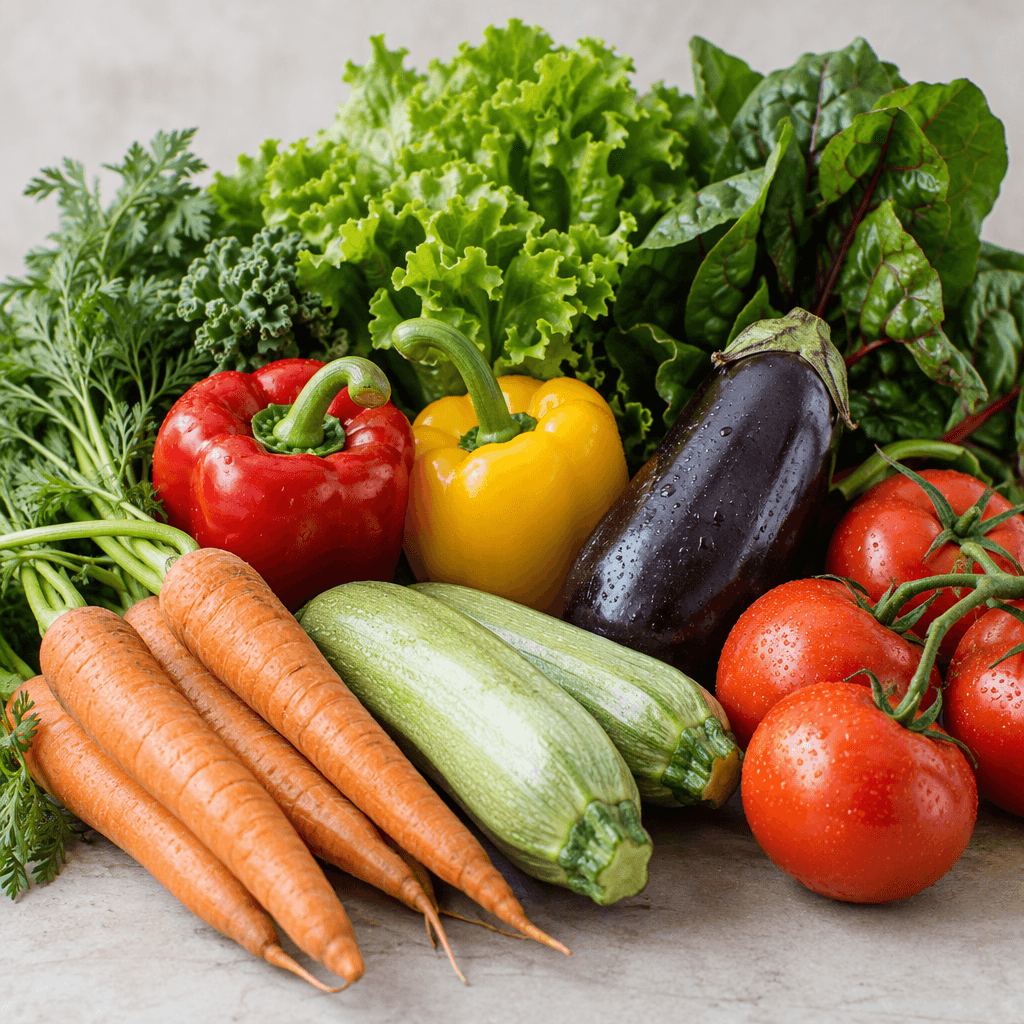
Seasonal vegetables Calories
Rich in vitamins and minerals, low calorie, high fiber
In season: Spring · Summer · Autumn · Winter
CALORIES
GI
POTASSIUM
FIBER
Quick answer
1 cup (medium) of Seasonal vegetables (90 g) has 32 calories. That works out to 35 calories per 100 g. It contains 5.6 g of carbs, 1.5 g of protein, 0.3 g of fat and 2.5 g of fiber. Its 288 µg of Vitamin A covers 32% of the Daily Value. Its glycemic index is 20 (low), so it raises blood sugar slowly.
What is Seasonal vegetables?
Seasonal vegetables are the fresh produce available at a particular time of year, rather than one fixed mix. The selection changes with place and climate; it might include leafy greens, peppers, carrots, eggplant, zucchini or tomatoes. Their flavours range from mild and earthy to sweet, while textures vary from tender leaves to firm, juicy vegetables. They can be eaten raw, roasted, simmered in soups and stews, or served as a side with grains, beans, fish or meat. They provide fibre and a range of vitamins and minerals, while remaining low in calories. For an easy meal, roast whatever is in season with a little oil and serve it with lentils or whole grains.
Seasonal vegetables Nutrition Facts
Selected: 100 g
35
KCAL / 100G
Carbs
6.2g
· 2% DV
Protein
1.7g
· 3% DV
Fat
0.3g
· 0% DV
Fiber
2.8g
· 10% DV
DV is the share of the daily value covered, on a 2,000 kcal reference diet.
Calories come from: Carbs 72% · Protein 20% · Fat 8%
Seasonal vegetables Vitamins & Minerals
Vitamins
Vitamin A
320µg · 36% DV
Vitamin K
38µg · 32% DV
Vitamin C
22mg · 24% DV
Folate
35µg · 9% DV
Minerals
Potassium ⭐
260mg · 8% DV
Iron
1mg · 6% DV
Phosphorus
32mg · 5% DV
Calcium
38mg · 4% DV
How Nutritious Is Seasonal vegetables?
Nutrient density
Very high
How many vitamins, minerals and how much fiber this food carries per calorie. A high score means a lot of nutrition for few calories.
Satiety score
Medium
An EatBetter score computed from fiber, protein and calorie density. A high score means staying full longer on the same calories.
Both scores are calculated per 100 g and do not change with the selected portion. The satiety score is EatBetter's own calculation, not a clinical measure.
Seasonal vegetables Glycemic Index
GLYCEMIC INDEX
GLYCEMIC LOAD
Accounts for portion size — a more realistic measure than GI alone.
How to Burn Off Seasonal vegetables
To burn the 35 calories in 100 g:
🚶
Walking (5 km/h)
🏃
Running (8 km/h)
🚴
Cycling
🏊
Swimming
Times are calculated with the MET equation for a 70 kg adult. Actual burn varies with your weight, age and pace.
Is Seasonal vegetables Processed?
NOVA 1
Unprocessed
1. Unprocessed
2. Minimally Processed
3. Processed
4. Ultra-Processed
NOVA classifies foods into 4 groups by industrial processing. NOVA 1 (unprocessed) is the healthiest.
Does Seasonal vegetables Contain Allergens?
No known major allergens
Which Diets Is Seasonal vegetables Good For?
Vegan
✓ Suitable
Vegetarian
✓ Suitable
Gluten-Free
✓ Suitable
Dairy-Free
— Not suitable
Mediterranean
✓ Suitable
Paleo
✓ Suitable
Whole30
— Not suitable
DASH
— Not suitable
Keto
— Not suitable
Low FODMAP
— Not suitable
Seasonal vegetables Fat Profile
SATURATED
0.05g
MONOUNSATURATED
0.02g
POLYUNSATURATED
0.09g
Omega 6:3 ratio 2:1
Below the ideal 4:1 — a good omega balance.
Compare Seasonal vegetables
Foods Similar to Seasonal vegetables
Frequently Asked Questions About Seasonal vegetables
What vegetables are in season right now?
Seasonal vegetables right now depend on your location and the current month. Check a local farmers’ market or seasonal produce calendar for your area; vegetables grown nearby and sold in abundance are often the best clues.
What vegetables are in season in winter?
Winter seasonal vegetables commonly include cabbage, Brussels sprouts, kale, leeks, cauliflower, and root vegetables such as carrots and parsnips. The exact list varies by climate, so local produce calendars can help you choose what is freshest near you.
What vegetables are in season in summer?
Summer seasonal vegetables often include tomatoes, peppers, zucchini, eggplant, cucumbers, and green beans. Their peak months vary by region, but they work well in salads, grilled dishes, and quick sautés when locally abundant.
Why should you eat seasonal vegetables?
Eating seasonal vegetables can make it easier to find locally grown produce at its freshest. Seasonal availability also brings variety to everyday meals, since the vegetables most abundant at markets change throughout the year.
How can you tell if vegetables are in season?
Seasonal vegetables are often plentiful at local markets, look fresh, and are offered by nearby growers. A seasonal produce calendar for your region is more reliable than a general worldwide list, because growing seasons differ with climate.
How should you store seasonal vegetables?
Store seasonal vegetables according to their type: keep most leafy greens and many other vegetables refrigerated, and keep potatoes and onions in a cool, dark, dry place. Avoid washing vegetables before storage unless you dry them thoroughly.
Can you freeze seasonal vegetables?
Yes, many seasonal vegetables freeze well. Wash, trim, and cut them first; blanching most vegetables briefly and cooling them quickly helps preserve their color and texture. Tomatoes can also be frozen for later use in cooked sauces and soups.
Should seasonal vegetables be eaten raw or cooked?
Seasonal vegetables can be eaten raw or cooked, depending on the vegetable and the dish. Leafy greens, peppers, and tomatoes suit salads, while eggplant and potatoes should be cooked. Wash vegetables under running water before eating or preparing them.
Are seasonal vegetables better than out-of-season vegetables?
Seasonal vegetables are often fresher and more readily available locally, but out-of-season vegetables can still be nutritious and useful. Choose produce that is fresh and in good condition, whether it is locally grown, stored, or imported.
How can you use seasonal vegetables before they go bad?
Use seasonal vegetables that are nearing the end of their freshness in soups, stews, frittatas, or roasted vegetable trays. Cooked leftovers can be refrigerated promptly and used in another meal, while suitable vegetables can be blanched and frozen.
Have another question about Seasonal vegetables?
Ask the AI nutrition coach — calories, portions, alternatives and more, answered in seconds in the app.

Scan calories with your camera
Instant AI nutrition analysis

Nutrition data compiled from USDA FoodData Central and scientific sources.