

Ready & Packaged Foods
All →Vegetables & Legumes
All →Desserts & Confectionery
All →Meat & Protein
All →Grains & Bakery
All →Beverages
All →Milk & Dairy
All →

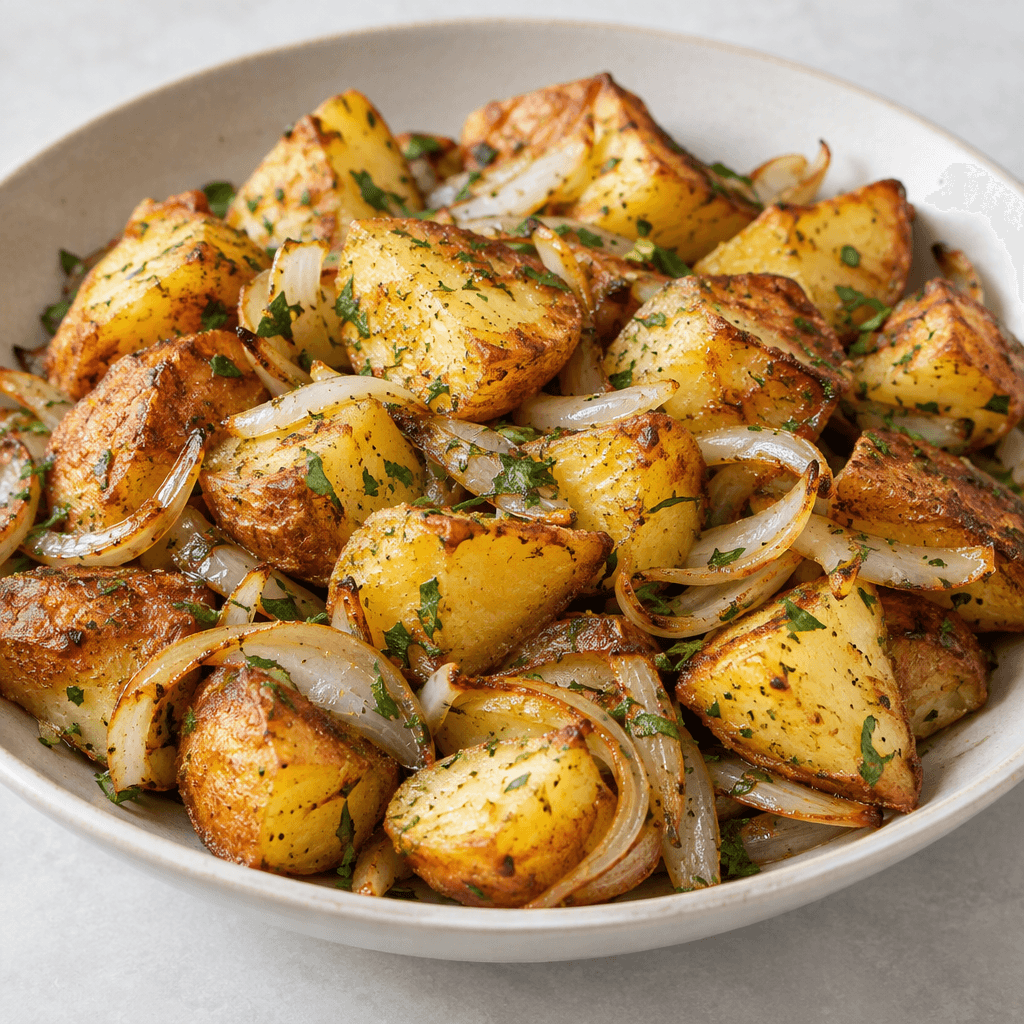
Sauteed Potato Calories
Lightly fried, sautéed potato; source of fiber and potassium
In season: Spring · Summer · Autumn · Winter
CALORIES
GI
POTASSIUM
FIBER
Quick answer
1 serving (medium) of Sauteed Potato (150 g) has 165 calories. That works out to 110 calories per 100 g. It contains 29.7 g of carbs, 3.2 g of protein, 4.8 g of fat and 3.3 g of fiber. Its 0.3 mg of B6 covers 19% of the Daily Value. Its glycemic index is 70 (high), so it raises blood sugar quickly.
What is Sauteed Potato?
Sauteed potato is a simple pan-cooked dish, made by turning potato pieces in a little oil until browned outside and tender within. In Turkish home cooking, it is often made with onion, with herbs or other vegetables added to taste; versions vary from kitchen to kitchen.
Serve it as a side with eggs at breakfast or alongside a main meal, or enjoy it with a salad for a lighter plate. Its nutritional profile is mainly carbohydrate, with some fibre and potassium. Using a modest amount of oil keeps the dish lighter, while onion and fresh herbs add flavour without making it feel heavy.
Sauteed Potato Nutrition Facts
Selected: 100 g
110
KCAL / 100G
Carbs
19.8g
· 7% DV
Protein
2.1g
· 4% DV
Fat
3.2g
· 4% DV
Fiber
2.2g
· 8% DV
DV is the share of the daily value covered, on a 2,000 kcal reference diet.
Calories come from: Carbs 68% · Protein 7% · Fat 25%
Sauteed Potato Vitamins & Minerals
Vitamins
B6
0.22mg · 13% DV
Vitamin C
10mg · 11% DV
B1
0.08mg · 7% DV
B3
1.1mg · 7% DV
Minerals
Potassium ⭐
390mg · 11% DV
Phosphorus
44mg · 6% DV
Magnesium
22mg · 5% DV
Calcium
10mg · 1% DV
How Nutritious Is Sauteed Potato?
Nutrient density
Medium
How many vitamins, minerals and how much fiber this food carries per calorie. A high score means a lot of nutrition for few calories.
Satiety score
Medium
An EatBetter score computed from fiber, protein and calorie density. A high score means staying full longer on the same calories.
Both scores are calculated per 100 g and do not change with the selected portion. The satiety score is EatBetter's own calculation, not a clinical measure.
Sauteed Potato Glycemic Index
GLYCEMIC INDEX
GLYCEMIC LOAD
Accounts for portion size — a more realistic measure than GI alone.
How to Burn Off Sauteed Potato
To burn the 110 calories in 100 g:
🚶
Walking (5 km/h)
🏃
Running (8 km/h)
🚴
Cycling
🏊
Swimming
Times are calculated with the MET equation for a 70 kg adult. Actual burn varies with your weight, age and pace.
Is Sauteed Potato Processed?
NOVA 2
Minimally Processed
1. Unprocessed
2. Minimally Processed
3. Processed
4. Ultra-Processed
NOVA classifies foods into 4 groups by industrial processing. NOVA 1 (unprocessed) is the healthiest.
Does Sauteed Potato Contain Allergens?
No known major allergens
Which Diets Is Sauteed Potato Good For?
Vegan
✓ Suitable
Vegetarian
✓ Suitable
Gluten-Free
✓ Suitable
Dairy-Free
— Not suitable
Mediterranean
✓ Suitable
Paleo
✓ Suitable
Whole30
— Not suitable
DASH
— Not suitable
Keto
— Not suitable
Low FODMAP
— Not suitable
Sauteed Potato Fat Profile
SATURATED
0.7g
MONOUNSATURATED
1.2g
POLYUNSATURATED
1g
Omega 6:3 ratio 32:1
Above the ideal 4:1 (32:1).
Compare Sauteed Potato
Foods Similar to Sauteed Potato
Frequently Asked Questions About Sauteed Potato
How do you make sautéed potatoes?
To make sautéed potatoes, cut potatoes into evenly sized pieces and cook them in a little oil over medium heat, turning occasionally. Add onion or herbs if you like, and cook until the pieces are tender inside and browned outside.
What should you serve with sautéed potatoes?
Sautéed potatoes go well with eggs, grilled meat or fish, and a crisp salad. For a simple meal, serve them with a dip such as yogurt sauce; their browned edges also make them a popular side for breakfast.
Which potatoes are best for sautéed potatoes?
Waxy or all-purpose potatoes usually work best for sautéed potatoes because they hold their shape in the pan. Very starchy potatoes can break apart more easily, so cut the pieces evenly and handle them gently as they cook.
Do you need to boil potatoes before making sautéed potatoes?
No, you do not have to boil potatoes before making sautéed potatoes. Small, evenly cut pieces can cook through in the pan with the lid on; parboiling is useful when you want a shorter cooking time or especially crisp edges.
Why do sautéed potatoes fall apart?
Sautéed potatoes can fall apart if the potatoes are very starchy, cut too small, or stirred too often. Use firm potatoes, leave the pieces fairly large, and let them brown before turning them so they keep their shape.
How do you keep sautéed potatoes from sticking to the pan?
To keep sautéed potatoes from sticking, preheat the pan, coat the pieces lightly with oil, and avoid crowding them. Let the first side brown before turning; cook in batches if the pan is too full.
How long do sautéed potatoes take to cook?
Sautéed potatoes usually take about 15–25 minutes, depending on the size of the pieces and the heat. They are ready when a fork slides into the center easily and the outside has browned; larger chunks take longer.
Can you make sautéed potatoes with onions?
Yes, onions are a common addition to sautéed potatoes. Soften sliced onion in the pan first, then add the potatoes so the onion has time to cook without burning. Garlic, peppers, and fresh herbs also work well.
Can you reheat leftover sautéed potatoes?
Yes, reheat leftover sautéed potatoes in a covered container in the refrigerator and use them within a few days. Warm them in a skillet with a little oil to bring back some crispness; a microwave will make them softer.
Are sautéed potatoes healthy?
Sautéed potatoes can fit into a balanced meal, especially when cooked with a modest amount of oil and served with vegetables and a protein source. The amount of oil and the portion size affect how substantial the dish is.
Have another question about Sauteed Potato?
Ask the AI nutrition coach — calories, portions, alternatives and more, answered in seconds in the app.

Scan calories with your camera
Instant AI nutrition analysis

Nutrition data compiled from USDA FoodData Central and scientific sources.