

Ready & Packaged Foods
All →Vegetables & Legumes
All →Desserts & Confectionery
All →Meat & Protein
All →Grains & Bakery
All →Beverages
All →Milk & Dairy
All →

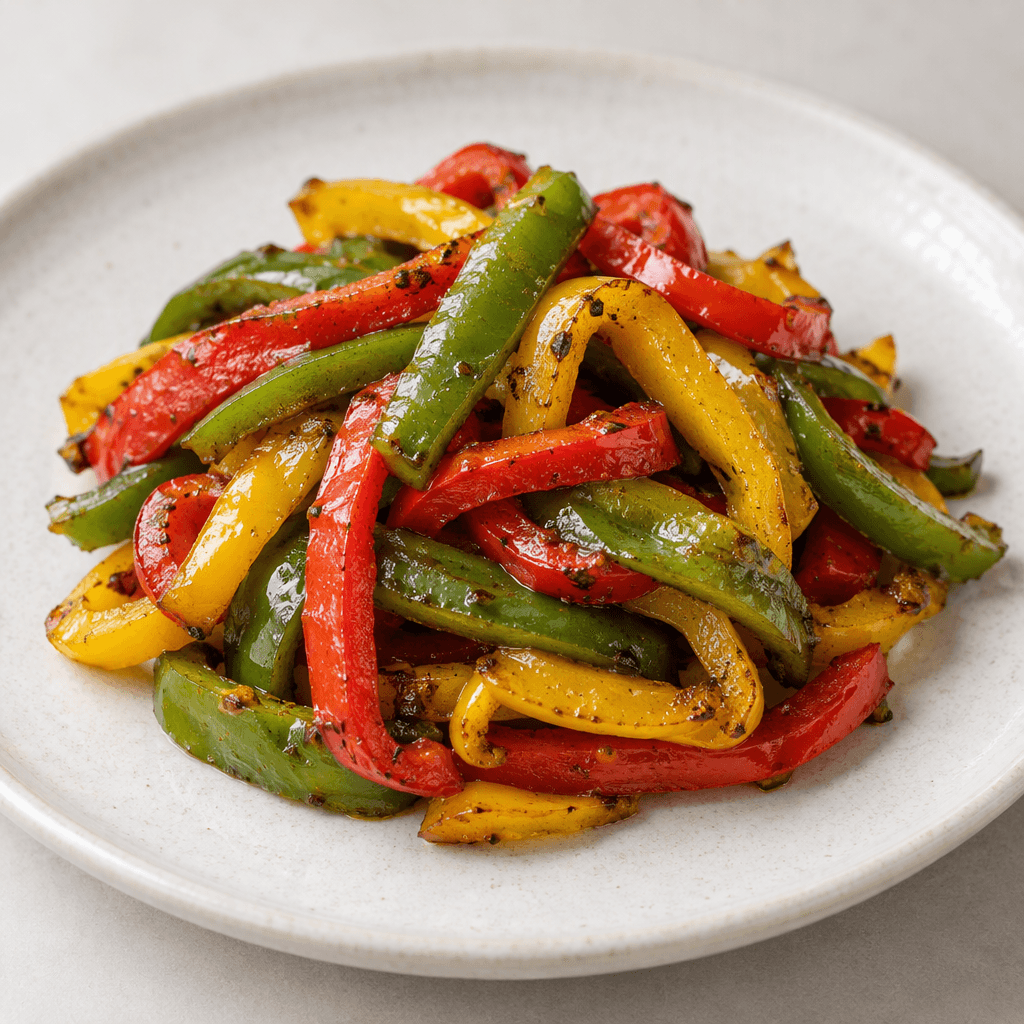
Sauteed pepper Calories
Peppers sautéed in oil, low calorie, rich in vitamin C.
In season: Summer · Autumn
CALORIES
GI
POTASSIUM
FIBER
Quick answer
100 g of Sauteed pepper has 55 calories. It contains 7.8 g of carbs, 1.1 g of protein, 2.2 g of fat and 2.6 g of fiber. Its 95 mg of Vitamin C covers 106% of the Daily Value. Its glycemic index is 35 (low), so it raises blood sugar slowly.
What is Sauteed pepper?
Biber kavurması is a Turkish home-style dish of peppers cooked in a pan with a little oil until softened and lightly browned. Green peppers are common, though a mix of colours works well. The peppers turn glossy and tender, with a gently sweet flavour and occasional browned edges.
In Turkey, it can accompany eggs and cheese at breakfast, or be served with bread and yoghurt as part of a simple lunch or dinner; it also fits on a meze table. It is a light vegetable side, with some fibre and vitamin C. Use just enough oil to coat the pan, and cook in batches if needed so the peppers brown rather than steam.
Sauteed pepper Nutrition Facts
Selected: 100 g
55
KCAL / 100G
Carbs
7.8g
· 3% DV
Protein
1.1g
· 2% DV
Fat
2.2g
· 3% DV
Fiber
2.6g
· 9% DV
DV is the share of the daily value covered, on a 2,000 kcal reference diet.
Calories come from: Carbs 56% · Protein 8% · Fat 36%
Sauteed pepper Vitamins & Minerals
Vitamins
Vitamin C
95mg · 106% DV
Vitamin A
157µg · 17% DV
B6
0.29mg · 17% DV
Vitamin E
1.6mg · 11% DV
Minerals
Iron
1mg · 6% DV
Potassium ⭐
175mg · 5% DV
Magnesium
15mg · 4% DV
Phosphorus
23mg · 3% DV
How Nutritious Is Sauteed pepper?
Nutrient density
High
How many vitamins, minerals and how much fiber this food carries per calorie. A high score means a lot of nutrition for few calories.
Satiety score
Medium
An EatBetter score computed from fiber, protein and calorie density. A high score means staying full longer on the same calories.
Both scores are calculated per 100 g and do not change with the selected portion. The satiety score is EatBetter's own calculation, not a clinical measure.
Sauteed pepper Glycemic Index
GLYCEMIC INDEX
GLYCEMIC LOAD
Accounts for portion size — a more realistic measure than GI alone.
How to Burn Off Sauteed pepper
To burn the 55 calories in 100 g:
🚶
Walking (5 km/h)
🏃
Running (8 km/h)
🚴
Cycling
🏊
Swimming
Times are calculated with the MET equation for a 70 kg adult. Actual burn varies with your weight, age and pace.
Is Sauteed pepper Processed?
NOVA 2
Minimally Processed
1. Unprocessed
2. Minimally Processed
3. Processed
4. Ultra-Processed
NOVA classifies foods into 4 groups by industrial processing. NOVA 1 (unprocessed) is the healthiest.
Does Sauteed pepper Contain Allergens?
No known major allergens
Which Diets Is Sauteed pepper Good For?
Vegan
✓ Suitable
Vegetarian
✓ Suitable
Gluten-Free
✓ Suitable
Dairy-Free
— Not suitable
Mediterranean
✓ Suitable
Paleo
✓ Suitable
Whole30
— Not suitable
DASH
— Not suitable
Keto
— Not suitable
Low FODMAP
— Not suitable
Sauteed pepper Fat Profile
SATURATED
0.3g
MONOUNSATURATED
1.1g
POLYUNSATURATED
0.22g
Omega 6:3 ratio 6:1
Above the ideal 4:1 (6:1).
Compare Sauteed pepper
Foods Similar to Sauteed pepper
Frequently Asked Questions About Sauteed pepper
How do you make sauteed peppers?
To make sauteed peppers, slice them and cook in a little oil in an open skillet, stirring occasionally, until tender with a few browned spots. Cooking uncovered helps them fry rather than steam in their own moisture.
Which peppers work best for sauteed peppers?
Bell peppers are a reliable choice for sauteed peppers, and mixing red, yellow, and green peppers gives a balance of sweetness and flavor. Thin-walled frying peppers also work well and soften more quickly.
How do you keep sauteed peppers from getting soggy?
Cook sauteed peppers in a wide, hot skillet without crowding it. Too many peppers release moisture faster than it can evaporate, so cook them in batches and leave the pan uncovered until the liquid is gone.
What seasonings go well with sauteed peppers?
Garlic, black pepper, paprika, and dried oregano all pair well with sauteed peppers. Add garlic near the end of cooking so it becomes fragrant without burning, and finish with salt to bring out the peppers’ flavor.
Can you add onions to sauteed peppers?
Yes, onions make sauteed peppers sweeter and more savory. Start cooking sliced onions first, then add the peppers once the onions begin to soften, since onions usually need more time in the pan.
Can you freeze sauteed peppers?
Yes, you can freeze sauteed peppers, though they will be softer after thawing. Cool them completely, pack them in an airtight freezer container, and use them in cooked dishes such as pasta, soups, or omelets.
How long do sauteed peppers last in the fridge?
Sauteed peppers keep for about 3–4 days in a covered container in the refrigerator. Cool them promptly before storing, and reheat only the portion you plan to eat so the rest is not warmed repeatedly.
What can you serve with sauteed peppers?
Serve sauteed peppers with grilled chicken, fish, eggs, or crusty bread. They also work as a topping for grain bowls and sandwiches, where their soft texture and lightly browned flavor add a cooked vegetable element.
Can sauteed peppers be used as a sandwich topping?
Yes, sauteed peppers make a flavorful sandwich topping. Let them cool slightly and drain away excess oil or cooking liquid before adding them to bread; this helps keep the bread from becoming soggy.
Should you cover the pan when making sauteed peppers?
Usually, leave the pan uncovered when making sauteed peppers so moisture can escape and the edges can brown. Cover it briefly only if the peppers need help softening, then uncover the pan to cook off any collected liquid.
Have another question about Sauteed pepper?
Ask the AI nutrition coach — calories, portions, alternatives and more, answered in seconds in the app.

Scan calories with your camera
Instant AI nutrition analysis

Nutrition data compiled from USDA FoodData Central and scientific sources.