

Ready & Packaged Foods
All →Vegetables & Legumes
All →Desserts & Confectionery
All →Meat & Protein
All →Grains & Bakery
All →Beverages
All →Milk & Dairy
All →

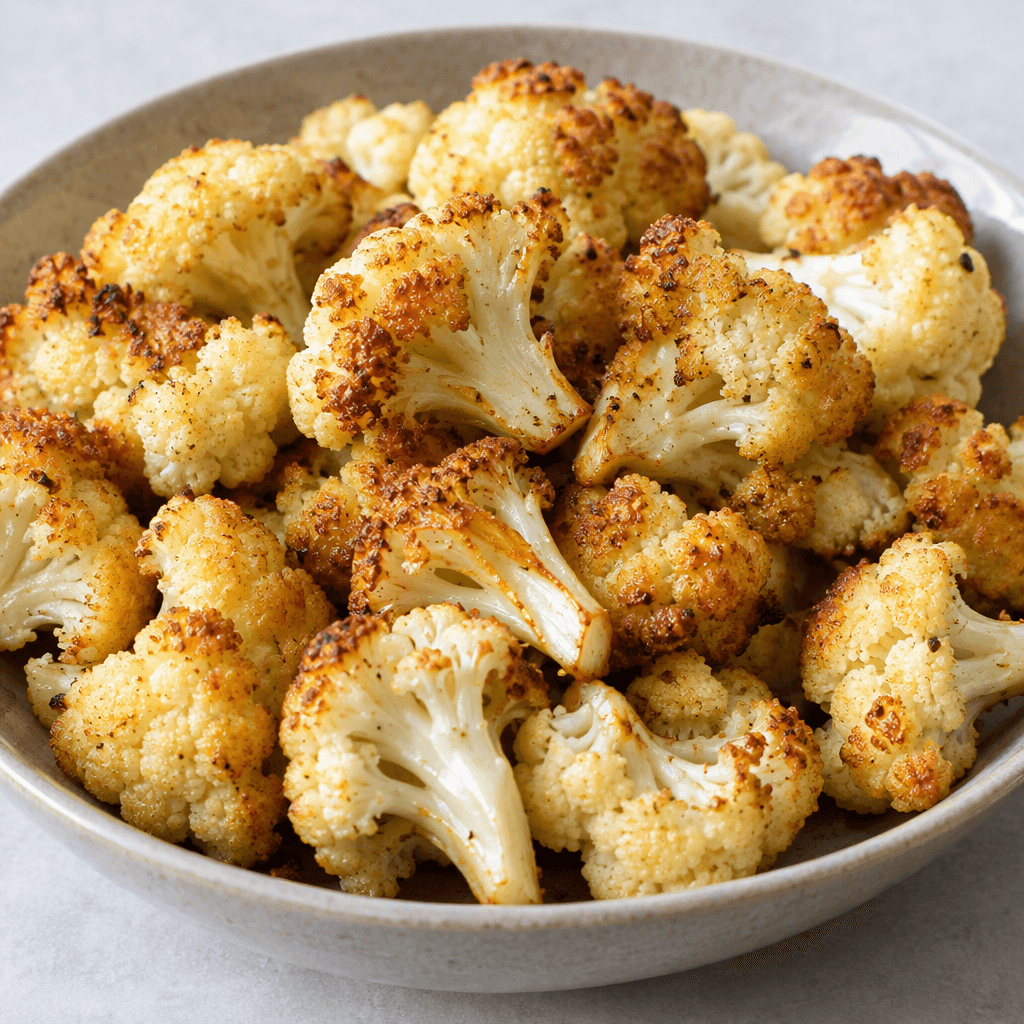
Sauteed Cauliflower Calories
Low calorie, source of fiber and vitamin C, lightly sautéed in oil
In season: Autumn · Winter · Spring
CALORIES
GI
POTASSIUM
FIBER
Quick answer
1 serving (medium) of Sauteed Cauliflower (120 g) has 54 calories. That works out to 45 calories per 100 g. It contains 7.8 g of carbs, 2.5 g of protein, 2 g of fat and 2.9 g of fiber. Its 57.6 mg of Vitamin C covers 64% of the Daily Value. Its glycemic index is 15 (low), so it raises blood sugar slowly.
What is Sauteed Cauliflower?
Sauteed Cauliflower is made by cooking bite-sized cauliflower florets in a pan with a little oil until tender and lightly browned. It is a simple preparation rather than a dish tied to one particular region, and cauliflower is used in home cooking around the world. The quick pan-cooking keeps the florets’ mild, slightly nutty flavour at the centre.
Serve it warm as a side with grains, roasted vegetables or a main dish, or add a squeeze of lemon for brightness. The florets can be tender inside with lightly crisp edges. Cauliflower contributes fibre and vitamin C, while this preparation is relatively low in calories: it has 45 calories per 100 g. Use just enough oil to coat the florets if you want to keep the dish light.
Sauteed Cauliflower Nutrition Facts
Selected: 100 g
45
KCAL / 100G
Carbs
6.5g
· 2% DV
Protein
2.1g
· 4% DV
Fat
1.7g
· 2% DV
Fiber
2.4g
· 9% DV
DV is the share of the daily value covered, on a 2,000 kcal reference diet.
Calories come from: Carbs 52% · Protein 17% · Fat 31%
Sauteed Cauliflower Vitamins & Minerals
Vitamins
Vitamin C
48mg · 53% DV
B5
0.7mg · 14% DV
Folate
55µg · 14% DV
Vitamin K
16µg · 13% DV
Minerals
Potassium ⭐
300mg · 9% DV
Iron
1mg · 6% DV
Phosphorus
44mg · 6% DV
Magnesium
15mg · 4% DV
How Nutritious Is Sauteed Cauliflower?
Nutrient density
Very high
How many vitamins, minerals and how much fiber this food carries per calorie. A high score means a lot of nutrition for few calories.
Satiety score
Medium
An EatBetter score computed from fiber, protein and calorie density. A high score means staying full longer on the same calories.
Both scores are calculated per 100 g and do not change with the selected portion. The satiety score is EatBetter's own calculation, not a clinical measure.
Sauteed Cauliflower Glycemic Index
GLYCEMIC INDEX
GLYCEMIC LOAD
Accounts for portion size — a more realistic measure than GI alone.
How to Burn Off Sauteed Cauliflower
To burn the 45 calories in 100 g:
🚶
Walking (5 km/h)
🏃
Running (8 km/h)
🚴
Cycling
🏊
Swimming
Times are calculated with the MET equation for a 70 kg adult. Actual burn varies with your weight, age and pace.
Is Sauteed Cauliflower Processed?
NOVA 2
Minimally Processed
1. Unprocessed
2. Minimally Processed
3. Processed
4. Ultra-Processed
NOVA classifies foods into 4 groups by industrial processing. NOVA 1 (unprocessed) is the healthiest.
Does Sauteed Cauliflower Contain Allergens?
No known major allergens
Which Diets Is Sauteed Cauliflower Good For?
Vegan
✓ Suitable
Vegetarian
✓ Suitable
Gluten-Free
✓ Suitable
Dairy-Free
— Not suitable
Mediterranean
✓ Suitable
Paleo
✓ Suitable
Whole30
— Not suitable
DASH
— Not suitable
Keto
— Not suitable
Low FODMAP
— Not suitable
Sauteed Cauliflower Fat Profile
SATURATED
0.3g
MONOUNSATURATED
0.6g
POLYUNSATURATED
0.2g
Omega 6:3 ratio 7:1
Above the ideal 4:1 (7:1).
Compare Sauteed Cauliflower
Foods Similar to Sauteed Cauliflower
Frequently Asked Questions About Sauteed Cauliflower
How do you make sauteed cauliflower?
Cut cauliflower into similar-sized florets, pat them dry, and cook them in a lightly oiled, hot skillet, turning occasionally. Use a roomy pan so the florets brown instead of steaming, and stop cooking when they are tender but still hold their shape.
Do you need to boil cauliflower before making sauteed cauliflower?
No, you do not need to boil cauliflower first for sauteed cauliflower. Small florets cook directly in the skillet and are less likely to turn mushy. A brief pre-cook can speed things up, but drain and dry the cauliflower well before sauteing.
How long does sauteed cauliflower take to cook?
Sauteed cauliflower is ready when a fork enters a floret easily but the pieces still hold their shape. Cooking time varies with floret size and pan heat, so check a piece as it cooks rather than relying on a fixed timer.
How do you keep sauteed cauliflower from getting soggy?
Keep sauteed cauliflower from getting soggy by drying the florets, using a wide skillet, and avoiding overcrowding. Cook over medium to medium-high heat and turn the pieces occasionally rather than constantly; trapped steam and excess stirring soften them.
What seasonings taste good on sauteed cauliflower?
Black pepper, garlic, paprika, cumin, and dried herbs all work well with sauteed cauliflower. Add garlic and delicate herbs toward the end so they do not burn, then finish with lemon juice or chopped parsley for a brighter flavor.
Can you make sauteed cauliflower with frozen cauliflower?
Yes, frozen cauliflower can be used for sauteed cauliflower, but thaw and drain it first to remove excess moisture. Pat the florets dry and cook them in a hot, uncrowded skillet; they may become softer than fresh cauliflower.
What can you serve with sauteed cauliflower?
Serve sauteed cauliflower with roasted chicken, fish, beans, or a grain such as rice or quinoa. It also works as a vegetable side alongside a main dish, while a dip or salad can make it part of a lighter meal.
How should you store leftover sauteed cauliflower?
Store leftover sauteed cauliflower in a covered container in the refrigerator and eat it within about three days. Let it cool without leaving it out for an extended time, and reheat only the portion you plan to serve.
Can you freeze sauteed cauliflower?
Yes, you can freeze sauteed cauliflower, though it will usually be softer after thawing. Cool it first, pack it in an airtight freezer-safe container, and use the thawed pieces in soups, frittatas, or other cooked dishes where crispness is less important.
Is sauteed cauliflower a healthy side dish?
Yes, sauteed cauliflower can be a nutritious vegetable side: it provides fiber and vitamin C, and a light saute uses less oil than deep-frying. Pair it with a protein-rich food or whole grain to make a more complete meal.
Have another question about Sauteed Cauliflower?
Ask the AI nutrition coach — calories, portions, alternatives and more, answered in seconds in the app.

Scan calories with your camera
Instant AI nutrition analysis

Nutrition data compiled from USDA FoodData Central and scientific sources.