

Ready & Packaged Foods
All →Vegetables & Legumes
All →Desserts & Confectionery
All →Meat & Protein
All →Grains & Bakery
All →Beverages
All →Milk & Dairy
All →

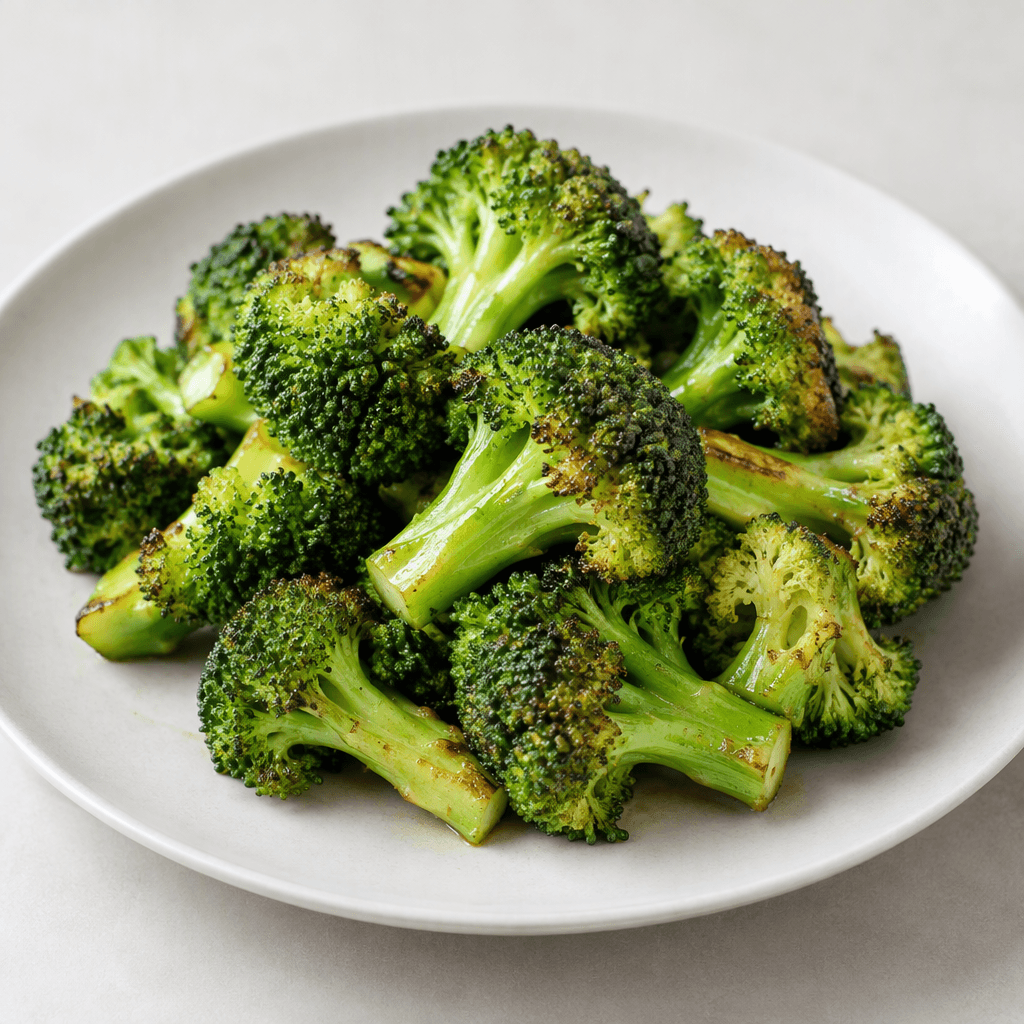
Sauteed broccoli Calories
High in fiber and vitamin C, low calorie, antioxidant
In season: Autumn · Winter · Spring
CALORIES
GI
POTASSIUM
FIBER
Quick answer
100 g of Sauteed broccoli has 42 calories. It contains 7.2 g of carbs, 3.1 g of protein, 0.7 g of fat and 3.3 g of fiber. Its 102 µg of Vitamin K covers 85% of the Daily Value. Its glycemic index is 15 (low), so it raises blood sugar slowly.
What is Sauteed broccoli?
Sauteed broccoli is made by cooking broccoli florets and tender stem pieces briefly in a little oil. It is a simple preparation rather than a dish tied to one particular region, and works well as an everyday vegetable side.
The florets stay pleasantly firm while the cut edges can turn lightly browned, bringing out broccoli’s mild, slightly sweet flavour. Serve it warm alongside grilled fish, meat, beans or grains, or toss it through pasta for an easy meal. It is a notably high-fibre, vitamin C-rich choice; a 100 g serving has 42 calories. Use just enough oil to coat the pan if you want to keep the side dish light.
Sauteed broccoli Nutrition Facts
Selected: 100 g
42
KCAL / 100G
Carbs
7.2g
· 3% DV
Protein
3.1g
· 6% DV
Fat
0.7g
· 1% DV
Fiber
3.3g
· 12% DV
DV is the share of the daily value covered, on a 2,000 kcal reference diet.
Calories come from: Carbs 61% · Protein 26% · Fat 13%
Sauteed broccoli Vitamins & Minerals
Vitamins
Vitamin K
102µg · 85% DV
Vitamin C
65mg · 72% DV
Folate
63µg · 16% DV
B5
0.56mg · 11% DV
Minerals
Zinc
1mg · 9% DV
Phosphorus
66mg · 9% DV
Potassium ⭐
316mg · 9% DV
Iron
1mg · 6% DV
How Nutritious Is Sauteed broccoli?
Nutrient density
Very high
How many vitamins, minerals and how much fiber this food carries per calorie. A high score means a lot of nutrition for few calories.
Satiety score
Medium
An EatBetter score computed from fiber, protein and calorie density. A high score means staying full longer on the same calories.
Both scores are calculated per 100 g and do not change with the selected portion. The satiety score is EatBetter's own calculation, not a clinical measure.
Sauteed broccoli Glycemic Index
GLYCEMIC INDEX
GLYCEMIC LOAD
Accounts for portion size — a more realistic measure than GI alone.
How to Burn Off Sauteed broccoli
To burn the 42 calories in 100 g:
🚶
Walking (5 km/h)
🏃
Running (8 km/h)
🚴
Cycling
🏊
Swimming
Times are calculated with the MET equation for a 70 kg adult. Actual burn varies with your weight, age and pace.
Is Sauteed broccoli Processed?
NOVA 2
Minimally Processed
1. Unprocessed
2. Minimally Processed
3. Processed
4. Ultra-Processed
NOVA classifies foods into 4 groups by industrial processing. NOVA 1 (unprocessed) is the healthiest.
Does Sauteed broccoli Contain Allergens?
No known major allergens
Which Diets Is Sauteed broccoli Good For?
Vegan
✓ Suitable
Vegetarian
✓ Suitable
Gluten-Free
✓ Suitable
Dairy-Free
— Not suitable
Mediterranean
✓ Suitable
Paleo
✓ Suitable
Whole30
— Not suitable
DASH
— Not suitable
Keto
✓ Suitable
Low FODMAP
— Not suitable
Sauteed broccoli Fat Profile
SATURATED
0.09g
MONOUNSATURATED
0.03g
POLYUNSATURATED
0.13g
Omega 6:3 ratio 0.3:1
Below the ideal 4:1 — a good omega balance.
Compare Sauteed broccoli
Foods Similar to Sauteed broccoli
Frequently Asked Questions About Sauteed broccoli
How do you make sauteed broccoli?
Cut the broccoli into bite-size florets and cook them in a lightly oiled hot pan, stirring often. Add a small splash of water and cover briefly if the stems need softening, then uncover so excess moisture evaporates. The broccoli is ready when bright green and fork-tender.
Do you need to blanch broccoli before making sauteed broccoli?
No, blanching is not necessary for sauteed broccoli. Small florets can cook directly in the pan, while larger pieces may need a splash of water and a brief covered cook. Blanching can speed things up, but it may make the broccoli too soft if you cook it again for long.
Can you make sauteed broccoli with frozen broccoli?
Yes, frozen broccoli works for sauteed broccoli, though it can release more water than fresh florets. Add it to a hot pan without overcrowding, let the moisture evaporate, and then stir in oil or seasonings. The finished broccoli may be softer and less browned than fresh broccoli.
Why does sauteed broccoli turn soggy?
Sauteed broccoli turns soggy when the pan is crowded, the florets are wet, or they cook covered for too long. Dry the broccoli well and cook it in batches so moisture can escape. Use the lid only briefly if needed to soften thick stems.
Can you use broccoli stems in sauteed broccoli?
Yes, broccoli stems work well in sauteed broccoli. Peel away the tough outer layer, slice the stem thinly, and add it to the pan before the florets because it takes longer to soften. The slices add a pleasantly crisp texture and help reduce food waste.
What seasonings go well with sauteed broccoli?
Garlic, black pepper, chili flakes, and lemon are reliable seasonings for sauteed broccoli. Add garlic near the end so it does not burn, and finish with lemon juice after taking the pan off the heat. Parmesan or toasted sesame seeds can also add a savory finish.
Can you make sauteed broccoli without oil?
Yes, you can make sauteed broccoli without oil by using a nonstick pan and adding small splashes of water as needed. The result will be softer and less browned than oil-cooked broccoli. Let the water evaporate before adding seasonings so the flavor does not become diluted.
How should you store leftover sauteed broccoli?
Cool leftover sauteed broccoli promptly and keep it in a covered container in the refrigerator. Use it within a few days for the best quality, and discard it if it has been left at room temperature for a prolonged period. Store it separately from sauces if you want to preserve its texture.
What is the best way to reheat sauteed broccoli?
Reheat sauteed broccoli briefly in a skillet over medium heat, stirring until hot; this helps evaporate excess moisture. A microwave also works, but can soften the florets more. Avoid reheating it repeatedly, since each round makes the broccoli less crisp.
What can you serve with sauteed broccoli?
Sauteed broccoli pairs well with grilled chicken, fish, tofu, eggs, or beans, and it makes an easy side for pasta or rice. Add lemon or a savory sauce to match the main dish. For a quick meal, combine it with a grain and a source of protein.
Have another question about Sauteed broccoli?
Ask the AI nutrition coach — calories, portions, alternatives and more, answered in seconds in the app.

Scan calories with your camera
Instant AI nutrition analysis

Nutrition data compiled from USDA FoodData Central and scientific sources.