

Ready & Packaged Foods
All →Vegetables & Legumes
All →Desserts & Confectionery
All →Meat & Protein
All →Grains & Bakery
All →Beverages
All →Milk & Dairy
All →

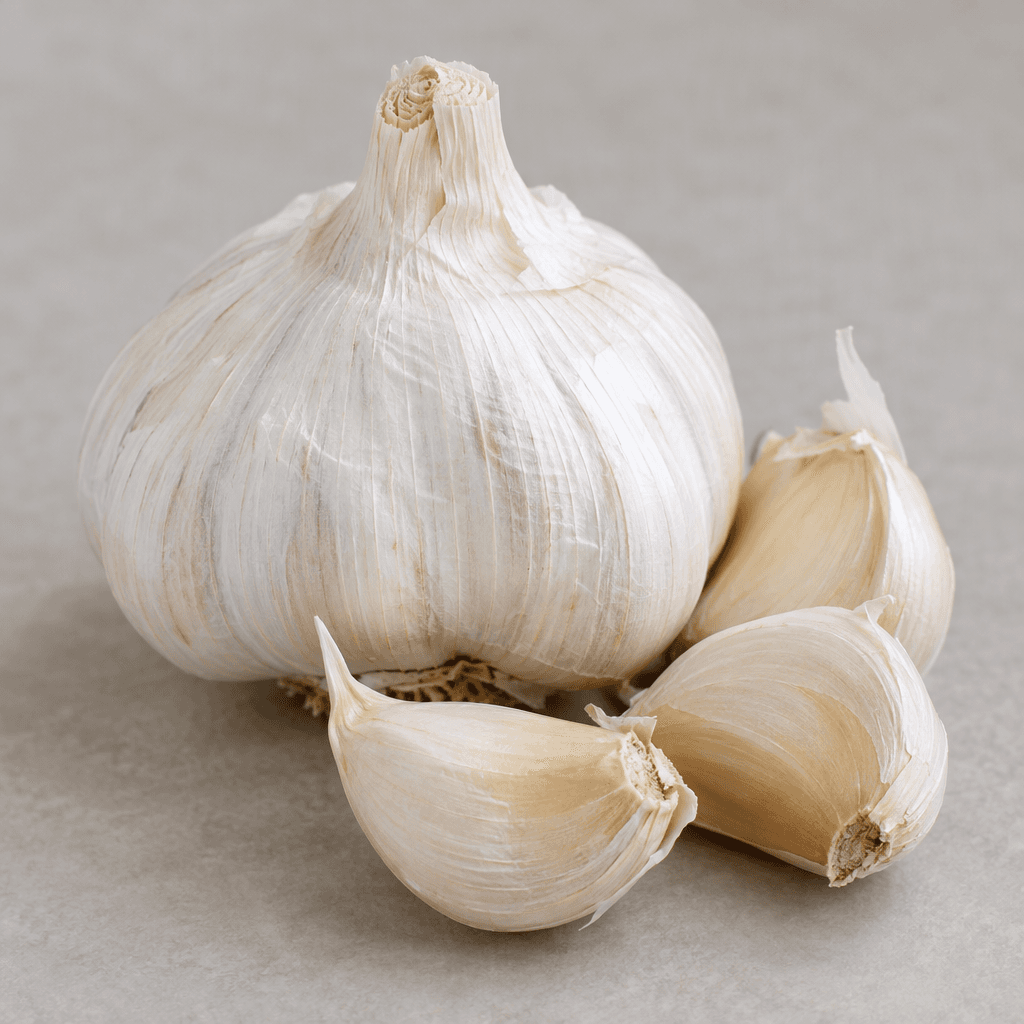
Garlic Calories
Antioxidant, immune booster, heart health benefits
In season: Spring · Summer · Autumn · Winter
CALORIES
GI
POTASSIUM
FIBER
Quick answer
1 piece (medium) of Garlic (5 g) has 7 calories. That works out to 149 calories per 100 g. It contains 1.7 g of carbs, 0.3 g of protein, 0 g of fat and 0.1 g of fiber. Its glycemic index is 30 (low), so it raises blood sugar slowly.
What is Garlic?
Garlic is a bulb made up of separate cloves, each wrapped in a thin skin. Peel and chop, crush or slice the cloves to season food; they can also be roasted whole or eaten raw in sauces and dressings.
Its sharp, savoury bite mellows and becomes sweeter with cooking. Across many cuisines, garlic starts soups, stews, sauces and sautés, while raw garlic adds punch to dips, dressings and marinades. It is mainly a flavouring rather than a substantial part of a meal: it contains carbohydrates and fibre but very little fat, and is usually used in small amounts. For a gentler flavour, roast the cloves or cook them slowly; they pair especially well with olive oil, beans, vegetables and herbs.
Garlic Nutrition Facts
Selected: 100 g
149
KCAL / 100G
Carbs
33.1g
· 12% DV
Protein
6.4g
· 13% DV
Fat
0.5g
· 1% DV
Fiber
2.1g
· 8% DV
DV is the share of the daily value covered, on a 2,000 kcal reference diet.
Calories come from: Carbs 81% · Protein 16% · Fat 3%

Log this food in EatBetter
100,000+ people use it
- Get your daily calorie target
- Snap your meal, log it in seconds
- See every vitamin and mineral

📸 Scan the code to get the app free.

Garlic Vitamins & Minerals
Vitamins
B6
1.24mg · 73% DV
Vitamin C
31.2mg · 35% DV
B1
0.2mg · 17% DV
B5
0.6mg · 12% DV
Minerals
Manganese
2mg · 87% DV
Selenium
14.2µg · 26% DV
Phosphorus
153mg · 22% DV
Potassium ⭐
401mg · 12% DV
Copper
0mg · 0% DV
How Nutritious Is Garlic?
Nutrient density
High
How many vitamins, minerals and how much fiber this food carries per calorie. A high score means a lot of nutrition for few calories.
Satiety score
Medium
An EatBetter score computed from fiber, protein and calorie density. A high score means staying full longer on the same calories.
Both scores are calculated per 100 g and do not change with the selected portion. The satiety score is EatBetter's own calculation, not a clinical measure.
Garlic Glycemic Index
GLYCEMIC INDEX
GLYCEMIC LOAD
Accounts for portion size — a more realistic measure than GI alone.
How to Burn Off Garlic
To burn the 149 calories in 100 g:
🚶
Walking (5 km/h)
🏃
Running (8 km/h)
🚴
Cycling
🏊
Swimming
Times are calculated with the MET equation for a 70 kg adult. Actual burn varies with your weight, age and pace.
Is Garlic Processed?
NOVA 1
Unprocessed
1. Unprocessed
2. Minimally Processed
3. Processed
4. Ultra-Processed
NOVA classifies foods into 4 groups by industrial processing. NOVA 1 (unprocessed) is the healthiest.
Does Garlic Contain Allergens?
No known major allergens
Which Diets Is Garlic Good For?
Vegan
✓ Suitable
Vegetarian
✓ Suitable
Gluten-Free
✓ Suitable
Dairy-Free
— Not suitable
Mediterranean
✓ Suitable
Paleo
✓ Suitable
Whole30
— Not suitable
DASH
— Not suitable
Keto
✓ Suitable
Low FODMAP
— Not suitable
Garlic Fat Profile
SATURATED
0.09g
MONOUNSATURATED
0.01g
POLYUNSATURATED
0.09g
Omega 6:3 ratio 4.5:1
Above the ideal 4:1 (4.5:1).
Compare Garlic
Foods Similar to Garlic
Frequently Asked Questions About Garlic
How should you store garlic?
Store whole garlic bulbs in a cool, dry, well-ventilated place, away from direct sunlight. Avoid sealed plastic bags and damp areas, which can encourage mold. Once peeled, refrigerate the cloves in a covered container and use them soon.
How do you peel garlic quickly?
Separate the cloves, then press each one gently with the flat side of a knife; the loosened skin comes off easily. For several cloves, shake them in a covered container for a short time, then remove the loosened papery skins.
Can you eat sprouted garlic?
Yes, sprouted garlic is generally safe to eat if the cloves are firm and free of mold. The green shoot can taste bitter, so remove it if you prefer a milder flavor. Discard cloves that are soft, moldy, or smell bad.
Why does garlic turn blue or green?
Garlic can turn blue or green when its natural sulfur compounds react with acids or certain metals during cooking or pickling. The color alone does not mean it has spoiled; discard it if it is moldy, soft, or has an unpleasant smell.
Is raw or cooked garlic healthier?
Raw garlic retains more of some sulfur compounds that can decrease with cooking, while cooked garlic has a milder, sweeter taste. Crushing garlic and letting it stand briefly before cooking gives those compounds time to form.
How do you get garlic smell off your hands?
Rub your hands with lemon juice or a little vinegar, then wash them with soap and water to reduce garlic odor. Rubbing your fingers on a stainless-steel surface under running water is another commonly used trick, though results can vary.
How do you get rid of garlic breath?
Brush your teeth and tongue, drink water, and try chewing fresh parsley or mint to reduce garlic breath. Garlic’s sulfur compounds can linger beyond the mouth, so the odor may not disappear immediately even after brushing.
Can dogs eat garlic?
No, do not feed garlic to dogs; it can damage their red blood cells, and concentrated garlic products can be especially risky. If your dog has eaten garlic, contact a veterinarian promptly and share how much was eaten and when.
Can you freeze garlic?
Yes, you can freeze peeled garlic cloves, chopped garlic, or garlic purée in small portions for convenient cooking. The texture may soften after thawing, so frozen garlic works best in cooked dishes rather than recipes that rely on crisp, fresh garlic.
Does garlic lower blood pressure?
Garlic may contribute to a modest reduction in blood pressure for some people, but it is not a substitute for prescribed treatment. If you take blood-pressure medicine or blood thinners, ask your healthcare professional before using concentrated garlic supplements.
Have another question about Garlic?
Ask the AI nutrition coach — calories, portions, alternatives and more, answered in seconds in the app.

Scan calories with your camera
Instant AI nutrition analysis

Nutrition data compiled from USDA FoodData Central and scientific sources.