

Ready & Packaged Foods
All →Vegetables & Legumes
All →Desserts & Confectionery
All →Meat & Protein
All →Grains & Bakery
All →Beverages
All →Milk & Dairy
All →

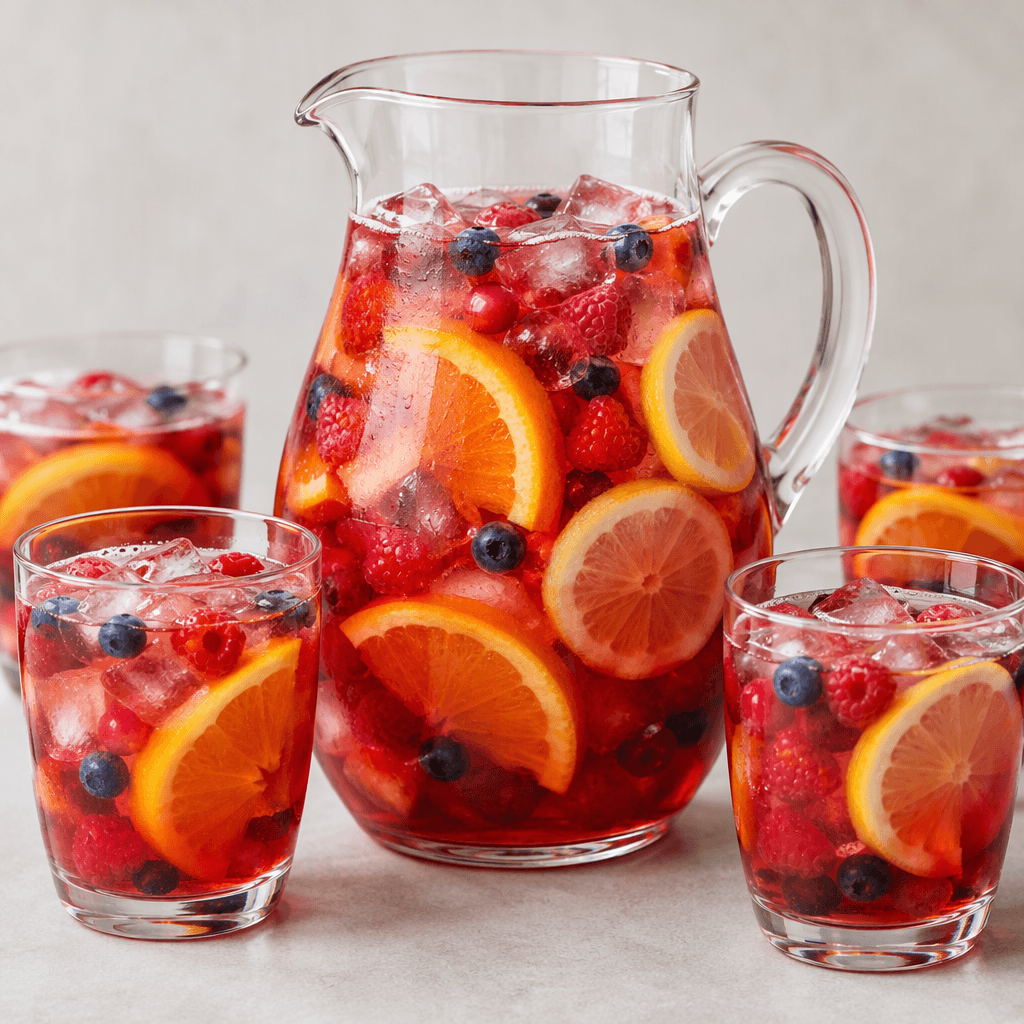
Sangria Calories
Spanish drink made with red wine, fruit, sugar, and soda
In season: Summer
CALORIES
GI
POTASSIUM
FIBER
Quick answer
1 cup (medium) of Sangria (200 g) has 150 calories. That works out to 75 calories per 100 g. It contains 17 g of carbs, 0.4 g of protein, 0 g of fat and 0.6 g of fiber. Its 6 mg of Vitamin C covers 7% of the Daily Value. Its glycemic index is 60 (medium), so it raises blood sugar at a moderate pace.
What is Sangria?
Sangria is a Spanish drink made by steeping fruit in red wine, then mixing it with sugar and soda. Orange and lemon are common additions, though recipes vary, and it is often chilled in a pitcher with ice before serving.
The fruit brings a fresh, sweet-tart note, while the wine adds depth and the soda gives the drink a light fizz. In Spain it is a familiar choice for relaxed meals and gatherings; elsewhere, it is often served at summer parties or alongside tapas-style snacks. Its calories mainly come from carbohydrates, with very little protein or fibre. For a less sweet version, use less sugar and add the soda just before pouring.
Sangria Nutrition Facts
Selected: 100 g
75
KCAL / 100G
Carbs
8.5g
· 3% DV
Protein
0.2g
· 0% DV
Fat
0g
· 0% DV
Fiber
0.3g
· 1% DV
DV is the share of the daily value covered, on a 2,000 kcal reference diet.
Calories come from: Carbs 98% · Protein 2% · Fat 0%
Sangria Vitamins & Minerals
Vitamins
Vitamin C
3mg · 3% DV
Biotin
0.5µg · 2% DV
B1
0.01mg · 1% DV
B2
0.01mg · 1% DV
Minerals
Potassium ⭐
60mg · 2% DV
Calcium
10mg · 1% DV
Magnesium
6mg · 1% DV
Phosphorus
8mg · 1% DV
How Nutritious Is Sangria?
Nutrient density
Low
How many vitamins, minerals and how much fiber this food carries per calorie. A high score means a lot of nutrition for few calories.
Satiety score
Low
An EatBetter score computed from fiber, protein and calorie density. A high score means staying full longer on the same calories.
Both scores are calculated per 100 g and do not change with the selected portion. The satiety score is EatBetter's own calculation, not a clinical measure.
Sangria Glycemic Index
GLYCEMIC INDEX
GLYCEMIC LOAD
Accounts for portion size — a more realistic measure than GI alone.
How to Burn Off Sangria
To burn the 75 calories in 100 g:
🚶
Walking (5 km/h)
🏃
Running (8 km/h)
🚴
Cycling
🏊
Swimming
Times are calculated with the MET equation for a 70 kg adult. Actual burn varies with your weight, age and pace.
Is Sangria Processed?
NOVA 3
Processed
1. Unprocessed
2. Minimally Processed
3. Processed
4. Ultra-Processed
NOVA classifies foods into 4 groups by industrial processing. NOVA 1 (unprocessed) is the healthiest.
Does Sangria Contain Allergens?
No known major allergens
Which Diets Is Sangria Good For?
Vegan
— Not suitable
Vegetarian
✓ Suitable
Gluten-Free
— Not suitable
Dairy-Free
— Not suitable
Mediterranean
✓ Suitable
Paleo
— Not suitable
Whole30
— Not suitable
DASH
— Not suitable
Keto
— Not suitable
Low FODMAP
— Not suitable
Sangria Fat Profile
SATURATED
0g
MONOUNSATURATED
0g
POLYUNSATURATED
0g
Compare Sangria
Foods Similar to Sangria
Frequently Asked Questions About Sangria
What is sangria made of?
Sangria is typically made with red wine, chopped fruit, a sweetener, and soda or another mixer. Recipes vary, but citrus fruit is common. Add the fizzy ingredient shortly before serving to keep the drink lively.
How do you make sangria?
To make sangria, combine red wine with sliced fruit and a little sweetener, then chill it so the flavors mingle. Stir in soda just before serving and pour it over ice, making sure each glass gets some fruit.
What wine is best for sangria?
A fruity, dry red wine is a common choice for classic sangria because it pairs well with citrus and other fruit. Avoid relying on very expensive wine; the fruit and mixer strongly shape the finished drink’s flavor.
Where did sangria originate?
Sangria is a Spanish drink, and its name is associated with the Spanish word for blood because of its traditional red-wine color. Recipes have spread internationally, so versions made with different wines and fruits are now common.
Can you make sangria with white wine?
Yes, white wine makes a popular variation often called white sangria. It is commonly paired with fruit such as citrus, apples, or peaches, giving the drink a different flavor and color from the red-wine version.
How long should sangria sit before serving?
Let sangria chill for a few hours before serving so the fruit can flavor the wine. Add soda or another fizzy mixer at the end; mixing it in too early can leave the finished drink flat.
Can you eat the fruit in sangria?
Yes, the fruit in sangria is edible and absorbs some of the drink’s flavor. It may become soft after soaking, and it also contains alcohol, so it is not suitable for children or people avoiding alcohol.
How long does homemade sangria last in the fridge?
Homemade sangria generally keeps for about one to two days in a covered container in the refrigerator. The fruit softens and the flavor changes as it sits; sangria mixed with soda is best served promptly while it is still fizzy.
Does sangria have to be served over ice?
No, sangria does not have to be served over ice, but it is usually served well chilled. If you want to avoid diluting it, chill the pitcher and glasses beforehand instead of adding ice to each glass.
What fruit goes in sangria?
Oranges and lemons are classic sangria additions, while apples, berries, and other seasonal fruit also work. Wash fruit thoroughly before slicing, especially if you leave citrus peel on, since the slices sit in the drink.
Have another question about Sangria?
Ask the AI nutrition coach — calories, portions, alternatives and more, answered in seconds in the app.

Scan calories with your camera
Instant AI nutrition analysis

Nutrition data compiled from USDA FoodData Central and scientific sources.