

Ready & Packaged Foods
All →Vegetables & Legumes
All →Desserts & Confectionery
All →Meat & Protein
All →Grains & Bakery
All →Beverages
All →Milk & Dairy
All →

Salad (Olive Oil) Calories
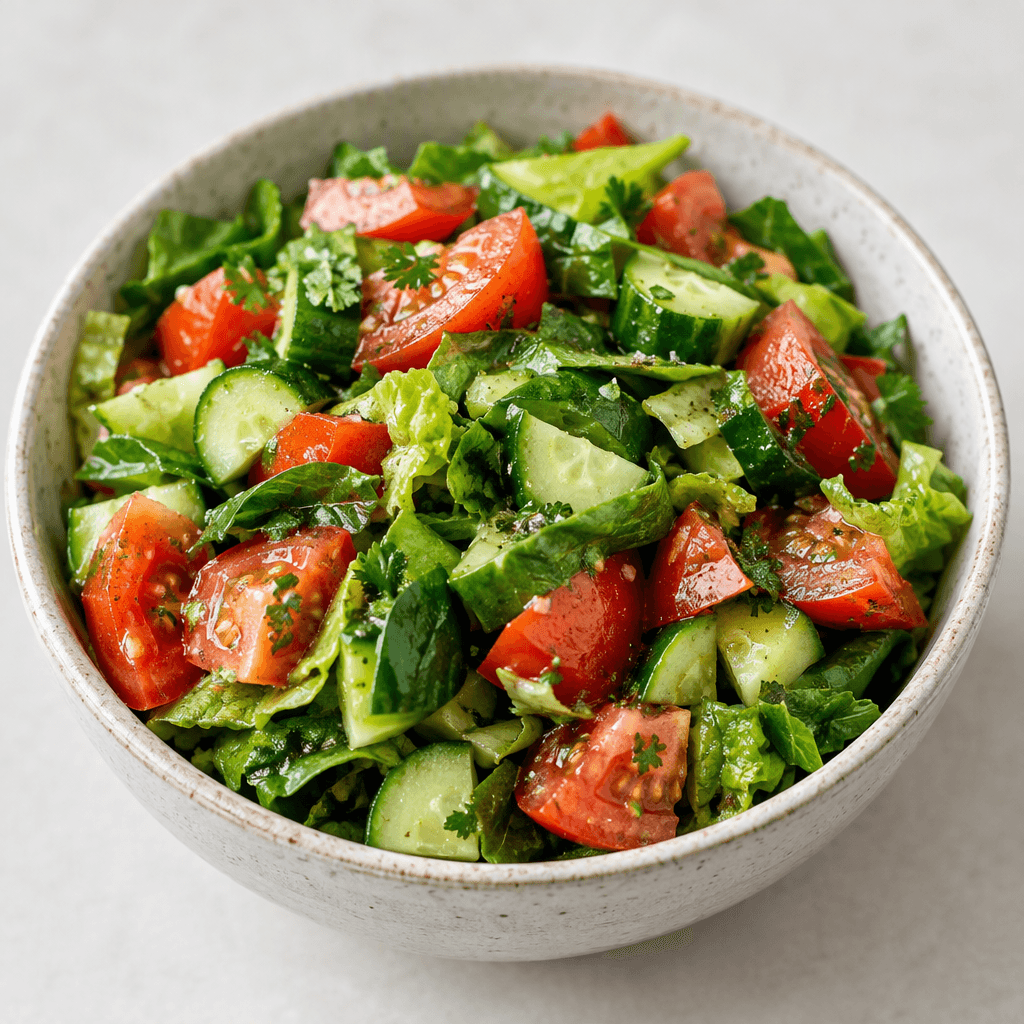
Fresh vegetable salad with olive oil dressing
In season: Spring · Summer · Autumn · Winter
CALORIES
GI
POTASSIUM
FIBER
Quick answer
1 serving (medium) of Salad (Olive Oil) (120 g) has 114 calories. That works out to 95 calories per 100 g. It contains 6.6 g of carbs, 1.4 g of protein, 9 g of fat and 2.4 g of fiber. Its 420 µg of Vitamin A covers 47% of the Daily Value. Its glycemic index is 15 (low), so it raises blood sugar slowly.
What is Salad (Olive Oil)?
Salad with olive oil is a fresh, Mediterranean-style dish made by chopping vegetables such as tomatoes, cucumbers and leafy greens, then dressing them with olive oil. The mix varies with the season and what is on hand, rather than following one fixed recipe.
The vegetables bring crunch and juiciness, while olive oil adds a smooth, fruity richness. It is commonly served as a side with grilled foods or other main dishes, and can also be part of a simple lunch. The bowl is mostly vegetables, with fibre and little protein; the oil contributes most of its fat. For a lighter dressing, use a modest pour of oil and add lemon juice, or pair it with beans or bread to make a more substantial meal.
Salad (Olive Oil) Nutrition Facts
Selected: 100 g
95
KCAL / 100G
Carbs
5.5g
· 2% DV
Protein
1.2g
· 2% DV
Fat
7.5g
· 10% DV
Fiber
2g
· 7% DV
DV is the share of the daily value covered, on a 2,000 kcal reference diet.
Calories come from: Carbs 23% · Protein 5% · Fat 72%
Salad (Olive Oil) Vitamins & Minerals
Vitamins
Vitamin A
350µg · 39% DV
Vitamin K
45µg · 38% DV
Vitamin C
12mg · 13% DV
Vitamin E
1.8mg · 12% DV
Minerals
Iron
1mg · 6% DV
Potassium ⭐
210mg · 6% DV
Sodium
120mg · 5% DV
Calcium
38mg · 4% DV
How Nutritious Is Salad (Olive Oil)?
Nutrient density
High
How many vitamins, minerals and how much fiber this food carries per calorie. A high score means a lot of nutrition for few calories.
Satiety score
Medium
An EatBetter score computed from fiber, protein and calorie density. A high score means staying full longer on the same calories.
Both scores are calculated per 100 g and do not change with the selected portion. The satiety score is EatBetter's own calculation, not a clinical measure.
Salad (Olive Oil) Glycemic Index
GLYCEMIC INDEX
GLYCEMIC LOAD
Accounts for portion size — a more realistic measure than GI alone.
How to Burn Off Salad (Olive Oil)
To burn the 95 calories in 100 g:
🚶
Walking (5 km/h)
🏃
Running (8 km/h)
🚴
Cycling
🏊
Swimming
Times are calculated with the MET equation for a 70 kg adult. Actual burn varies with your weight, age and pace.
Is Salad (Olive Oil) Processed?
NOVA 2
Minimally Processed
1. Unprocessed
2. Minimally Processed
3. Processed
4. Ultra-Processed
NOVA classifies foods into 4 groups by industrial processing. NOVA 1 (unprocessed) is the healthiest.
Does Salad (Olive Oil) Contain Allergens?
No known major allergens
Which Diets Is Salad (Olive Oil) Good For?
Vegan
✓ Suitable
Vegetarian
✓ Suitable
Gluten-Free
✓ Suitable
Dairy-Free
— Not suitable
Mediterranean
✓ Suitable
Paleo
✓ Suitable
Whole30
— Not suitable
DASH
— Not suitable
Keto
— Not suitable
Low FODMAP
— Not suitable
Salad (Olive Oil) Fat Profile
SATURATED
1.1g
MONOUNSATURATED
5.5g
POLYUNSATURATED
0.7g
Omega 6:3 ratio 7.9:1
Above the ideal 4:1 (7.9:1).
Compare Salad (Olive Oil)
Foods Similar to Salad (Olive Oil)
Frequently Asked Questions About Salad (Olive Oil)
What ingredients go in an olive oil salad?
An olive oil salad commonly combines chopped tomatoes, cucumbers, and leafy greens with olive oil. Red onion, peppers, fresh herbs, or lemon juice are easy additions; choose vegetables that are fresh and in season.
Does an olive oil salad need lemon juice or vinegar?
No, an olive oil salad does not need lemon juice or vinegar, but an acidic ingredient can balance the oil's richness. Add lemon juice or vinegar to taste just before serving so the vegetables stay crisp.
Which olive oil is best for an olive oil salad?
A flavorful extra-virgin olive oil is a good choice for an olive oil salad because it is used uncooked and its aroma comes through. If its taste is too strong, choose a milder olive oil instead.
How do you stop an olive oil salad from getting soggy?
Dry the vegetables thoroughly and dress an olive oil salad right before serving. If you are prepping it ahead, keep the dressing separate and wait to chop watery tomatoes until closer to mealtime.
Can you make an olive oil salad ahead of time?
Yes, you can prep an olive oil salad ahead by washing and drying the vegetables and storing them covered in the refrigerator. Keep the chopped tomatoes and dressing separate until serving to preserve the salad's texture.
What should you serve with an olive oil salad?
An olive oil salad pairs well with grilled fish, chicken, beans, or a grain-based main dish. Serve it alongside richer foods for a fresh contrast, or add a protein-rich topping to make it a more substantial meal.
How should you store leftover olive oil salad?
Store leftover olive oil salad in a covered container in the refrigerator and eat it promptly. It keeps its texture better when the dressing is stored separately; dressed greens and chopped tomatoes tend to soften as they sit.
Is an olive oil salad healthy?
Yes, an olive oil salad is a nutrient-rich way to include fresh vegetables, and olive oil supplies unsaturated fat. Its overall balance depends on what you add, so use the dressing in an amount that suits the meal.
Can an olive oil salad help with weight loss?
An olive oil salad can add vegetables and volume to a meal, which may help make it satisfying, but it does not cause weight loss on its own. Keep the oil portion moderate and pair the salad with filling foods.
Is an olive oil salad suitable for people with diabetes?
Yes, a vegetable-based olive oil salad can fit into many diabetes meal plans. Avoid sweetened dressings, and account for additions such as croutons, corn, or beans; adjust the meal to your personal glucose-management plan.
Have another question about Salad (Olive Oil)?
Ask the AI nutrition coach — calories, portions, alternatives and more, answered in seconds in the app.

Scan calories with your camera
Instant AI nutrition analysis

Nutrition data compiled from USDA FoodData Central and scientific sources.