

Ready & Packaged Foods
All →Vegetables & Legumes
All →Desserts & Confectionery
All →Meat & Protein
All →Grains & Bakery
All →Beverages
All →Milk & Dairy
All →

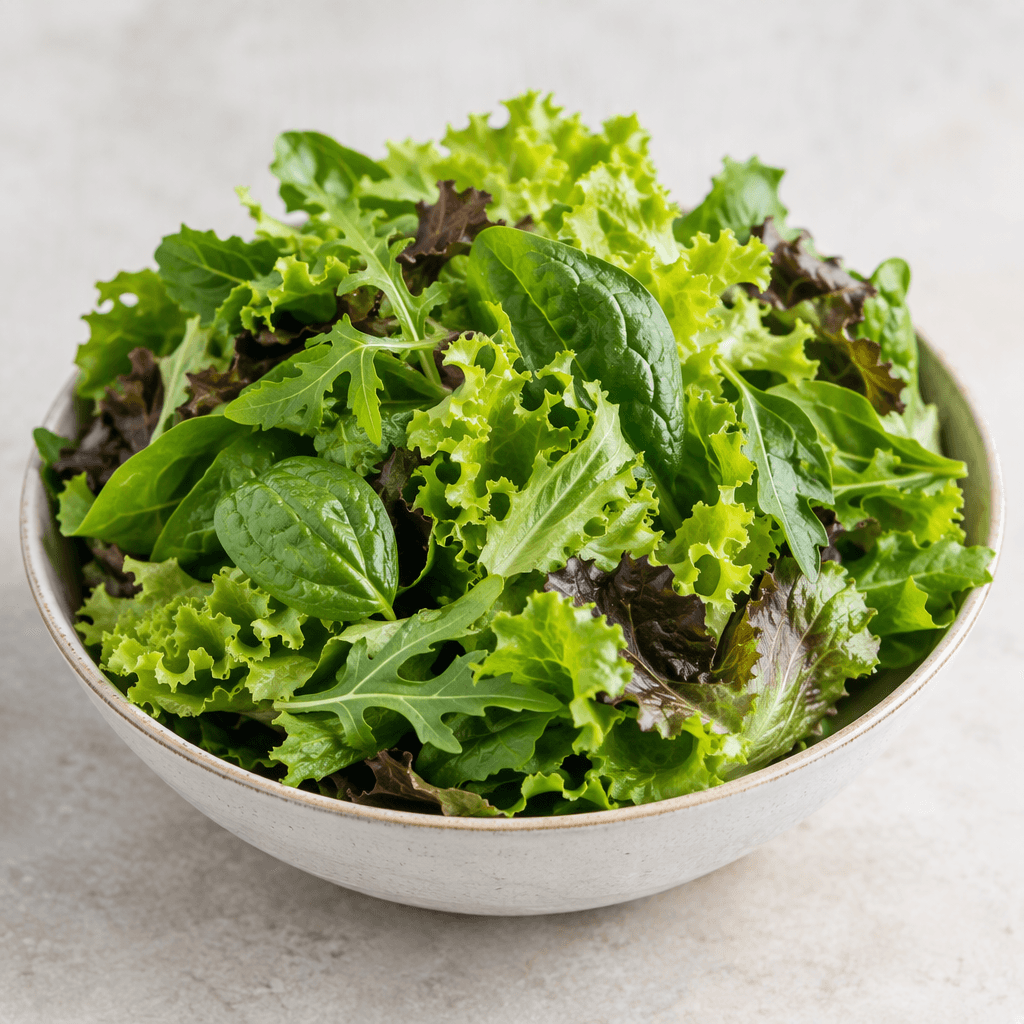
Salad Mix Calories
Variety of fresh greens, low calorie, high fiber
In season: Spring · Summer · Autumn · Winter
CALORIES
GI
POTASSIUM
FIBER
Quick answer
1 cup (medium) of Salad Mix (40 g) has 7 calories. That works out to 18 calories per 100 g. It contains 1.2 g of carbs, 0.6 g of protein, 0.1 g of fat and 0.8 g of fiber. Its 72 µg of Vitamin K covers 60% of the Daily Value. Its glycemic index is 15 (low), so it raises blood sugar slowly.
What is Salad Mix?
Salad Mix is an assortment of fresh leafy greens, usually eaten raw. It is not one traditional dish with a fixed recipe: the leaves and their shapes can vary depending on the grower, shop or season. You may find it sold loose or ready to use.
The flavour is generally fresh and mild, while the texture ranges from tender leaves to crisp, ruffled ones. Toss it into a simple salad, layer it in a sandwich, or serve it alongside a main dish; olive oil and a sharp dressing make an easy pairing. It is a low-calorie source of fibre, with 18 calories per 100 g. For a more filling meal, add beans, egg or another protein-rich topping; keep dressing modest for a lighter bowl.
Salad Mix Nutrition Facts
Selected: 100 g
18
KCAL / 100G
Carbs
3.1g
· 1% DV
Protein
1.5g
· 3% DV
Fat
0.2g
· 0% DV
Fiber
2g
· 7% DV
DV is the share of the daily value covered, on a 2,000 kcal reference diet.
Calories come from: Carbs 61% · Protein 30% · Fat 9%
Salad Mix Vitamins & Minerals
Vitamins
Vitamin K
180µg · 150% DV
Vitamin A
370µg · 41% DV
Vitamin C
18mg · 20% DV
Folate
70µg · 18% DV
Minerals
Calcium
55mg · 6% DV
Iron
1mg · 6% DV
Potassium ⭐
220mg · 6% DV
Magnesium
18mg · 4% DV
How Nutritious Is Salad Mix?
Nutrient density
Very high
How many vitamins, minerals and how much fiber this food carries per calorie. A high score means a lot of nutrition for few calories.
Satiety score
Medium
An EatBetter score computed from fiber, protein and calorie density. A high score means staying full longer on the same calories.
Both scores are calculated per 100 g and do not change with the selected portion. The satiety score is EatBetter's own calculation, not a clinical measure.
Salad Mix Glycemic Index
GLYCEMIC INDEX
GLYCEMIC LOAD
Accounts for portion size — a more realistic measure than GI alone.
How to Burn Off Salad Mix
To burn the 18 calories in 100 g:
🚶
Walking (5 km/h)
🏃
Running (8 km/h)
🚴
Cycling
🏊
Swimming
Times are calculated with the MET equation for a 70 kg adult. Actual burn varies with your weight, age and pace.
Is Salad Mix Processed?
NOVA 1
Unprocessed
1. Unprocessed
2. Minimally Processed
3. Processed
4. Ultra-Processed
NOVA classifies foods into 4 groups by industrial processing. NOVA 1 (unprocessed) is the healthiest.
Does Salad Mix Contain Allergens?
No known major allergens
Which Diets Is Salad Mix Good For?
Vegan
✓ Suitable
Vegetarian
✓ Suitable
Gluten-Free
✓ Suitable
Dairy-Free
— Not suitable
Mediterranean
✓ Suitable
Paleo
✓ Suitable
Whole30
— Not suitable
DASH
— Not suitable
Keto
✓ Suitable
Low FODMAP
— Not suitable
Salad Mix Fat Profile
SATURATED
0.04g
MONOUNSATURATED
0.01g
POLYUNSATURATED
0.05g
Omega 6:3 ratio 0.7:1
Below the ideal 4:1 — a good omega balance.
Compare Salad Mix
Foods Similar to Salad Mix
Frequently Asked Questions About Salad Mix
What is usually in a salad mix?
A salad mix usually combines several leafy greens, such as different lettuces, baby spinach, arugula, or similar leaves. The blend varies by product, so one mix may be mild and tender while another tastes peppery or includes more frilly leaves.
How do you keep salad mix fresh longer?
Keep salad mix cold and dry in a clean, covered container, with a paper towel to absorb excess moisture. Remove any damaged leaves and replace a damp towel. Moisture trapped among the leaves is a common reason the mix turns slimy quickly.
Should you wash salad mix before eating it?
Wash salad mix unless its package specifically says it is washed and ready to eat. Rinse loose leaves gently under clean running water, then dry them thoroughly; wet leaves dilute dressing and spoil faster in storage.
Can you freeze salad mix?
You can freeze salad mix for cooked dishes, but it will not stay crisp enough for a fresh salad after thawing. The leaves soften and release water, so add frozen greens directly to soups, sauces, or other dishes that will be cooked.
Why does salad mix get slimy?
Salad mix gets slimy when moisture and warmth encourage decay, especially if damaged leaves are stored with the rest. Discard leaves that are slippery or smell unpleasant, and keep the remaining mix dry and refrigerated.
How do you make salad mix less bitter?
Pair a bitter salad mix with a creamy or slightly sweet dressing, or combine it with milder greens and ingredients such as ripe fruit. Removing especially mature, tough leaves can also soften the flavor without masking the whole salad.
When should you dress salad mix?
Dress salad mix just before serving. Salt and acidic ingredients in dressing draw moisture from tender leaves, making them wilt and lose their crisp texture if the salad sits for too long.
Can salad mix be cooked?
Yes, salad mix can be cooked, although its delicate leaves wilt quickly. Stir it into a soup, pasta, or pan of cooked vegetables near the end, just long enough for the leaves to soften.
How can you tell if salad mix has gone bad?
Discard salad mix if the leaves are slimy, badly discolored, or have an unpleasant odor. A few limp leaves may simply have lost moisture, but slippery texture or a sour, rotten smell signals that the mix should not be eaten.
Does salad mix help you feel full?
Salad mix can add volume and fiber to a meal, which may help you feel fuller, especially when paired with a source of protein. A bowl of leaves alone may not keep you satisfied for long, so add filling ingredients if needed.
Have another question about Salad Mix?
Ask the AI nutrition coach — calories, portions, alternatives and more, answered in seconds in the app.

Scan calories with your camera
Instant AI nutrition analysis

Nutrition data compiled from USDA FoodData Central and scientific sources.