

Ready & Packaged Foods
All →Vegetables & Legumes
All →Desserts & Confectionery
All →Meat & Protein
All →Grains & Bakery
All →Beverages
All →Milk & Dairy
All →

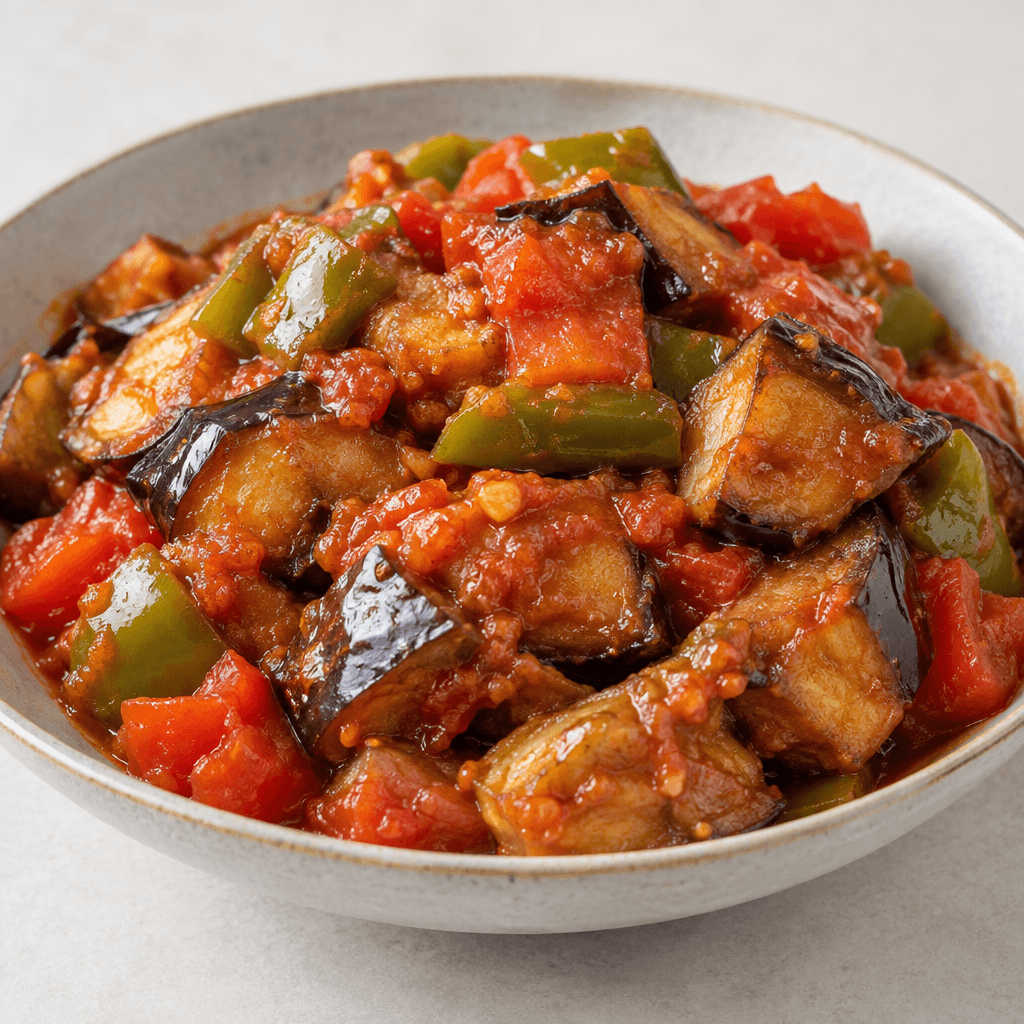
Saksuka Calories
Traditional Turkish meze of fried vegetables (eggplant, zucchini, peppers) in tomato sauce.
In season: Summer · Autumn
CALORIES
GI
POTASSIUM
FIBER
Quick answer
1 serving (medium) of Saksuka (120 g) has 132 calories. That works out to 110 calories per 100 g. It contains 12.6 g of carbs, 1.9 g of protein, 8.6 g of fat and 3.4 g of fiber. Its 384 µg of Vitamin A covers 43% of the Daily Value. Its glycemic index is 35 (low), so it raises blood sugar slowly.
What is Saksuka?
Saksuka is a Turkish meze made with fried eggplant and, depending on the recipe, zucchini and peppers, tossed in a tomato sauce. The vegetables turn tender while the glossy sauce is gently sweet and tangy. In Turkey it is commonly served cool or at room temperature as part of a spread, often with bread; it also works as a side dish. Beyond Turkey, it makes an easy vegetable dish to share or serve alongside grilled foods.
The vegetables contribute fibre, while frying adds much of the dish’s energy; a 100 g portion has about 110 calories. For a lighter version, roast the vegetables with a little oil before coating them in the sauce.
Saksuka Nutrition Facts
Selected: 100 g
110
KCAL / 100G
Carbs
10.5g
· 4% DV
Protein
1.6g
· 3% DV
Fat
7.2g
· 9% DV
Fiber
2.8g
· 10% DV
DV is the share of the daily value covered, on a 2,000 kcal reference diet.
Calories come from: Carbs 37% · Protein 6% · Fat 57%
Saksuka Vitamins & Minerals
Vitamins
Vitamin A
320µg · 36% DV
Vitamin C
13mg · 14% DV
Vitamin E
1.1mg · 7% DV
B5
0.28mg · 6% DV
Minerals
Sodium
180mg · 8% DV
Iron
1mg · 6% DV
Potassium ⭐
220mg · 6% DV
Magnesium
16mg · 4% DV
How Nutritious Is Saksuka?
Nutrient density
High
How many vitamins, minerals and how much fiber this food carries per calorie. A high score means a lot of nutrition for few calories.
Satiety score
Medium
An EatBetter score computed from fiber, protein and calorie density. A high score means staying full longer on the same calories.
Both scores are calculated per 100 g and do not change with the selected portion. The satiety score is EatBetter's own calculation, not a clinical measure.
Saksuka Glycemic Index
GLYCEMIC INDEX
GLYCEMIC LOAD
Accounts for portion size — a more realistic measure than GI alone.
How to Burn Off Saksuka
To burn the 110 calories in 100 g:
🚶
Walking (5 km/h)
🏃
Running (8 km/h)
🚴
Cycling
🏊
Swimming
Times are calculated with the MET equation for a 70 kg adult. Actual burn varies with your weight, age and pace.
Is Saksuka Processed?
NOVA 2
Minimally Processed
1. Unprocessed
2. Minimally Processed
3. Processed
4. Ultra-Processed
NOVA classifies foods into 4 groups by industrial processing. NOVA 1 (unprocessed) is the healthiest.
Does Saksuka Contain Allergens?
No known major allergens
Which Diets Is Saksuka Good For?
Vegan
✓ Suitable
Vegetarian
✓ Suitable
Gluten-Free
✓ Suitable
Dairy-Free
— Not suitable
Mediterranean
✓ Suitable
Paleo
— Not suitable
Whole30
— Not suitable
DASH
— Not suitable
Keto
— Not suitable
Low FODMAP
— Not suitable
Saksuka Fat Profile
SATURATED
1.1g
MONOUNSATURATED
4.2g
POLYUNSATURATED
1.3g
Omega 6:3 ratio 30:1
Above the ideal 4:1 (30:1).
Compare Saksuka
Foods Similar to Saksuka
Frequently Asked Questions About Saksuka
What is Saksuka?
Saksuka is a Turkish vegetable meze, usually made with fried eggplant, zucchini and peppers covered in tomato sauce. It is commonly served at room temperature or chilled, rather than as an egg dish.
How do you make Saksuka?
To make Saksuka, cut the vegetables into bite-size pieces and fry them separately until tender and browned. Spoon over a tomato sauce seasoned with garlic, then let the dish rest so the vegetables take on the sauce.
What vegetables go into Saksuka?
Eggplant is the usual centerpiece of Saksuka, often joined by zucchini and green peppers; tomatoes form the sauce. Home recipes vary, so some leave out zucchini or add onion or garlic, but fried vegetables define the dish.
Is Saksuka the same as shakshuka?
No. Turkish Saksuka is a meze of fried vegetables in tomato sauce, while shakshuka usually refers to eggs cooked in a spiced tomato-and-pepper sauce. The similar names can cause confusion, but they are different dishes.
Is Saksuka served hot or cold?
Saksuka is usually served chilled or at room temperature. Resting it before serving gives the tomato sauce time to flavor the fried vegetables, making it a practical make-ahead dish for a meze spread.
How do you stop eggplant in Saksuka from absorbing too much oil?
Dry the eggplant well after cutting and fry it in properly heated oil to reduce oil absorption. Avoid crowding the pan, and drain the cooked pieces on paper towels before adding the tomato sauce.
Can you bake the vegetables for Saksuka instead of frying them?
Yes, you can roast the vegetables for Saksuka with a light coating of oil, then mix them with tomato sauce. The result is less oily, but the vegetables will have a different texture from the traditional fried version.
What do you serve with Saksuka?
Serve Saksuka with bread, rice or yogurt, or include it alongside other cold mezes. Bread is especially useful for scooping up the tomato sauce, while a larger meze spread can pair it with salads and dips.
How long does Saksuka keep in the refrigerator?
Saksuka keeps for about three days in a covered container in the refrigerator. Refrigerate it once it has cooled, and serve portions with a clean utensil rather than leaving the whole dish out for a long meal.
Can you freeze Saksuka?
Yes, Saksuka can be frozen in an airtight container, though the vegetables may turn softer after thawing. Freeze it in meal-sized portions and thaw in the refrigerator; its texture is best when freshly made.
Have another question about Saksuka?
Ask the AI nutrition coach — calories, portions, alternatives and more, answered in seconds in the app.

Scan calories with your camera
Instant AI nutrition analysis

Nutrition data compiled from USDA FoodData Central and scientific sources.