

Ready & Packaged Foods
All →Vegetables & Legumes
All →Desserts & Confectionery
All →Meat & Protein
All →Grains & Bakery
All →Beverages
All →Milk & Dairy
All →

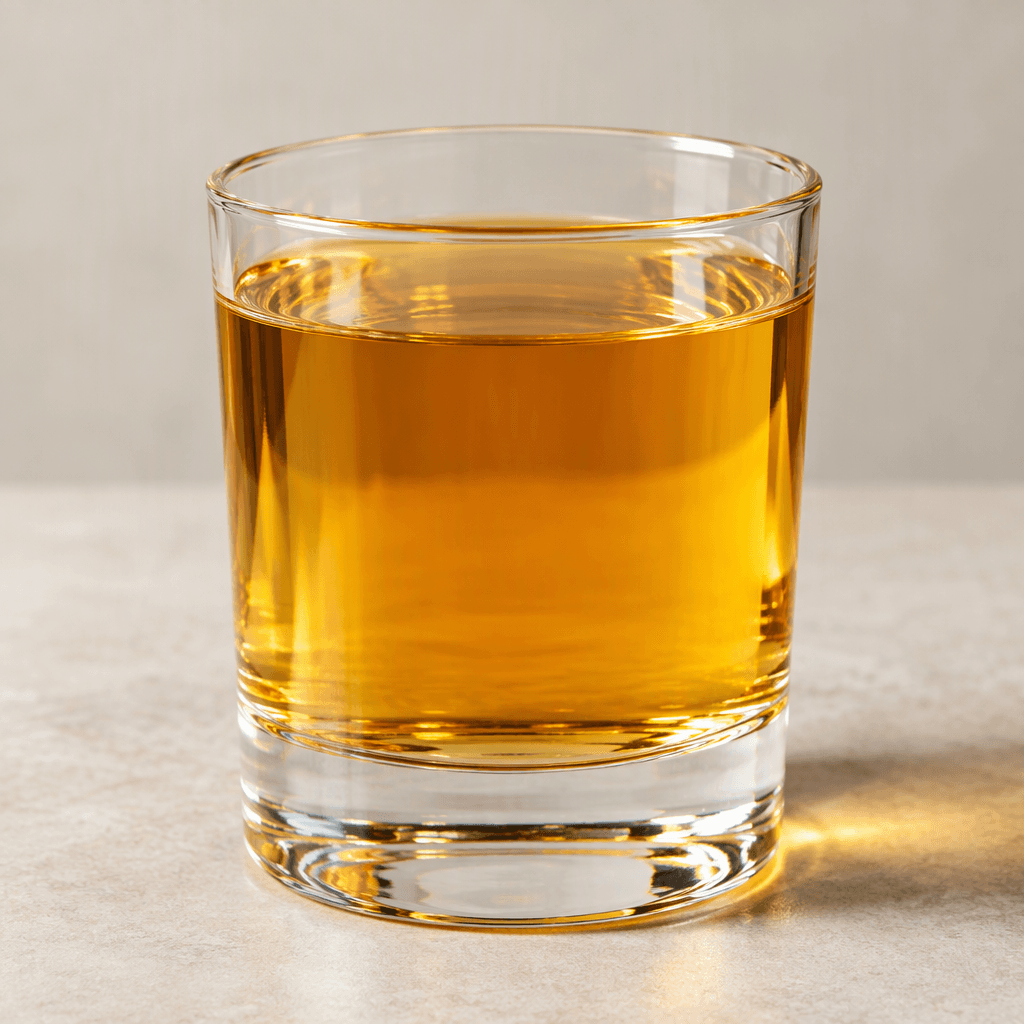
Rum Calories
Rum
CALORIES · 100 G
GI
POTASSIUM · 100 G
FIBER · 100 G
Quick answer
1 cup (medium) of Rum (240 g) has 554 calories. That works out to 231 calories per 100 g. It contains 0 g of carbs, 0 g of protein, 0 g of fat and 0 g of fiber. Its glycemic index is 0 (low), so it raises blood sugar slowly.
Rum Nutrition Facts
Selected: 1 cup (medium) · 240 g
554
KCAL / 240G
Carbs
0g
· 0% DV
Protein
0g
· 0% DV
Fat
0g
· 0% DV
Fiber
0g
· 0% DV
DV is the share of the daily value covered, on a 2,000 kcal reference diet.
Calories come from: Carbs 0% · Protein 0% · Fat 100%
Rum nutrition facts table · 1 cup (medium) (240 g)
| Nutrient | Amount | % DV |
|---|---|---|
| Calories | 554 kcal | |
| Total fat | 0 g | 0% |
| Saturated fat | 0 g | 0% |
| Trans fat | 0 g | |
| Sodium | 2.4 mg | 0% |
| Total carbohydrate | 0 g | 0% |
| Fiber | 0 g | 0% |
| Protein | 0 g | 0% |
Calories: Calories measure energy. Average daily need is 2,000 kcal. Excess calories are stored as fat, too few cause weight loss.
Carbs: Your body's primary energy source. The brain runs exclusively on carbs. Daily need: 275g.
Protein: Essential for muscle repair and cell growth. Daily need: 50g. Keeps you full and boosts metabolism.
Fat: Needed for hormone production and vitamin absorption. Daily need: 78g. Limit saturated fats, choose unsaturated.
Fiber: Critical for digestive health and satiety. Daily need: 28g. Stabilizes blood sugar, lowers cholesterol.

Log this food in EatBetter
100,000+ people use it
- Get your daily calorie target
- Snap your meal, log it in seconds
- See every vitamin and mineral

📸 Scan the code to get the app free.

How Many Calories in 1 Cup of Rum?
| Serving | Amount | Calories |
|---|---|---|
| 1 cup (medium) | 240 g | 554 kcal |
| 1 teaspoon (small) | 5 g | 12 kcal |
| 1 tablespoon (medium) | 14 g | 32 kcal |
| 1 ounce (small) | 28 g | 65 kcal |
| 1 ounce (large) | 42 g | 97 kcal |
| 1 serving (medium) | 45 g | 104 kcal |
| 100 g | 100 g | 231 kcal |
| 1 bottle (whole) | 700 g | 1617 kcal |
Calculated from 231 calories per 100 g.
Frequently Asked Questions About Rum
What is Rum made from?
Rum is made by fermenting and distilling sugarcane juice or molasses. Some varieties are aged in barrels, which can add color and flavors such as oak, vanilla, or spice; the exact taste varies by production style.
What is the difference between white Rum and dark Rum?
White Rum is usually lighter in color and flavor, making it popular in cocktails. Dark Rum often gets its deeper color and richer notes from barrel aging or coloring, but color alone does not tell you how long it was aged.
How should you drink Rum?
You can drink Rum neat, over ice, or mixed into a cocktail. Try an aged Rum neat in small sips to notice its aroma, or choose white Rum for drinks where you want a lighter sugarcane flavor.
What does Rum taste like?
Rum can taste sweet, grassy, fruity, or warmly spiced, depending on its ingredients and production. White Rum is often lighter, while barrel-aged Rum may have oak or vanilla notes; the spirit itself is not necessarily sweetened.
What are the best mixers for Rum?
Cola, soda water, ginger beer, and citrus juices are common Rum mixers. Choose cola or ginger beer for a sweeter, fuller drink, or soda and lime for a lighter-tasting mix.
Does Rum go bad after opening?
An opened bottle of Rum generally does not spoil quickly when tightly sealed and stored away from heat and sunlight. Air can gradually dull its aroma, so keeping the cap closed helps preserve its flavor.
How is spiced Rum different from regular Rum?
Spiced Rum has added spices or flavorings, often including notes such as vanilla or cinnamon; some brands also add sweeteners. Regular Rum does not necessarily have those additions, so the two can taste noticeably different.
Which Rum is best for a mojito?
White Rum is the usual choice for a mojito because its relatively light flavor lets the mint and lime come through. Combine it with mint, lime, ice, and soda water for the classic refreshing style.
Does Rum contain sugar?
Plain, unflavored Rum typically has little to no residual sugar because fermentation uses the sugar and distillation separates the alcohol. Spiced, flavored, or sweetened Rum may have sugar added after distillation.
Does Rum help you sleep?
No. Rum may make you feel drowsy at first, but alcohol can disrupt sleep later in the night and reduce sleep quality. Drinking Rum before bed is therefore not a reliable way to get restful sleep.
Rum Vitamins & Minerals
Vitamins
Vitamin A
0µg · 0% DV
B1
0mg · 0% DV
B2
0mg · 0% DV
B3
0mg · 0% DV
Minerals
Copper
0.02mg · 2% DV
Magnesium
4.8mg · 1% DV
Manganese
0.02mg · 1% DV
Iron
0.1mg · 1% DV
Potassium ⭐
4.8mg · 0% DV
Sodium
2.4mg · 0% DV
Rum Glycemic Index
GLYCEMIC INDEX
GLYCEMIC LOAD
Accounts for portion size — a more realistic measure than GI alone.
How to Burn Off Rum
To burn the 554 calories in 1 cup (medium) (240 g):
🚶
Walking (5 km/h)
🏃
Running (8 km/h)
🚴
Cycling
🏊
Swimming
Times are calculated with the MET equation for a 70 kg adult. Actual burn varies with your weight, age and pace.
What is Rum?
Rum is a distilled spirit made from fermented sugar-cane juice or molasses, with deep roots in the Caribbean. Clear rum is often used in cocktails, while aged styles take on a golden colour and can develop notes of vanilla, caramel or spice from time in barrels.
It is served neat or over ice, and is widely mixed into drinks such as a daiquiri or mojito. Rum contains no protein or carbohydrates; its calories come mainly from alcohol. For a less sweet drink, pair it with soda water and citrus rather than sugary mixers.
How Nutritious Is Rum?
Nutrient density
Low
How many vitamins, minerals and how much fiber this food carries per calorie. A high score means a lot of nutrition for few calories.
Satiety score
Low
An EatBetter score computed from fiber, protein and calorie density. A high score means staying full longer on the same calories.
Both scores are calculated per 100 g and do not change with the selected portion. The satiety score is EatBetter's own calculation, not a clinical measure.
Is Rum Processed?
NOVA 4
Ultra-Processed
1. Unprocessed
2. Minimally Processed
3. Processed
4. Ultra-Processed
NOVA classifies foods into 4 groups by industrial processing. NOVA 1 (unprocessed) is the healthiest.
Does Rum Contain Allergens?
No known major allergens
Which Diets Is Rum Good For?
Vegan
✓ Suitable
Vegetarian
✓ Suitable
Gluten-Free
✓ Suitable
Dairy-Free
— Not suitable
Mediterranean
✓ Suitable
Paleo
— Not suitable
Whole30
— Not suitable
DASH
— Not suitable
Keto
— Not suitable
Low FODMAP
— Not suitable
Rum Fat Profile
SATURATED
0g
MONOUNSATURATED
0g
POLYUNSATURATED
0g
Compare Rum
Foods Similar to Rum
Have another question about Rum?
Ask the AI nutrition coach — calories, portions, alternatives and more, answered in seconds in the app.

Scan calories with your camera
Instant AI nutrition analysis

Nutrition data compiled from USDA FoodData Central and scientific sources.