

Ready & Packaged Foods
All →Vegetables & Legumes
All →Desserts & Confectionery
All →Meat & Protein
All →Grains & Bakery
All →Beverages
All →Milk & Dairy
All →

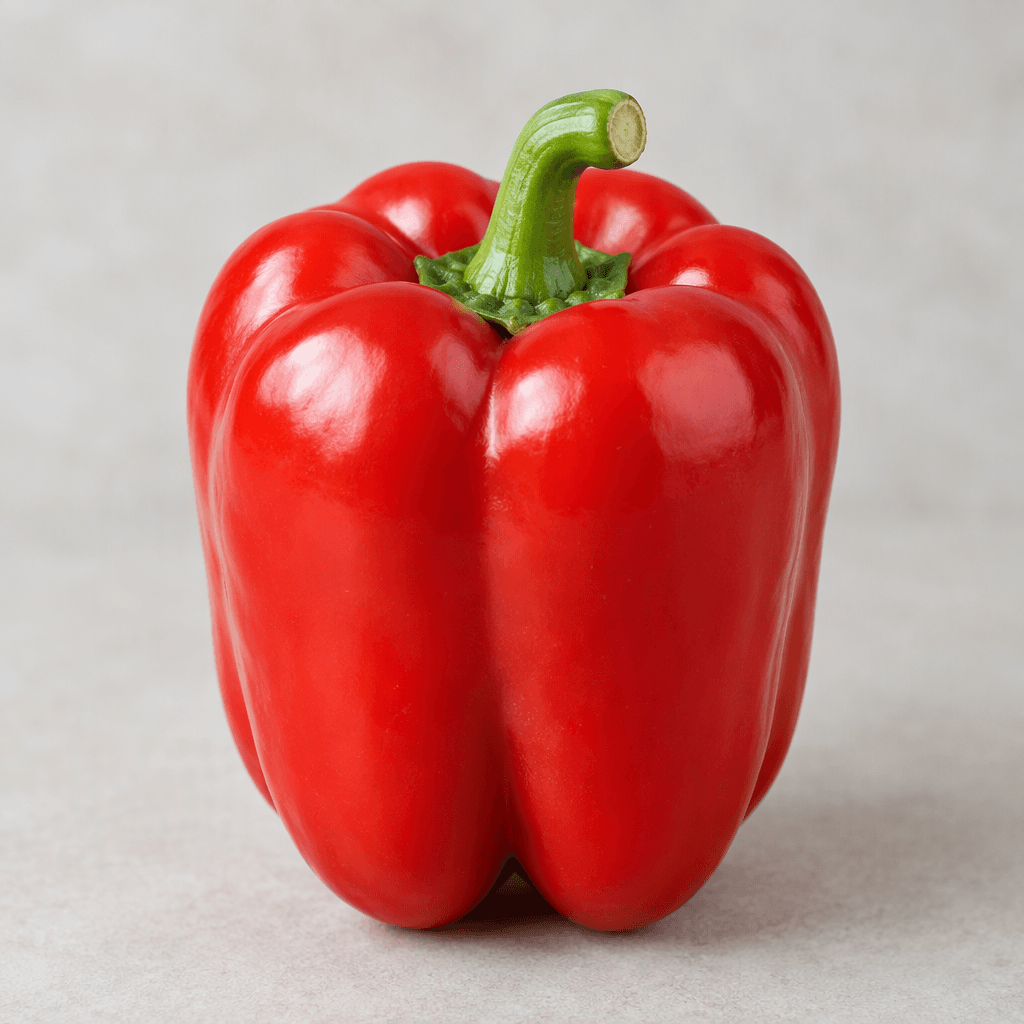
Red sweet pepper Calories
Rich in vitamin C and antioxidants, low-calorie vegetable
In season: Summer · Autumn
CALORIES
GI
POTASSIUM
FIBER
Quick answer
1 piece (medium) of Red sweet pepper (120 g) has 37 calories. That works out to 31 calories per 100 g. It contains 7.2 g of carbs, 1.2 g of protein, 0.4 g of fat and 2.5 g of fiber. Its 153.2 mg of Vitamin C covers 170% of the Daily Value. Its glycemic index is 15 (low), so it raises blood sugar slowly.
What is Red sweet pepper?
Red sweet pepper is the ripe, red form of a sweet bell pepper, with crisp flesh and a mild, slightly fruity flavour. It is eaten raw in salads, sliced for snacks, or cooked in dishes such as stuffed peppers, roasts and stir-fries. In many places, it is also charred until the skin blisters, then peeled and served in salads or as a side. Its sweetness deepens with cooking, while it stays pleasantly crunchy when raw.
It is a low-calorie vegetable that provides fibre and vitamin C; 100 g contains 31 calories. Pair it with hummus or a yoghurt dip for a simple snack, or add it near the end of cooking if you want it to keep some bite.
Red sweet pepper Nutrition Facts
Selected: 100 g
31
KCAL / 100G
Carbs
6g
· 2% DV
Protein
1g
· 2% DV
Fat
0.3g
· 0% DV
Fiber
2.1g
· 8% DV
DV is the share of the daily value covered, on a 2,000 kcal reference diet.
Calories come from: Carbs 78% · Protein 13% · Fat 9%
Red sweet pepper Vitamins & Minerals
Vitamins
Vitamin C
127.7mg · 142% DV
Vitamin A
157µg · 17% DV
B6
0.29mg · 17% DV
Folate
46µg · 12% DV
Minerals
Potassium ⭐
211mg · 6% DV
Phosphorus
26mg · 4% DV
Magnesium
12mg · 3% DV
Calcium
7mg · 1% DV
How Nutritious Is Red sweet pepper?
Nutrient density
Very high
How many vitamins, minerals and how much fiber this food carries per calorie. A high score means a lot of nutrition for few calories.
Satiety score
Medium
An EatBetter score computed from fiber, protein and calorie density. A high score means staying full longer on the same calories.
Both scores are calculated per 100 g and do not change with the selected portion. The satiety score is EatBetter's own calculation, not a clinical measure.
Red sweet pepper Glycemic Index
GLYCEMIC INDEX
GLYCEMIC LOAD
Accounts for portion size — a more realistic measure than GI alone.
How to Burn Off Red sweet pepper
To burn the 31 calories in 100 g:
🚶
Walking (5 km/h)
🏃
Running (8 km/h)
🚴
Cycling
🏊
Swimming
Times are calculated with the MET equation for a 70 kg adult. Actual burn varies with your weight, age and pace.
Is Red sweet pepper Processed?
NOVA 1
Unprocessed
1. Unprocessed
2. Minimally Processed
3. Processed
4. Ultra-Processed
NOVA classifies foods into 4 groups by industrial processing. NOVA 1 (unprocessed) is the healthiest.
Does Red sweet pepper Contain Allergens?
No known major allergens
Which Diets Is Red sweet pepper Good For?
Vegan
✓ Suitable
Vegetarian
✓ Suitable
Gluten-Free
✓ Suitable
Dairy-Free
— Not suitable
Mediterranean
✓ Suitable
Paleo
✓ Suitable
Whole30
— Not suitable
DASH
— Not suitable
Keto
✓ Suitable
Low FODMAP
— Not suitable
Red sweet pepper Fat Profile
SATURATED
0.03g
MONOUNSATURATED
0.01g
POLYUNSATURATED
0.07g
Omega 6:3 ratio 2:1
Below the ideal 4:1 — a good omega balance.
Compare Red sweet pepper
Foods Similar to Red sweet pepper
Frequently Asked Questions About Red sweet pepper
Is red sweet pepper good for you?
Yes, red sweet pepper is a nutritious vegetable, providing vitamin C and antioxidant compounds. It is easy to add to meals raw or cooked, though eating it does not by itself prevent or treat disease.
Can you eat red sweet pepper raw?
Yes, you can eat red sweet pepper raw. Rinse it under running water, remove the stem and seeds if you prefer, then slice it for salads, sandwiches, or a crunchy snack.
How should you store red sweet pepper?
Store red sweet pepper unwashed and dry in the refrigerator’s crisper drawer. A breathable bag helps limit moisture buildup; refrigerate cut pieces in a covered container and use them promptly.
Can you freeze red sweet pepper?
Yes, red sweet pepper freezes well for cooked dishes. Wash and dry it, remove the stem and seeds, then slice or dice it before freezing. Its texture softens after thawing, so it is less suitable for salads.
How do you roast and peel red sweet pepper?
Roast red sweet pepper until the skin is blistered and charred, turning it as needed for even cooking. Let it steam briefly in a covered bowl, then rub off the loose skin; peeling is optional, not a safety requirement.
Do you need to remove the seeds from red sweet pepper?
No, you do not need to remove red sweet pepper seeds for safety; they are edible. Many cooks remove them along with the pale inner ribs because they can affect the texture and leave a slightly bitter taste.
Why is red sweet pepper sweeter than green pepper?
Red sweet pepper is usually a riper stage of the same kind of pepper that is picked green. As it ripens, its flavor becomes sweeter and less grassy, and its color changes from green to red.
Does cooking red sweet pepper destroy its vitamin C?
No, cooking does not destroy all the vitamin C in red sweet pepper, but heat and long cooking can reduce it. For more vitamin C, eat some raw or use quick cooking methods such as a brief sauté.
Can red sweet pepper help with weight loss?
Red sweet pepper can fit into a weight-loss eating pattern because it adds crunch and volume without being energy-dense. It is not a weight-loss food on its own; use it in place of more energy-dense snacks or ingredients.
Can red sweet pepper cause bloating or indigestion?
Yes, red sweet pepper can cause bloating or indigestion in some people, especially when eaten raw or in a large amount. Try a smaller serving or cooked pepper, which is softer; persistent symptoms merit medical advice.
Have another question about Red sweet pepper?
Ask the AI nutrition coach — calories, portions, alternatives and more, answered in seconds in the app.

Scan calories with your camera
Instant AI nutrition analysis

Nutrition data compiled from USDA FoodData Central and scientific sources.