

Ready & Packaged Foods
All →Vegetables & Legumes
All →Desserts & Confectionery
All →Meat & Protein
All →Grains & Bakery
All →Beverages
All →Milk & Dairy
All →

Red Radish Calories
Vitamin C source, low calorie, high fiber vegetable
In season: Spring · Autumn
CALORIES
GI
POTASSIUM
FIBER
Quick answer
1 piece (medium) of Red Radish (15 g) has 2 calories. That works out to 16 calories per 100 g. It contains 0.5 g of carbs, 0.1 g of protein, 0 g of fat and 0.2 g of fiber. Its glycemic index is 15 (low), so it raises blood sugar slowly.
What is Red Radish?
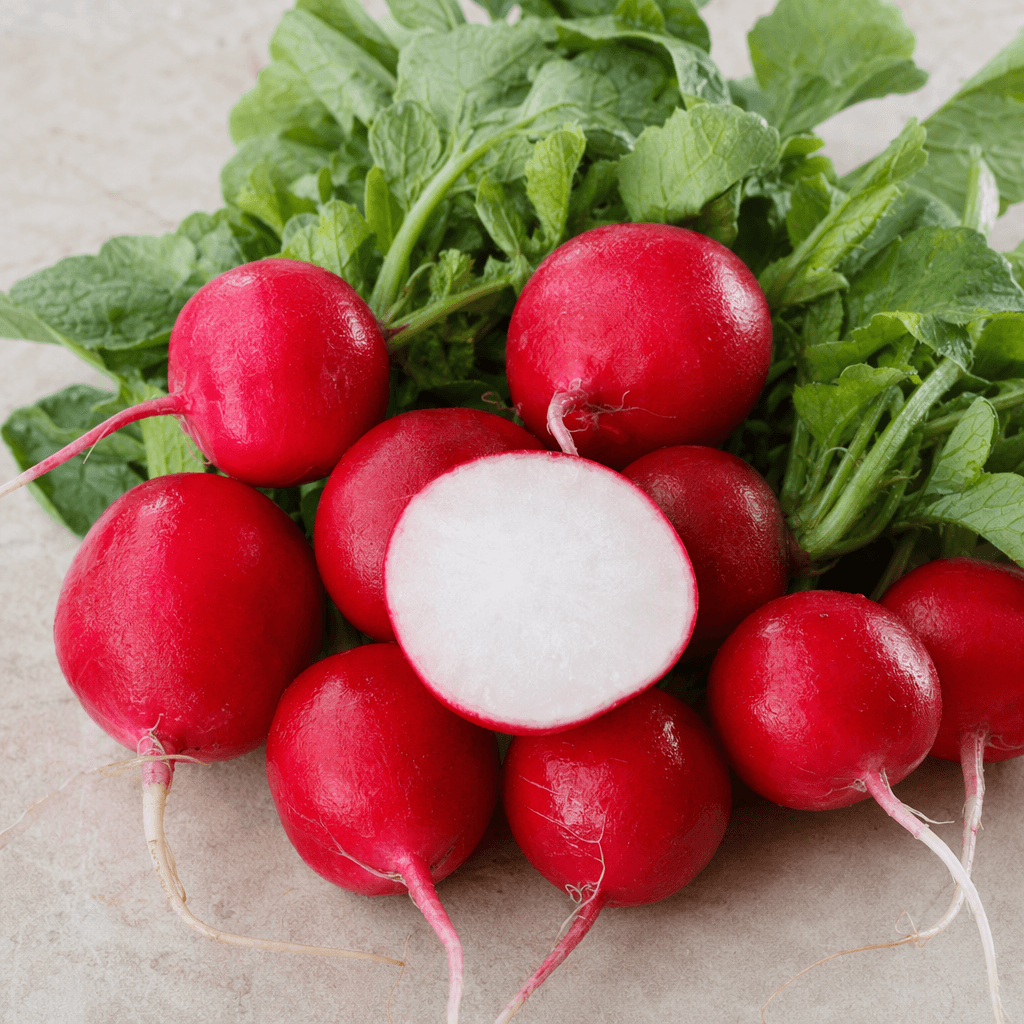
Red radish is a small, crisp root vegetable with glossy red skin and white flesh, often edged with a faint pink ring. It is usually eaten raw, and its leafy tops can be used when fresh. Unlike larger winter radishes, these little radishes are typically served whole or sliced.
Their juicy crunch and peppery bite work well in salads, sandwiches and simple vegetable plates; a little salt or a squeeze of lemon softens the sharpness. In many places they are also served alongside bread, cheese or dips as an easy snack. Red radish is low in calories and provides fibre and vitamin C. Keep it chilled and slice just before serving for the best crunch.
Red Radish Nutrition Facts
Selected: 100 g
16
KCAL / 100G
Carbs
3.4g
· 1% DV
Protein
0.7g
· 1% DV
Fat
0.1g
· 0% DV
Fiber
1.6g
· 6% DV
DV is the share of the daily value covered, on a 2,000 kcal reference diet.
Calories come from: Carbs 79% · Protein 16% · Fat 5%
Red Radish Vitamins & Minerals
Vitamins
Vitamin C
14.8mg · 16% DV
Folate
25µg · 6% DV
B6
0.07mg · 4% DV
B2
0.04mg · 3% DV
Minerals
Potassium ⭐
233mg · 7% DV
Calcium
25mg · 3% DV
Phosphorus
20mg · 3% DV
Magnesium
10mg · 2% DV
How Nutritious Is Red Radish?
Nutrient density
High
How many vitamins, minerals and how much fiber this food carries per calorie. A high score means a lot of nutrition for few calories.
Satiety score
Medium
An EatBetter score computed from fiber, protein and calorie density. A high score means staying full longer on the same calories.
Both scores are calculated per 100 g and do not change with the selected portion. The satiety score is EatBetter's own calculation, not a clinical measure.
Red Radish Glycemic Index
GLYCEMIC INDEX
GLYCEMIC LOAD
Accounts for portion size — a more realistic measure than GI alone.
How to Burn Off Red Radish
To burn the 16 calories in 100 g:
🚶
Walking (5 km/h)
🏃
Running (8 km/h)
🚴
Cycling
🏊
Swimming
Times are calculated with the MET equation for a 70 kg adult. Actual burn varies with your weight, age and pace.
Is Red Radish Processed?
NOVA 1
Unprocessed
1. Unprocessed
2. Minimally Processed
3. Processed
4. Ultra-Processed
NOVA classifies foods into 4 groups by industrial processing. NOVA 1 (unprocessed) is the healthiest.
Does Red Radish Contain Allergens?
No known major allergens
Which Diets Is Red Radish Good For?
Vegan
✓ Suitable
Vegetarian
✓ Suitable
Gluten-Free
✓ Suitable
Dairy-Free
— Not suitable
Mediterranean
✓ Suitable
Paleo
✓ Suitable
Whole30
— Not suitable
DASH
— Not suitable
Keto
✓ Suitable
Low FODMAP
— Not suitable
Red Radish Fat Profile
SATURATED
0.03g
MONOUNSATURATED
0.01g
POLYUNSATURATED
0.03g
Omega 6:3 ratio 2:1
Below the ideal 4:1 — a good omega balance.
Compare Red Radish
Foods Similar to Red Radish
Frequently Asked Questions About Red Radish
Are red radishes good for you?
Yes, red radishes are a crisp vegetable that provides fiber and vitamin C and is easy to add to meals. Eat them raw in salads or alongside a sandwich, or cook them when you want a milder flavor.
Can you eat red radish leaves?
Yes, red radish leaves are edible. Remove wilted or yellow parts, wash the greens thoroughly, and add them to soups, omelets, or sautés. Younger leaves are usually more tender and less strong-tasting.
How do you store red radishes so they stay crisp?
Store red radishes dry in the refrigerator and remove the leafy tops first, since the greens draw moisture from the roots. Keep the leaves separately and wash the radishes just before eating; discard any that become moldy or slimy.
Do you peel red radishes before eating them?
No, you usually do not need to peel red radishes. Their skin is thin, so scrub them well under running water and trim the root and stem ends. Peel only if the skin is damaged or unusually tough.
Why do red radishes taste spicy?
Red radishes taste peppery because of naturally occurring compounds in the mustard family. The sharpness varies with the variety and growing conditions; choose firm, fresh radishes for a crisp bite and eat them soon after buying.
Can you cook red radishes?
Yes, cooking red radishes softens their texture and mellows their peppery flavor. Halve or quarter them and roast or sauté until tender. You can cook the greens separately, too, or stir them into a soup near the end.
What is the difference between red radishes and daikon?
Red radishes are small, round, red-skinned roots with crisp white flesh, while daikon is a much larger, usually white Asian radish with a milder flavor. They can both be eaten raw or cooked, but their size and texture affect how they work in recipes.
Why are red radishes hollow or spongy inside?
Red radishes can turn hollow, pithy, or spongy when they grow too large or lose freshness. Choose roots that feel firm and heavy for their size, and use them promptly rather than leaving them to dry out.
Can people with diabetes eat red radishes?
Yes, red radishes can fit into many diabetes meal plans as a non-starchy vegetable. If you use insulin or medication that can cause low blood sugar, follow your clinician’s guidance on how to balance vegetables with your individual meals.
Can you pickle red radishes?
Yes, red radishes pickle well and develop a tangy flavor while keeping some crunch. Slice them thinly, cover them with a vinegar-based pickling liquid, and refrigerate; use a tested canning recipe if you want to store them unrefrigerated.
Have another question about Red Radish?
Ask the AI nutrition coach — calories, portions, alternatives and more, answered in seconds in the app.

Scan calories with your camera
Instant AI nutrition analysis

Nutrition data compiled from USDA FoodData Central and scientific sources.