

Ready & Packaged Foods
All →Vegetables & Legumes
All →Desserts & Confectionery
All →Meat & Protein
All →Grains & Bakery
All →Beverages
All →Milk & Dairy
All →

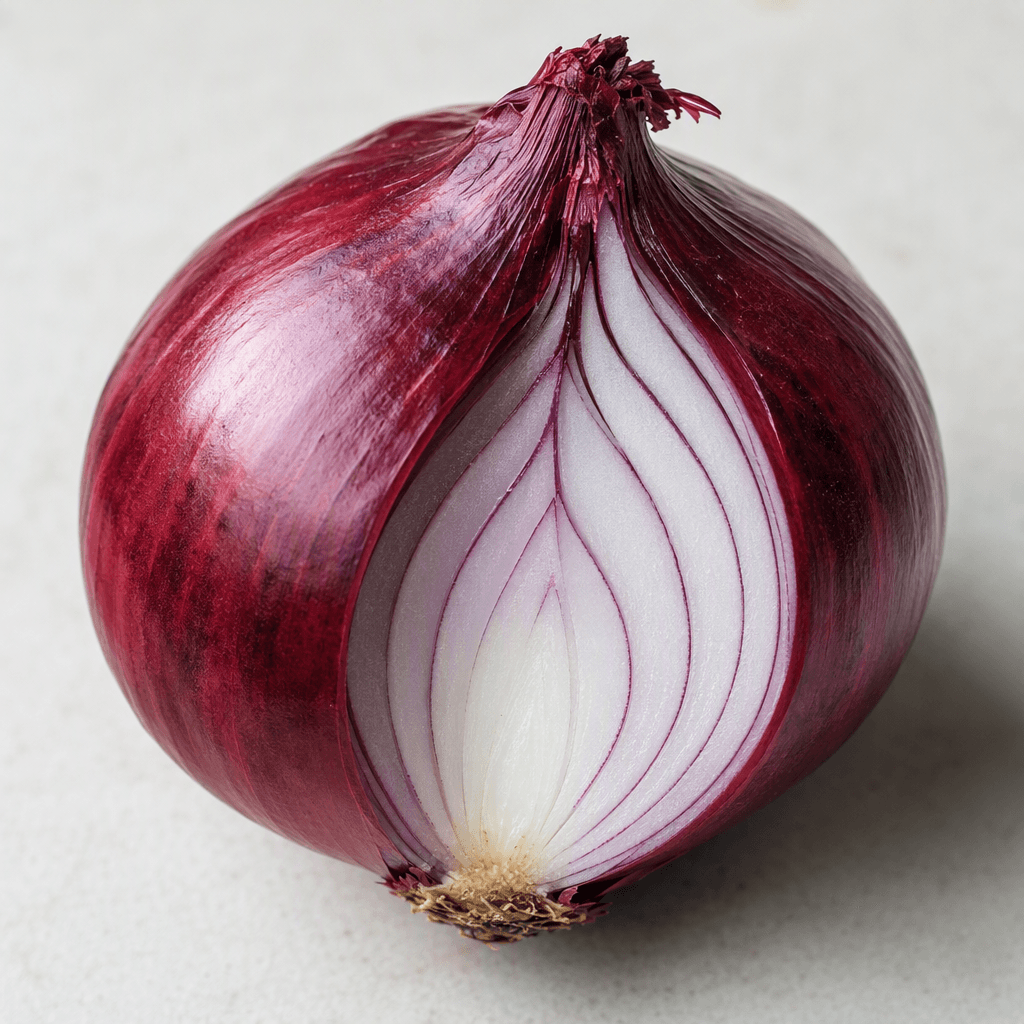
Red Onion Calories
Antioxidants, low calorie, fiber source
In season: Spring · Summer · Autumn · Winter
CALORIES
GI
POTASSIUM
FIBER
Quick answer
1 piece (medium) of Red Onion (80 g) has 32 calories. That works out to 40 calories per 100 g. It contains 7.4 g of carbs, 0.9 g of protein, 0.1 g of fat and 1.4 g of fiber. Its 5.9 mg of Vitamin C covers 7% of the Daily Value. Its glycemic index is 15 (low), so it raises blood sugar slowly.
What is Red Onion?
Red onion is a variety of bulb onion, with glossy purple-red skin and pale flesh marked by purple rings. Its flavour is often milder and slightly sweeter than that of yellow onions, though it still has a noticeable bite when raw. Thinly sliced, it adds colour and crunch to salads, sandwiches, burgers and tacos; it is also widely used in pickles and salsas. Cooking softens its sharpness and brings out a sweeter taste, making it useful in roasted vegetables and sautés.
It is low in calories and provides some fibre, so it can add flavour and texture without making a meal heavy. If you prefer a gentler raw taste, soak the slices briefly in cold water, drain them, and dress with lemon or vinegar.
Red Onion Nutrition Facts
Selected: 100 g
40
KCAL / 100G
Carbs
9.3g
· 3% DV
Protein
1.1g
· 2% DV
Fat
0.1g
· 0% DV
Fiber
1.7g
· 6% DV
DV is the share of the daily value covered, on a 2,000 kcal reference diet.
Calories come from: Carbs 88% · Protein 10% · Fat 2%

Log this food in EatBetter
100,000+ people use it
- Get your daily calorie target
- Snap your meal, log it in seconds
- See every vitamin and mineral

📸 Scan the code to get the app free.

Red Onion Vitamins & Minerals
Vitamins
Vitamin C
7.4mg · 8% DV
B6
0.12mg · 7% DV
Folate
19µg · 5% DV
B1
0.04mg · 3% DV
Minerals
Potassium ⭐
146mg · 4% DV
Phosphorus
29mg · 4% DV
Manganese
0mg · 0% DV
Copper
0mg · 0% DV
How Nutritious Is Red Onion?
Nutrient density
High
How many vitamins, minerals and how much fiber this food carries per calorie. A high score means a lot of nutrition for few calories.
Satiety score
Medium
An EatBetter score computed from fiber, protein and calorie density. A high score means staying full longer on the same calories.
Both scores are calculated per 100 g and do not change with the selected portion. The satiety score is EatBetter's own calculation, not a clinical measure.
Red Onion Glycemic Index
GLYCEMIC INDEX
GLYCEMIC LOAD
Accounts for portion size — a more realistic measure than GI alone.
How to Burn Off Red Onion
To burn the 40 calories in 100 g:
🚶
Walking (5 km/h)
🏃
Running (8 km/h)
🚴
Cycling
🏊
Swimming
Times are calculated with the MET equation for a 70 kg adult. Actual burn varies with your weight, age and pace.
Is Red Onion Processed?
NOVA 1
Unprocessed
1. Unprocessed
2. Minimally Processed
3. Processed
4. Ultra-Processed
NOVA classifies foods into 4 groups by industrial processing. NOVA 1 (unprocessed) is the healthiest.
Does Red Onion Contain Allergens?
No known major allergens
Which Diets Is Red Onion Good For?
Vegan
✓ Suitable
Vegetarian
✓ Suitable
Gluten-Free
✓ Suitable
Dairy-Free
— Not suitable
Mediterranean
✓ Suitable
Paleo
✓ Suitable
Whole30
— Not suitable
DASH
— Not suitable
Keto
✓ Suitable
Low FODMAP
— Not suitable
Red Onion Fat Profile
SATURATED
0.02g
MONOUNSATURATED
0.01g
POLYUNSATURATED
0.03g
Omega 6:3 ratio 2:1
Below the ideal 4:1 — a good omega balance.
Compare Red Onion
Foods Similar to Red Onion
Frequently Asked Questions About Red Onion
Are red onions good for you?
Yes, red onions can be part of a healthy diet. Their purple color comes from anthocyanins, and they also contain sulfur compounds found in other onions. Add them raw or cooked for flavor, but do not rely on them to prevent or treat disease.
How do you pickle red onions?
To pickle red onions, slice them thinly and cover them with a hot mixture of vinegar, water, salt, and optional sugar in a clean jar. Let the mixture cool, then refrigerate it. The onions turn bright pink and are ready to use after a short rest.
Why are red onions called red when they look purple?
Red onions are called red because the name reflects their traditional color category, although their skins and flesh often look purple. Anthocyanin pigments create the purple-red shades, which can shift toward pink, blue, or green depending on acidity and cooking conditions.
Can you eat red onion raw?
Yes, red onion is commonly eaten raw in salads, sandwiches, burgers, and salsas. Its flavor is often milder and sweeter than that of yellow onion, especially when sliced thinly. If it tastes too sharp, briefly soak the slices in cold water.
How do you cut a red onion without crying?
Chill the red onion before cutting and use a sharp knife to reduce the amount of irritating compounds released into the air. Keep the root end intact until the final cuts, and work near good ventilation. These steps can reduce eye irritation, though they may not prevent it completely.
What is the difference between red onion and yellow onion?
Red onion is usually milder and more colorful, so it is often served raw; yellow onion has a stronger savory flavor and is a common choice for cooking. They can substitute for each other in most recipes, though the color and flavor of the finished dish will change.
How should you store red onions?
Store whole red onions in a cool, dry, dark place with good airflow, rather than in a sealed plastic bag. Once cut, place the onion in an airtight container in the refrigerator and use it within a few days.
Can you freeze red onions?
Yes, red onions freeze well for use in cooked dishes, but they become soft after thawing and are less suitable for salads. Peel and chop them, pack them airtight, and add them straight from the freezer to a pan or pot without thawing.
Why does red onion turn blue or green when cooked?
Red onion can turn blue or green when its anthocyanin pigments react to changes in acidity, especially in alkaline cooking conditions. The color change is generally harmless. Adding an acidic ingredient such as lemon juice or vinegar can bring the color back toward pink.
Can you use red onion instead of yellow onion?
Yes, red onion can replace yellow onion in most cooked recipes, including soups, sauces, and sautés. It may taste a little sweeter and can tint pale dishes, so yellow onion is a better choice when you want a neutral color and a more traditional savory flavor.
Have another question about Red Onion?
Ask the AI nutrition coach — calories, portions, alternatives and more, answered in seconds in the app.

Scan calories with your camera
Instant AI nutrition analysis

Nutrition data compiled from USDA FoodData Central and scientific sources.