

Ready & Packaged Foods
All →Vegetables & Legumes
All →Desserts & Confectionery
All →Meat & Protein
All →Grains & Bakery
All →Beverages
All →Milk & Dairy
All →

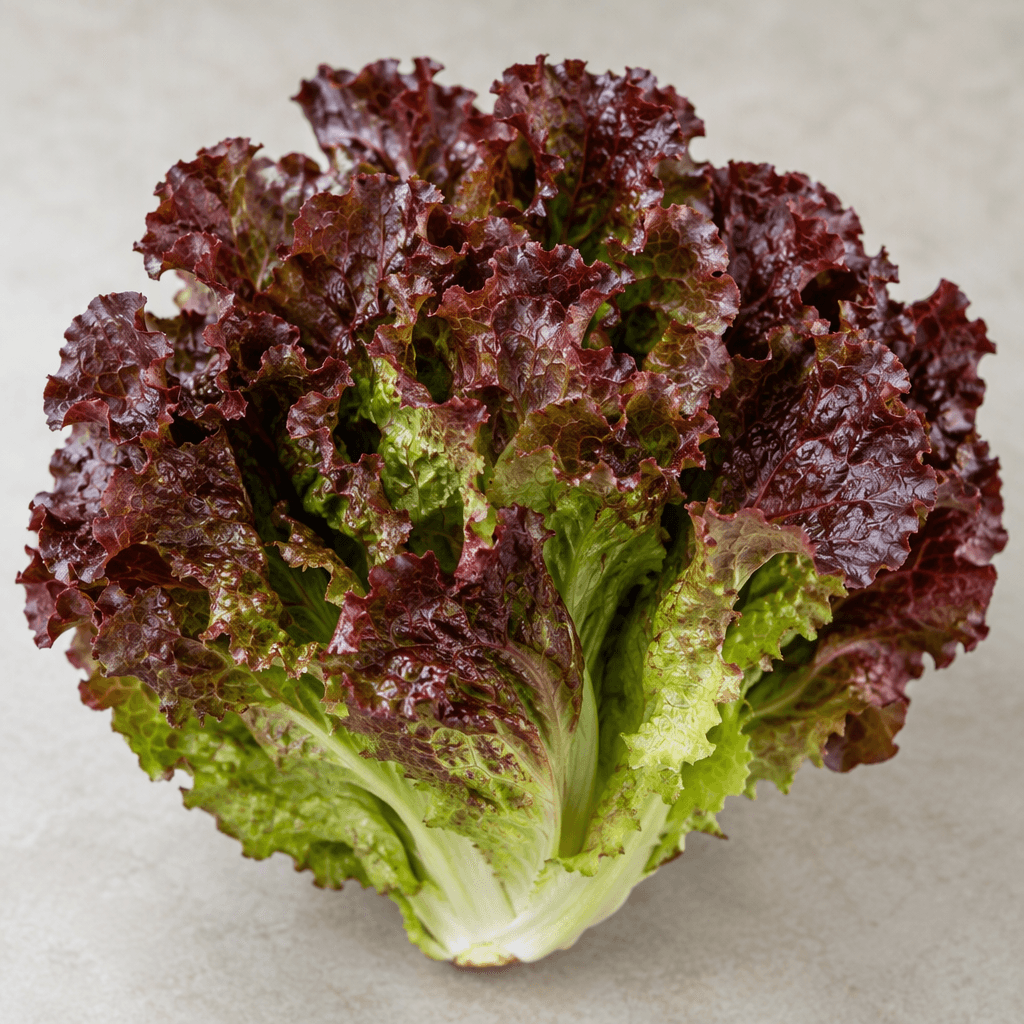
Red Lettuce Calories
Antioxidants, low calorie, fiber source
In season: Spring · Summer · Autumn
CALORIES
GI
POTASSIUM
FIBER
Quick answer
1 cup (medium) of Red Lettuce (50 g) has 8 calories. That works out to 16 calories per 100 g. It contains 1.5 g of carbs, 0.7 g of protein, 0.1 g of fat and 0.6 g of fiber. Its 70 µg of Vitamin K covers 58% of the Daily Value. Its glycemic index is 15 (low), so it raises blood sugar slowly.
What is Red Lettuce?
Red Lettuce is a loose-leaf variety of garden lettuce, with crisp, ruffled leaves that often fade from burgundy at the edges to green near the stems. It is grown for its tender leaves, which are usually eaten raw rather than cooked.
Its mild, fresh taste and crunchy texture work well in salads, sandwiches and wraps. In Turkey and elsewhere, the leaves are often combined with tomato, cucumber and a bright lemon or vinegar dressing; add the dressing just before serving to keep them crisp. Red Lettuce is low in calories and contributes some fibre, but it is not very filling on its own. Pair it with beans, eggs or another substantial ingredient for a more satisfying meal.
Red Lettuce Nutrition Facts
Selected: 100 g
16
KCAL / 100G
Carbs
2.9g
· 1% DV
Protein
1.3g
· 3% DV
Fat
0.2g
· 0% DV
Fiber
1.1g
· 4% DV
DV is the share of the daily value covered, on a 2,000 kcal reference diet.
Calories come from: Carbs 62% · Protein 28% · Fat 10%

Log this food in EatBetter
100,000+ people use it
- Get your daily calorie target
- Snap your meal, log it in seconds
- See every vitamin and mineral

📸 Scan the code to get the app free.

Red Lettuce Vitamins & Minerals
Vitamins
Vitamin K
140µg · 117% DV
Vitamin A
370µg · 41% DV
Vitamin C
9mg · 10% DV
Folate
38µg · 10% DV
Minerals
Potassium ⭐
238mg · 7% DV
Phosphorus
29mg · 4% DV
Manganese
0mg · 0% DV
Copper
0mg · 0% DV
How Nutritious Is Red Lettuce?
Nutrient density
Very high
How many vitamins, minerals and how much fiber this food carries per calorie. A high score means a lot of nutrition for few calories.
Satiety score
Medium
An EatBetter score computed from fiber, protein and calorie density. A high score means staying full longer on the same calories.
Both scores are calculated per 100 g and do not change with the selected portion. The satiety score is EatBetter's own calculation, not a clinical measure.
Red Lettuce Glycemic Index
GLYCEMIC INDEX
GLYCEMIC LOAD
Accounts for portion size — a more realistic measure than GI alone.
How to Burn Off Red Lettuce
To burn the 16 calories in 100 g:
🚶
Walking (5 km/h)
🏃
Running (8 km/h)
🚴
Cycling
🏊
Swimming
Times are calculated with the MET equation for a 70 kg adult. Actual burn varies with your weight, age and pace.
Is Red Lettuce Processed?
NOVA 1
Unprocessed
1. Unprocessed
2. Minimally Processed
3. Processed
4. Ultra-Processed
NOVA classifies foods into 4 groups by industrial processing. NOVA 1 (unprocessed) is the healthiest.
Does Red Lettuce Contain Allergens?
No known major allergens
Which Diets Is Red Lettuce Good For?
Vegan
✓ Suitable
Vegetarian
✓ Suitable
Gluten-Free
✓ Suitable
Dairy-Free
— Not suitable
Mediterranean
✓ Suitable
Paleo
✓ Suitable
Whole30
— Not suitable
DASH
— Not suitable
Keto
— Not suitable
Low FODMAP
— Not suitable
Red Lettuce Fat Profile
SATURATED
0.03g
MONOUNSATURATED
0.01g
POLYUNSATURATED
0.05g
Omega 6:3 ratio 0.3:1
Below the ideal 4:1 — a good omega balance.
Compare Red Lettuce
Foods Similar to Red Lettuce
Frequently Asked Questions About Red Lettuce
What is red lettuce?
Red lettuce is a leafy lettuce with green leaves marked by red or purple coloring. The name covers several lettuce varieties rather than one single cultivar, and its tender leaves are commonly used fresh in salads.
Is red lettuce the same as radicchio?
No, red lettuce is not radicchio. Red lettuce is a type of lettuce with soft, leafy growth, while radicchio is a chicory with firmer leaves and a characteristically bitter taste.
How do you keep red lettuce crisp?
Keep red lettuce dry and chilled, loosely wrapped in a paper towel inside a bag or container. Excess moisture makes the leaves deteriorate faster, so wash them just before use and dry them well.
Should red lettuce be washed before eating?
Yes, wash red lettuce before eating it. Separate the leaves and rinse them under cool running water to remove grit caught in their ruffled surfaces, then dry them thoroughly before serving.
What does red lettuce taste like?
Red lettuce tastes mild and fresh, often with a slightly earthy or more pronounced flavor than some green lettuces. The taste varies by variety; tender inner leaves are usually milder than older outer ones.
Can you put red lettuce in a sandwich?
Yes, red lettuce works well in sandwiches and wraps. Its tender leaves add freshness and color; dry them after washing so they do not make the bread soggy.
Can red lettuce be cooked?
Yes, red lettuce can be cooked, but its delicate leaves wilt quickly. Stir them into a hot dish at the end of cooking or sauté them briefly rather than simmering them for a long time.
Why are my red lettuce leaves turning brown?
Red lettuce leaves can turn brown when bruised, cut, or left exposed to air, and excess moisture can speed their decline. Remove damaged leaves, keep the rest dry and chilled, and cut them close to serving time.
Can you freeze red lettuce?
Yes, red lettuce can be frozen, but thawed leaves lose their crisp texture and become limp. Use frozen red lettuce in cooked dishes rather than expecting it to work well in a fresh salad.
Does red lettuce have more antioxidants than green lettuce?
Red lettuce contains anthocyanin pigments that give its leaves their red or purple color. The exact antioxidant content varies by variety and growing conditions, so color alone does not establish a precise comparison with green lettuce.
Have another question about Red Lettuce?
Ask the AI nutrition coach — calories, portions, alternatives and more, answered in seconds in the app.

Scan calories with your camera
Instant AI nutrition analysis

Nutrition data compiled from USDA FoodData Central and scientific sources.