

Ready & Packaged Foods
All →Vegetables & Legumes
All →Desserts & Confectionery
All →Meat & Protein
All →Grains & Bakery
All →Beverages
All →Milk & Dairy
All →

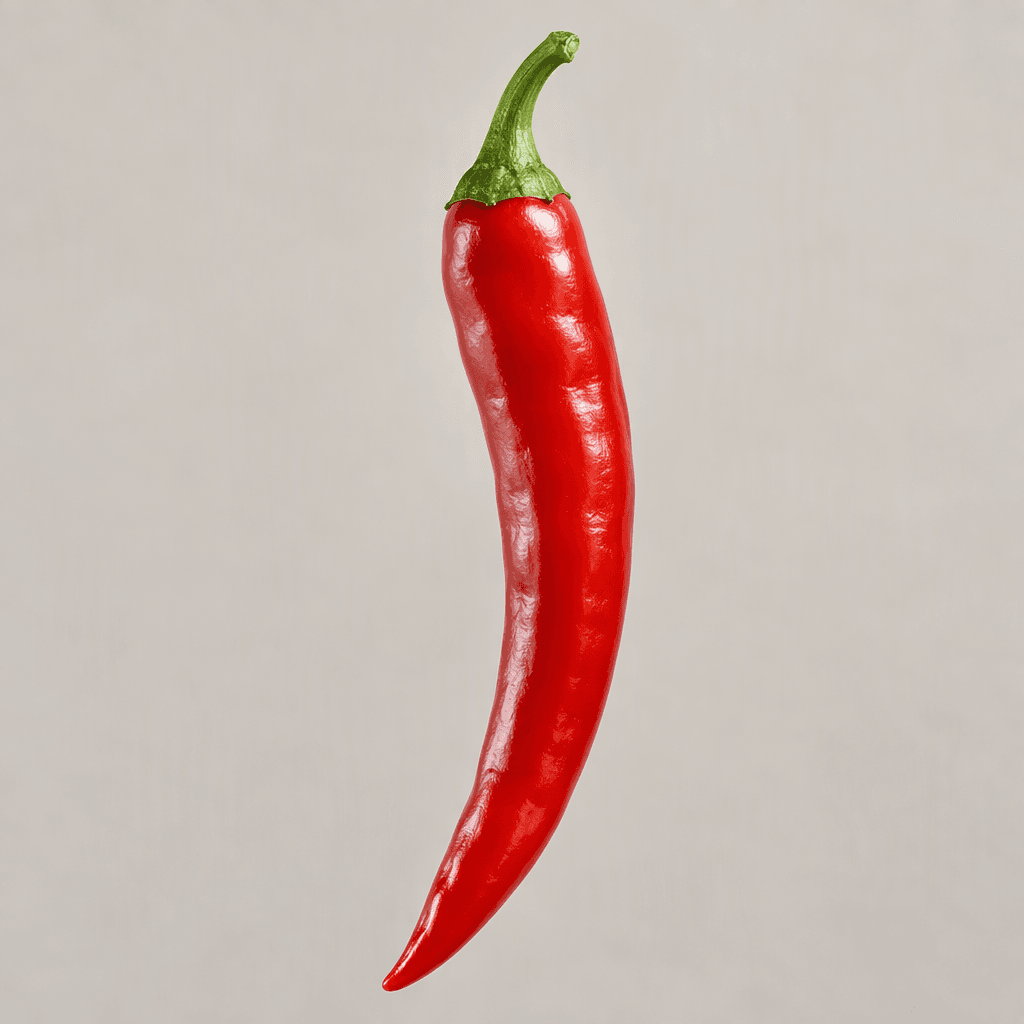
Red Chili Pepper Calories
Rich in vitamin C and capsaicin, boosts metabolism
In season: Summer · Autumn
CALORIES
GI
POTASSIUM
FIBER
Quick answer
1 piece (medium) of Red Chili Pepper (15 g) has 6 calories. That works out to 40 calories per 100 g. It contains 1.3 g of carbs, 0.3 g of protein, 0.1 g of fat and 0.2 g of fiber. Its 21.6 mg of Vitamin C covers 24% of the Daily Value. Its glycemic index is 15 (low), so it raises blood sugar slowly.
What is Red Chili Pepper?
Red chili pepper refers to ripe, red fruits of chili varieties, with a slender shape and a pointed tip. Chilies originated in the Americas and are now used in cuisines around the world. They can be eaten fresh, dried or ground, usually in modest amounts to bring heat and depth to a dish.
The flesh is crisp and juicy when fresh, while the level of heat varies widely by variety. It is chopped into salsas, sauces, soups and stews, or served pickled alongside a meal; in many homes, a little fresh chili also livens up eggs or beans. Red chili pepper provides vitamin C and some fibre, with 40 calories per 100 g. If you are unsure about its heat, start with a small amount and pair it with cooling yogurt or a squeeze of lime.
Red Chili Pepper Nutrition Facts
Selected: 100 g
40
KCAL / 100G
Carbs
9g
· 3% DV
Protein
2g
· 4% DV
Fat
0.5g
· 1% DV
Fiber
1.5g
· 5% DV
DV is the share of the daily value covered, on a 2,000 kcal reference diet.
Calories come from: Carbs 74% · Protein 16% · Fat 10%
Red Chili Pepper Vitamins & Minerals
Vitamins
Vitamin C
143.7mg · 160% DV
B6
0.51mg · 30% DV
Biotin
4.8µg · 16% DV
B2
0.19mg · 15% DV
Minerals
Potassium ⭐
322mg · 9% DV
Iron
1mg · 6% DV
Phosphorus
43mg · 6% DV
Magnesium
23mg · 5% DV
How Nutritious Is Red Chili Pepper?
Nutrient density
Very high
How many vitamins, minerals and how much fiber this food carries per calorie. A high score means a lot of nutrition for few calories.
Satiety score
Medium
An EatBetter score computed from fiber, protein and calorie density. A high score means staying full longer on the same calories.
Both scores are calculated per 100 g and do not change with the selected portion. The satiety score is EatBetter's own calculation, not a clinical measure.
Red Chili Pepper Glycemic Index
GLYCEMIC INDEX
GLYCEMIC LOAD
Accounts for portion size — a more realistic measure than GI alone.
How to Burn Off Red Chili Pepper
To burn the 40 calories in 100 g:
🚶
Walking (5 km/h)
🏃
Running (8 km/h)
🚴
Cycling
🏊
Swimming
Times are calculated with the MET equation for a 70 kg adult. Actual burn varies with your weight, age and pace.
Is Red Chili Pepper Processed?
NOVA 1
Unprocessed
1. Unprocessed
2. Minimally Processed
3. Processed
4. Ultra-Processed
NOVA classifies foods into 4 groups by industrial processing. NOVA 1 (unprocessed) is the healthiest.
Does Red Chili Pepper Contain Allergens?
No known major allergens
Which Diets Is Red Chili Pepper Good For?
Vegan
✓ Suitable
Vegetarian
✓ Suitable
Gluten-Free
✓ Suitable
Dairy-Free
— Not suitable
Mediterranean
✓ Suitable
Paleo
✓ Suitable
Whole30
— Not suitable
DASH
— Not suitable
Keto
✓ Suitable
Low FODMAP
— Not suitable
Red Chili Pepper Fat Profile
SATURATED
0.07g
MONOUNSATURATED
0.03g
POLYUNSATURATED
0.09g
Omega 6:3 ratio 2.7:1
Below the ideal 4:1 — a good omega balance.
Compare Red Chili Pepper
Foods Similar to Red Chili Pepper
Frequently Asked Questions About Red Chili Pepper
How can you cool your mouth after eating a red chili pepper?
Milk, yogurt, or another dairy food can ease the burn from a red chili pepper because casein helps remove capsaicin from your mouth. Water usually does little, since capsaicin does not dissolve well in water.
Are the seeds of a red chili pepper hot?
The seeds of a red chili pepper are not the main source of heat; most capsaicin is in the pale inner tissue attached to them. Seeds can still taste hot when that tissue leaves capsaicin on their surface.
How should you store a fresh red chili pepper?
Keep a fresh red chili pepper dry and unwashed in the refrigerator’s crisper drawer, ideally in a paper bag or a ventilated container. Wash it just before use, and discard it if it becomes moldy or slimy.
Can you freeze a red chili pepper?
Yes, you can freeze a red chili pepper whole or chopped after washing and drying it thoroughly. Pack it in a freezer-safe container; thawed peppers may be soft, so they work best in cooked dishes rather than fresh salsas.
Can you eat a red chili pepper raw?
Yes, a red chili pepper can be eaten raw after you wash it and remove the stem. Start with a small piece because heat varies, and wash your hands after cutting it to avoid irritating your eyes.
How do you know whether a red chili pepper is fresh?
Choose a red chili pepper with glossy, firm skin, an intact shape, and a green-looking stem. Avoid peppers with mold, wet spots, deep wrinkles, or soft areas, which can indicate deterioration.
How do you dry a red chili pepper at home?
Wash a red chili pepper and dry it completely before stringing it or placing it on a rack in a warm, well-ventilated, dry spot. Keep peppers separated to prevent mold, and store them airtight once fully dry.
Does a red chili pepper boost metabolism enough to cause weight loss?
Capsaicin in a red chili pepper may briefly increase heat production and energy use, but the effect is small and does not reliably cause meaningful weight loss. Use it for flavor, not as a weight-loss treatment.
Can a red chili pepper upset your stomach?
Yes, the capsaicin in a red chili pepper can trigger heartburn, reflux symptoms, or stomach discomfort in some people. If it repeatedly causes symptoms, reduce the amount or avoid it.
Why does a red chili pepper vary in heat from one pepper to another?
A red chili pepper’s heat can differ with its variety, growing conditions, and ripeness, so color and size do not reliably predict spiciness. Taste a tiny piece before adding a whole pepper to a dish.
Have another question about Red Chili Pepper?
Ask the AI nutrition coach — calories, portions, alternatives and more, answered in seconds in the app.

Scan calories with your camera
Instant AI nutrition analysis

Nutrition data compiled from USDA FoodData Central and scientific sources.