

Ready & Packaged Foods
All →Vegetables & Legumes
All →Desserts & Confectionery
All →Meat & Protein
All →Grains & Bakery
All →Beverages
All →Milk & Dairy
All →

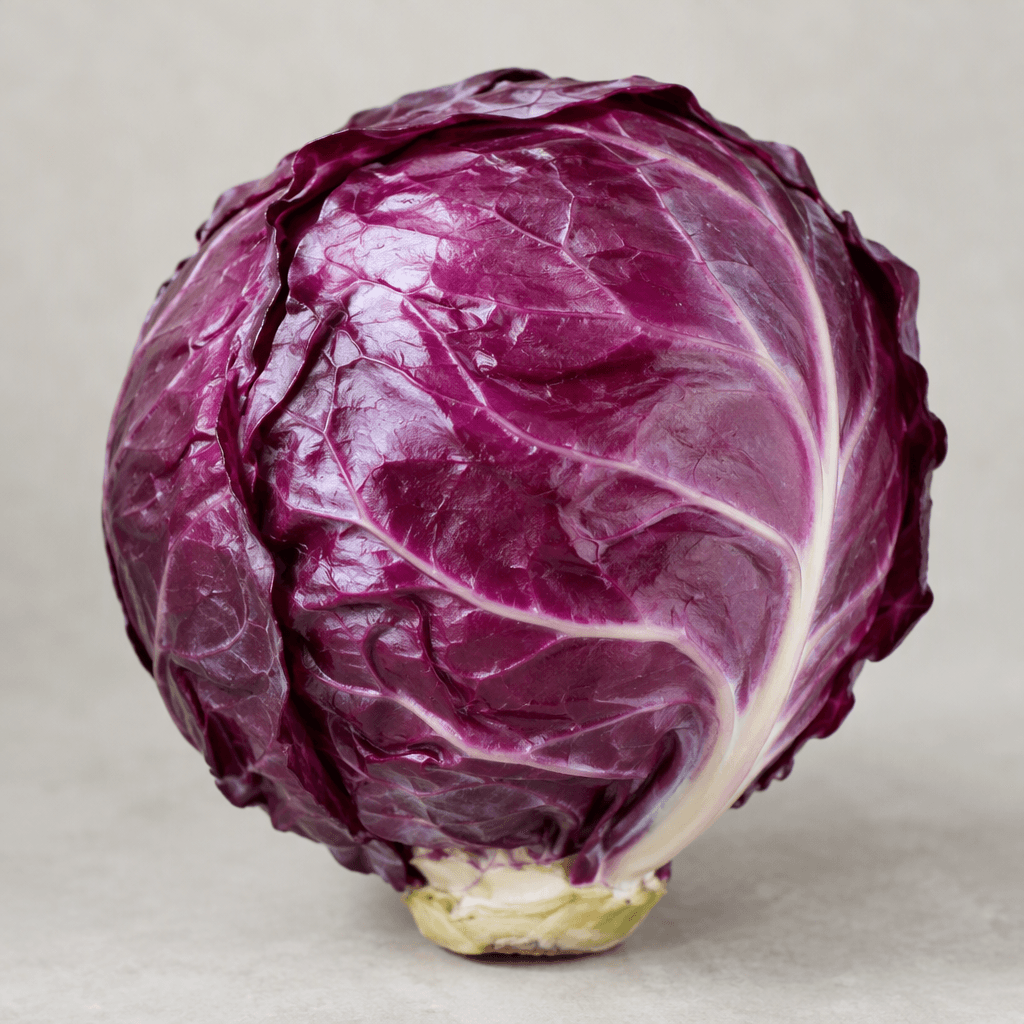
Red Cabbage Calories
Red cabbage is rich in antioxidants and vitamin C.
In season: Autumn · Winter
CALORIES
GI
POTASSIUM
FIBER
Quick answer
1 cup (chopped) of Red Cabbage (90 g) has 28 calories. That works out to 31 calories per 100 g. It contains 6.7 g of carbs, 1.3 g of protein, 0.2 g of fat and 1.9 g of fiber. Its 51.3 mg of Vitamin C covers 57% of the Daily Value. Its glycemic index is 10 (low), so it raises blood sugar slowly.
What is Red Cabbage?
Red cabbage is a firm-headed variety of cabbage, recognised by its tightly layered purple-red leaves. It can be eaten raw or cooked, and appears in many cuisines: finely shredded in slaws, pickled, or slowly braised as a side dish. Raw leaves are crisp, with a mild, slightly peppery sweetness; cooking softens them and brings out a gentler sweetness.
Serve it with roasted meats, tuck it into sandwiches, or combine it with apple or citrus for a bright salad. It provides fibre and vitamin C, while remaining low in calories. For a quick, tender slaw, slice it thinly and briefly massage with salt and a little lemon juice or vinegar.
Red Cabbage Nutrition Facts
Selected: 100 g
31
KCAL / 100G
Carbs
7.4g
· 3% DV
Protein
1.4g
· 3% DV
Fat
0.2g
· 0% DV
Fiber
2.1g
· 8% DV
DV is the share of the daily value covered, on a 2,000 kcal reference diet.
Calories come from: Carbs 80% · Protein 15% · Fat 5%
Red Cabbage Vitamins & Minerals
Vitamins
Vitamin C
57mg · 63% DV
Vitamin K
35µg · 29% DV
B6
0.2mg · 12% DV
Folate
43µg · 11% DV
Minerals
Potassium ⭐
240mg · 7% DV
Iron
1mg · 6% DV
Calcium
45mg · 5% DV
Magnesium
16mg · 4% DV
How Nutritious Is Red Cabbage?
Nutrient density
Very high
How many vitamins, minerals and how much fiber this food carries per calorie. A high score means a lot of nutrition for few calories.
Satiety score
Medium
An EatBetter score computed from fiber, protein and calorie density. A high score means staying full longer on the same calories.
Both scores are calculated per 100 g and do not change with the selected portion. The satiety score is EatBetter's own calculation, not a clinical measure.
Red Cabbage Glycemic Index
GLYCEMIC INDEX
GLYCEMIC LOAD
Accounts for portion size — a more realistic measure than GI alone.
How to Burn Off Red Cabbage
To burn the 31 calories in 100 g:
🚶
Walking (5 km/h)
🏃
Running (8 km/h)
🚴
Cycling
🏊
Swimming
Times are calculated with the MET equation for a 70 kg adult. Actual burn varies with your weight, age and pace.
Is Red Cabbage Processed?
NOVA 1
Unprocessed
1. Unprocessed
2. Minimally Processed
3. Processed
4. Ultra-Processed
NOVA classifies foods into 4 groups by industrial processing. NOVA 1 (unprocessed) is the healthiest.
Does Red Cabbage Contain Allergens?
No known major allergens
Which Diets Is Red Cabbage Good For?
Vegan
✓ Suitable
Vegetarian
✓ Suitable
Gluten-Free
✓ Suitable
Dairy-Free
— Not suitable
Mediterranean
✓ Suitable
Paleo
✓ Suitable
Whole30
— Not suitable
DASH
— Not suitable
Keto
✓ Suitable
Low FODMAP
— Not suitable
Red Cabbage Fat Profile
SATURATED
0.03g
MONOUNSATURATED
0.01g
POLYUNSATURATED
0.04g
Omega 6:3 ratio 0.7:1
Below the ideal 4:1 — a good omega balance.
Compare Red Cabbage
Foods Similar to Red Cabbage
Frequently Asked Questions About Red Cabbage
Can you eat red cabbage raw?
Yes, red cabbage is safe to eat raw and is commonly shredded into slaws and salads. Its leaves are crisp and firm, so slice them thinly; tossing them with a little salt or dressing helps soften them before serving.
How do you keep red cabbage from turning blue when cooking?
Add an acidic ingredient such as vinegar, lemon juice, or apple to red cabbage while it cooks. Its natural pigments react to acidity, so a more acidic cooking liquid helps the cabbage keep a red-purple color instead of turning bluish.
How long does red cabbage last in the fridge?
A whole red cabbage can keep for weeks in the refrigerator when stored dry in the vegetable drawer. Wrap a cut side or seal the cut cabbage in a container, and use it sooner because exposed leaves dry out more quickly.
Can you freeze red cabbage?
Yes, red cabbage freezes well for cooked dishes. Shred it, briefly blanch it, cool and drain it, then pack it airtight for the freezer. Thawed cabbage becomes softer, so it works better in braises and soups than in crunchy slaw.
What does red cabbage taste like?
Red cabbage has a crisp texture and a mild, slightly peppery cabbage flavor, often with a touch of sweetness. Raw leaves taste fresher and crunchier, while slow cooking brings out more sweetness and makes them tender.
How do you shred red cabbage for coleslaw?
Cut the red cabbage into quarters, remove the firm core, and slice each quarter crosswise into thin strips. A sharp knife or mandoline makes even shreds; keep fingers clear if using a mandoline, as its blade is very sharp.
Why does red cabbage turn pink when you add vinegar?
Red cabbage turns brighter pink or red in vinegar because its natural pigments respond to acidic conditions. This color change is normal and is one reason vinegar or citrus is often added to cabbage salads and braised dishes.
Is red cabbage healthier than green cabbage?
Red cabbage offers anthocyanin pigments that give it its deep color, while both red and green cabbage are nutritious vegetables. Choosing red cabbage adds color and a different mix of plant compounds, but either variety can be part of a healthy diet.
Can you eat the outer leaves of red cabbage?
Yes, the outer leaves of red cabbage are edible if they are fresh and clean. Remove leaves that are damaged, wilted, or dirty, then rinse the remaining cabbage under running water before slicing or cooking it.
Can you cook red cabbage in a pan?
Yes, red cabbage cooks well in a pan; slice it thinly and sauté it with a little oil until tender. Add a splash of vinegar or lemon juice to balance its flavor and help the cooked cabbage retain its vivid color.
Have another question about Red Cabbage?
Ask the AI nutrition coach — calories, portions, alternatives and more, answered in seconds in the app.

Scan calories with your camera
Instant AI nutrition analysis

Nutrition data compiled from USDA FoodData Central and scientific sources.