

Ready & Packaged Foods
All →Vegetables & Legumes
All →Desserts & Confectionery
All →Meat & Protein
All →Grains & Bakery
All →Beverages
All →Milk & Dairy
All →

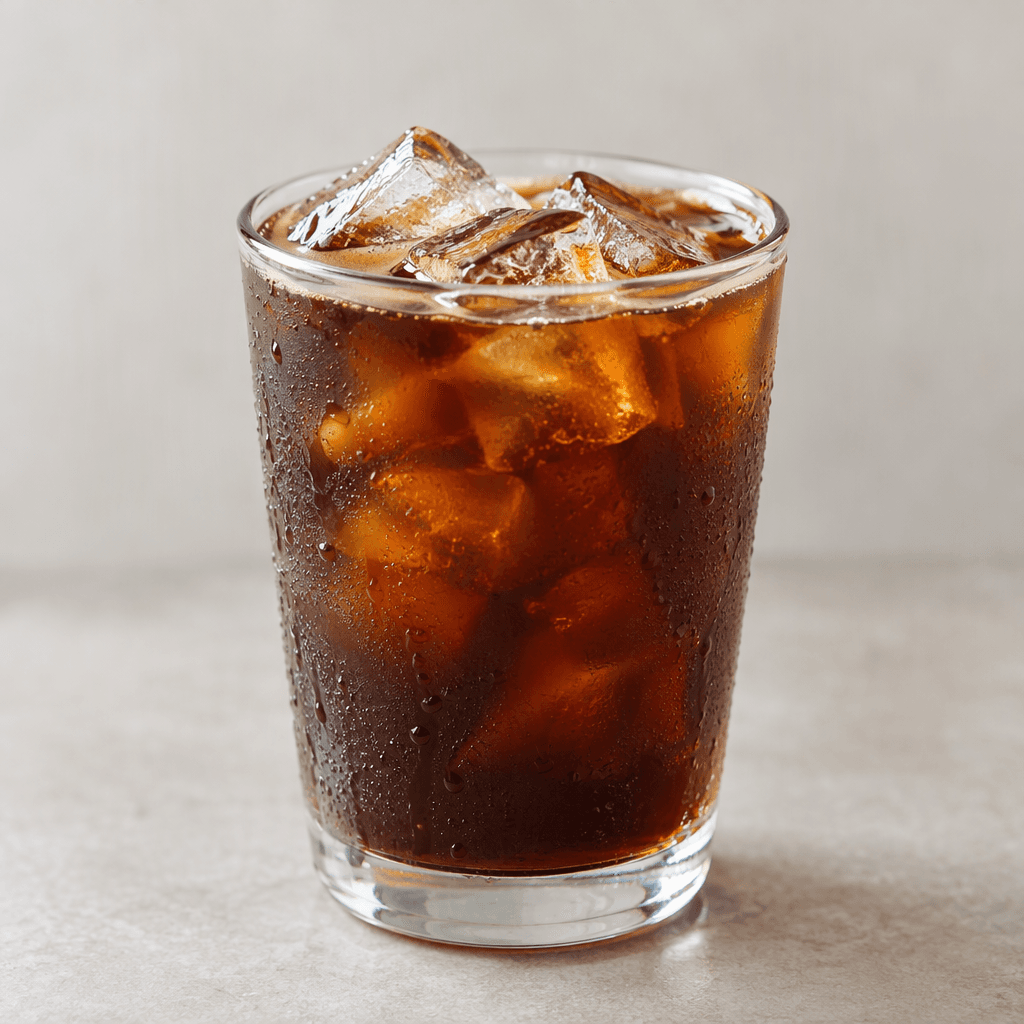
Ready-to-drink unsweetened iced coffee Calories
Low-calorie, unsweetened, caffeinated beverage
In season: Spring · Summer · Autumn · Winter
CALORIES
GI
POTASSIUM
FIBER
Quick answer
1 bottle (medium) of Ready-to-drink unsweetened iced coffee (250 g) has 3 calories. That works out to 1 calories per 100 g. It contains 0.5 g of carbs, 0.4 g of protein, 0 g of fat and 0 g of fiber. Its 0.2 mg of B2 covers 12% of the Daily Value. Its glycemic index is 5 (low), so it raises blood sugar slowly.
What is Ready-to-drink unsweetened iced coffee?
Ready-to-drink unsweetened iced coffee is chilled coffee sold in a bottle or can, ready to drink without adding sugar. It has the roasted, slightly bitter character of coffee and is usually lighter in body than a milk-based iced coffee.
It is served cold, often over ice, as a quick morning drink or an afternoon pick-me-up, especially in warm weather. With virtually no calories and no added sugar, it suits those looking for a simple caffeinated drink rather than a sweet café-style beverage. Add a splash of milk if you prefer a softer taste, or drink it plain to keep the coffee flavour front and centre.
Ready-to-drink unsweetened iced coffee Nutrition Facts
Selected: 100 g
1
KCAL / 100G
Carbs
0.2g
· 0% DV
Protein
0.1g
· 0% DV
Fat
0g
· 0% DV
Fiber
0g
· 0% DV
DV is the share of the daily value covered, on a 2,000 kcal reference diet.
Calories come from: Carbs 67% · Protein 33% · Fat 0%
Ready-to-drink unsweetened iced coffee Vitamins & Minerals
Vitamins
B2
0.06mg · 5% DV
B3
0.5mg · 3% DV
Vitamin A
0µg · 0% DV
B1
0mg · 0% DV
Minerals
Magnesium
8mg · 2% DV
Potassium ⭐
60mg · 2% DV
Phosphorus
7mg · 1% DV
Calcium
2mg · 0% DV
How Nutritious Is Ready-to-drink unsweetened iced coffee?
Nutrient density
Low
How many vitamins, minerals and how much fiber this food carries per calorie. A high score means a lot of nutrition for few calories.
Satiety score
Medium
An EatBetter score computed from fiber, protein and calorie density. A high score means staying full longer on the same calories.
Both scores are calculated per 100 g and do not change with the selected portion. The satiety score is EatBetter's own calculation, not a clinical measure.
Ready-to-drink unsweetened iced coffee Glycemic Index
GLYCEMIC INDEX
GLYCEMIC LOAD
Accounts for portion size — a more realistic measure than GI alone.
How to Burn Off Ready-to-drink unsweetened iced coffee
To burn the 1 calories in 100 g:
🚶
Walking (5 km/h)
🏃
Running (8 km/h)
🚴
Cycling
🏊
Swimming
Times are calculated with the MET equation for a 70 kg adult. Actual burn varies with your weight, age and pace.
Is Ready-to-drink unsweetened iced coffee Processed?
NOVA 3
Processed
1. Unprocessed
2. Minimally Processed
3. Processed
4. Ultra-Processed
NOVA classifies foods into 4 groups by industrial processing. NOVA 1 (unprocessed) is the healthiest.
Does Ready-to-drink unsweetened iced coffee Contain Allergens?
No known major allergens
Which Diets Is Ready-to-drink unsweetened iced coffee Good For?
Vegan
✓ Suitable
Vegetarian
✓ Suitable
Gluten-Free
✓ Suitable
Dairy-Free
— Not suitable
Mediterranean
✓ Suitable
Paleo
✓ Suitable
Whole30
— Not suitable
DASH
— Not suitable
Keto
— Not suitable
Low FODMAP
— Not suitable
Ready-to-drink unsweetened iced coffee Fat Profile
SATURATED
0.02g
MONOUNSATURATED
0.01g
POLYUNSATURATED
0.01g
Compare Ready-to-drink unsweetened iced coffee
Foods Similar to Ready-to-drink unsweetened iced coffee
Frequently Asked Questions About Ready-to-drink unsweetened iced coffee
How much caffeine is in ready-to-drink unsweetened iced coffee?
The caffeine content varies by brand, recipe and bottle size, so there is no reliable amount for every ready-to-drink unsweetened iced coffee. Check the package if you need to track your intake, and count other caffeinated drinks too.
Does ready-to-drink unsweetened iced coffee break a fast?
Yes, ready-to-drink unsweetened iced coffee breaks a fasting window because it is a beverage you consume, even without added sugar. For a religious fast, follow the rules of that fast; during Ramadan, drinking it during daylight hours breaks the fast.
Can ready-to-drink unsweetened iced coffee affect sleep?
Yes, its caffeine can make it harder to fall asleep or reduce sleep quality, especially when you drink it later in the day. If you are sensitive to caffeine, choose a caffeine-free drink or have this coffee earlier.
Is ready-to-drink unsweetened iced coffee safe during pregnancy?
It can fit within a pregnancy caffeine limit, but the amount of caffeine varies between products and contributes to your daily total. Check the bottle’s caffeine information and follow your maternity care team’s advice.
Can you drink ready-to-drink unsweetened iced coffee before a workout?
Yes, you can drink it before exercise if you tolerate caffeine well. It does not replace water, and caffeine may cause jitters or stomach discomfort in some people, so try it well before an important workout.
How long does ready-to-drink unsweetened iced coffee last after opening?
Keep it refrigerated after opening and follow the product’s storage instructions for how soon to finish it. Do not leave it at room temperature for extended periods; versions containing milk are particularly perishable once opened.
Can you heat ready-to-drink unsweetened iced coffee?
Yes, pour it into a mug and warm it if you prefer hot coffee. Do not heat a sealed bottle, and expect a milk-based version to taste or feel different when warmed.
Can you freeze ready-to-drink unsweetened iced coffee?
Yes, you can freeze it in an ice-cube tray and use the cubes in coffee instead of regular ice. A milk-containing version may separate or become grainy after thawing, so freezing works best for adding cubes directly to a drink.
Can ready-to-drink unsweetened iced coffee be used in a smoothie?
Yes, blend it with ingredients such as banana, oats or milk for a coffee-flavoured smoothie. The coffee adds caffeine, so remember that the smoothie is not a caffeine-free snack.
Is ready-to-drink unsweetened iced coffee the same as cold brew?
Not necessarily. Cold brew describes coffee steeped in cold water, while ready-to-drink unsweetened iced coffee describes a packaged, ready-to-serve product; it may be made using a different brewing method.
Have another question about Ready-to-drink unsweetened iced coffee?
Ask the AI nutrition coach — calories, portions, alternatives and more, answered in seconds in the app.

Scan calories with your camera
Instant AI nutrition analysis

Nutrition data compiled from USDA FoodData Central and scientific sources.