

Ready & Packaged Foods
All →Vegetables & Legumes
All →Desserts & Confectionery
All →Meat & Protein
All →Grains & Bakery
All →Beverages
All →Milk & Dairy
All →

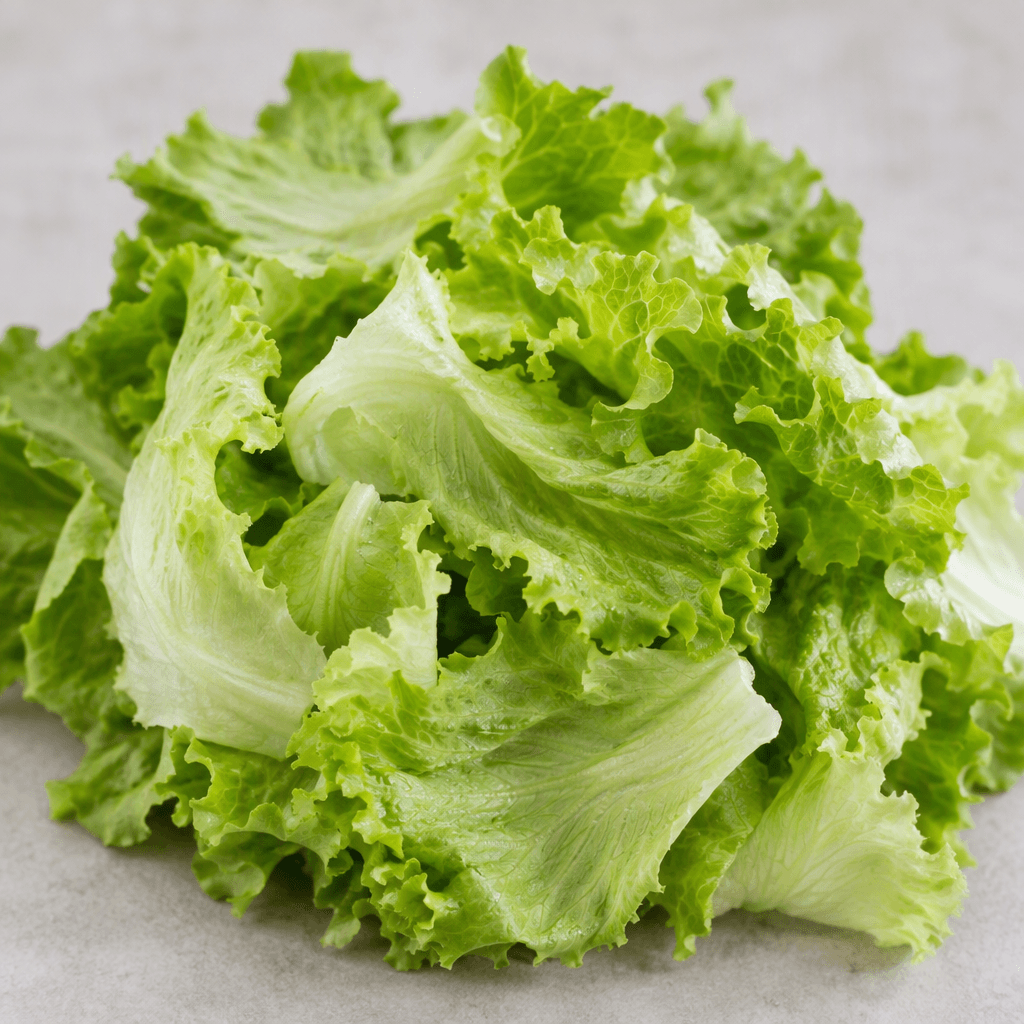
Raw lettuce Calories
Low calorie, high water content, source of fiber and folate
In season: Spring · Summer · Autumn
CALORIES · 100 G
GI
POTASSIUM · 100 G
FIBER · 100 G
Quick answer
1 cup (medium) of Raw lettuce (36 g) has 5 calories. That works out to 15 calories per 100 g. It contains 1 g of carbs, 0.5 g of protein, 0.1 g of fat and 0.5 g of fiber. Its 45.4 µg of Vitamin K covers 38% of the Daily Value. Its glycemic index is 15 (low), so it raises blood sugar slowly.
Raw lettuce Nutrition Facts
Selected: 1 cup (medium) · 36 g
5
KCAL / 36G
Carbs
1g
· 0% DV
Protein
0.5g
· 1% DV
Fat
0.1g
· 0% DV
Fiber
0.5g
· 2% DV
DV is the share of the daily value covered, on a 2,000 kcal reference diet.
Calories come from: Carbs 58% · Protein 29% · Fat 13%
Raw lettuce nutrition facts table · 1 cup (medium) (36 g)
| Nutrient | Amount | % DV |
|---|---|---|
| Calories | 5 kcal | |
| Total fat | 0.1 g | 0% |
| Saturated fat | 0.01 g | 0% |
| Trans fat | 0 g | |
| Sodium | 10 mg | 0% |
| Total carbohydrate | 1 g | 0% |
| Fiber | 0.5 g | 2% |
| Protein | 0.5 g | 1% |
Calories: Calories measure energy. Average daily need is 2,000 kcal. Excess calories are stored as fat, too few cause weight loss.
Carbs: Your body's primary energy source. The brain runs exclusively on carbs. Daily need: 275g.
Protein: Essential for muscle repair and cell growth. Daily need: 50g. Keeps you full and boosts metabolism.
Fat: Needed for hormone production and vitamin absorption. Daily need: 78g. Limit saturated fats, choose unsaturated.
Fiber: Critical for digestive health and satiety. Daily need: 28g. Stabilizes blood sugar, lowers cholesterol.

Log this food in EatBetter
100,000+ people use it
- Get your daily calorie target
- Snap your meal, log it in seconds
- See every vitamin and mineral

📸 Scan the code to get the app free.

How Many Calories in 1 Cup of Raw lettuce?
| Serving | Amount | Calories |
|---|---|---|
| 1 cup (medium) | 36 g | 5 kcal |
| 1 cup (extra small) | 18 g | 3 kcal |
| 1 cup (small) | 20 g | 3 kcal |
| 1 cup (thin) | 30 g | 5 kcal |
| 1 cup (thick) | 45 g | 7 kcal |
| 1 cup (large) | 55 g | 8 kcal |
| 1 cup (jumbo) | 72 g | 11 kcal |
| 100 g | 100 g | 15 kcal |
| 1 piece (small) | 100 g | 15 kcal |
| 1 piece (whole) | 300 g | 45 kcal |
Calculated from 15 calories per 100 g.
Frequently Asked Questions About Raw lettuce
How should you wash raw lettuce?
Separate the raw lettuce leaves and rinse each under clean running water, paying attention to folds and the base where grit can collect. Drain them well or dry with a clean towel; wet leaves can make salads soggy and spoil faster.
How do you store raw lettuce to keep it fresh?
Keep raw lettuce unwashed and dry in a loosely closed bag or container in the refrigerator’s crisper drawer. If you have already washed it, dry the leaves thoroughly before storing; trapped moisture encourages sliminess and decay.
Can you freeze raw lettuce?
Yes, but thawed raw lettuce becomes limp and watery, so it will not work well in salads. Frozen lettuce is better added to cooked dishes, where its softened texture matters less; keep it refrigerated if you want crisp leaves.
Why does raw lettuce taste bitter?
Raw lettuce can taste bitter because of its variety, growing conditions, or because the plant has become mature and started to flower. Mild bitterness does not necessarily mean it has spoiled, but choose fresher, crisp leaves if the flavor is unpleasant.
Can you eat the outer leaves of raw lettuce?
Yes, you can eat the outer leaves of raw lettuce if they are fresh and intact. They may have more dirt from growing and handling, so wash them carefully; discard leaves that are rotten, slimy, or badly damaged.
How can you tell if raw lettuce has gone bad?
Raw lettuce that feels slimy, smells unpleasant, or has rotten patches should be discarded. Limp leaves alone may simply have lost freshness, but check them closely and remove any damaged parts before using the rest.
Does raw lettuce need to be washed if the package says prewashed?
Usually, no: raw lettuce labeled ready-to-eat or prewashed can be used without washing again. Rewashing it at home can introduce germs from hands, utensils, or the sink; follow the package directions and keep it refrigerated.
Can eating raw lettuce cause gas or bloating?
Raw lettuce does not cause noticeable gas for most people, but some may feel bloated after eating raw vegetables. Try a smaller serving or cooked lettuce if it bothers you; seek medical advice if symptoms persist or are severe.
How do you stop raw lettuce from wilting?
Keep raw lettuce cold and dry, and avoid leaving it exposed to warm air. If the leaves are only slightly limp, soaking them briefly in cold water may help restore some crispness; discard them if they are slimy or smell bad.
Why does raw lettuce turn brown after cutting?
Cut raw lettuce can turn brown when its damaged edges react with air, especially after it has been chopped and left out. Tear the leaves by hand, use a clean knife, and add dressing shortly before serving to keep the salad fresher.
Raw lettuce Vitamins & Minerals
Vitamins
Vitamin K
45.36µg · 38% DV
Vitamin A
133.2µg · 15% DV
Folate
26.28µg · 7% DV
Vitamin C
3.31mg · 4% DV
Minerals
Manganese
0.09mg · 4% DV
Potassium ⭐
70mg · 2% DV
Iron
0.32mg · 2% DV
Phosphorus
10mg · 1% DV
Sodium
10mg · 0% DV
Raw lettuce Glycemic Index
GLYCEMIC INDEX
GLYCEMIC LOAD
Accounts for portion size — a more realistic measure than GI alone.
How to Burn Off Raw lettuce
To burn the 5 calories in 1 cup (medium) (36 g):
🚶
Walking (5 km/h)
🏃
Running (8 km/h)
🚴
Cycling
🏊
Swimming
Times are calculated with the MET equation for a 70 kg adult. Actual burn varies with your weight, age and pace.
What is Raw lettuce?
Raw lettuce is the fresh, leafy part of the lettuce plant, with crisp ribs and tender, loosely ruffled edges. It is usually eaten uncooked, either as whole leaves or chopped, so its delicate crunch and mild flavour stay intact.
Across many English-speaking kitchens, it is a familiar base for salads and a crisp addition to sandwiches, burgers and wraps. Its gentle taste pairs easily with sharper dressings, herbs and other vegetables. Raw lettuce is mostly water and is low in calories, while also providing some fibre and folate. Wash and dry the leaves well before serving; for a lighter salad, use a squeeze of lemon and a modest amount of dressing.
How Nutritious Is Raw lettuce?
Nutrient density
High
How many vitamins, minerals and how much fiber this food carries per calorie. A high score means a lot of nutrition for few calories.
Satiety score
Medium
An EatBetter score computed from fiber, protein and calorie density. A high score means staying full longer on the same calories.
Both scores are calculated per 100 g and do not change with the selected portion. The satiety score is EatBetter's own calculation, not a clinical measure.
Is Raw lettuce Processed?
NOVA 1
Unprocessed
1. Unprocessed
2. Minimally Processed
3. Processed
4. Ultra-Processed
NOVA classifies foods into 4 groups by industrial processing. NOVA 1 (unprocessed) is the healthiest.
Does Raw lettuce Contain Allergens?
No known major allergens
Which Diets Is Raw lettuce Good For?
Vegan
✓ Suitable
Vegetarian
✓ Suitable
Gluten-Free
✓ Suitable
Dairy-Free
— Not suitable
Mediterranean
✓ Suitable
Paleo
✓ Suitable
Whole30
— Not suitable
DASH
— Not suitable
Keto
— Not suitable
Low FODMAP
— Not suitable
Raw lettuce Fat Profile
SATURATED
0.01g
MONOUNSATURATED
0g
POLYUNSATURATED
0.02g
Omega 6:3 ratio 0:1
Below the ideal 4:1 — a good omega balance.
Compare Raw lettuce
Foods Similar to Raw lettuce
Have another question about Raw lettuce?
Ask the AI nutrition coach — calories, portions, alternatives and more, answered in seconds in the app.

Scan calories with your camera
Instant AI nutrition analysis

Nutrition data compiled from USDA FoodData Central and scientific sources.