

Ready & Packaged Foods
All →Vegetables & Legumes
All →Desserts & Confectionery
All →Meat & Protein
All →Grains & Bakery
All →Beverages
All →Milk & Dairy
All →

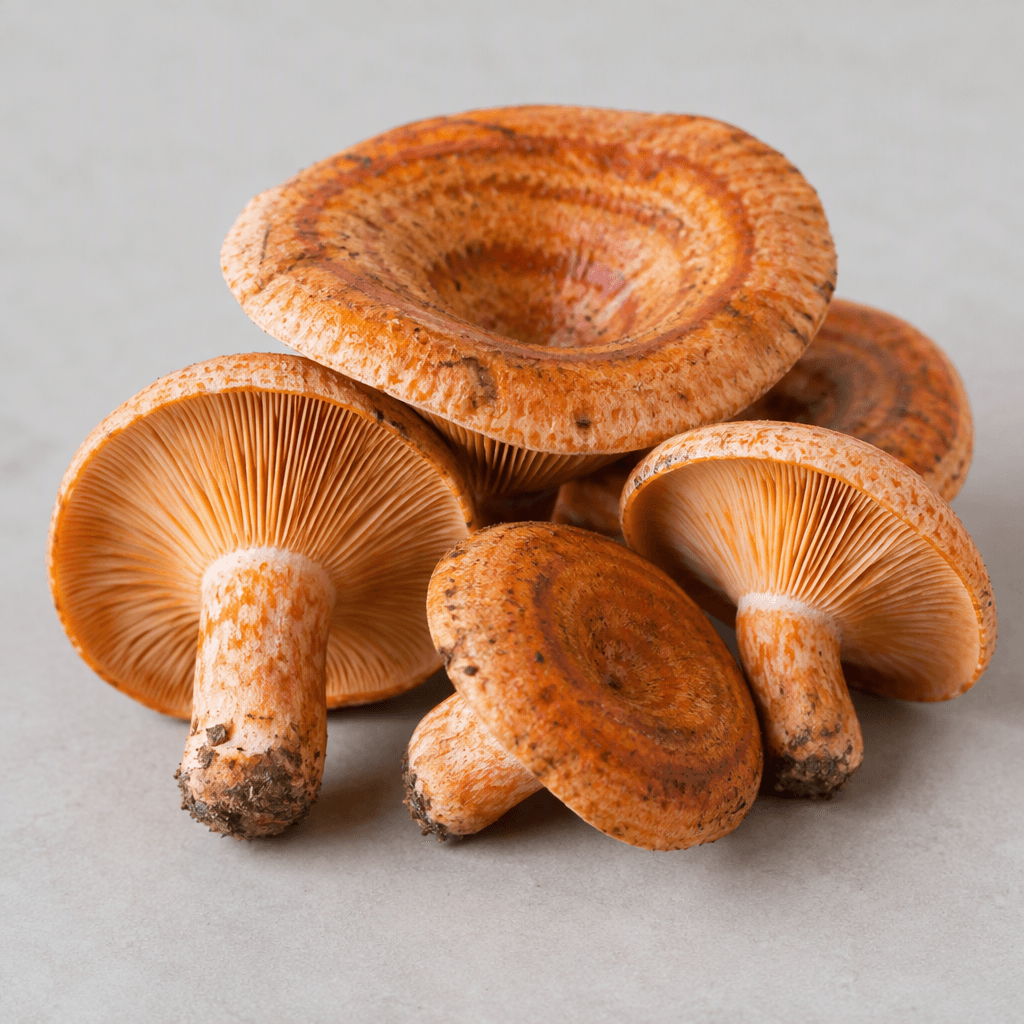
Raw Cintar Mushroom Calories
Low calorie, source of fiber, contains selenium and vitamin D
In season: Autumn · Winter
CALORIES · 100 G
GI
POTASSIUM · 100 G
FIBER · 100 G
Quick answer
1 piece (medium) of Raw Cintar Mushroom (60 g) has 17 calories. That works out to 28 calories per 100 g. It contains 2.7 g of carbs, 1.6 g of protein, 0.2 g of fat and 1.5 g of fiber. Its 9.6 µg of Biotin covers 32% of the Daily Value. Its glycemic index is 15 (low), so it raises blood sugar slowly.
Raw Cintar Mushroom Nutrition Facts
Selected: 1 piece (medium) · 60 g
17
KCAL / 60G
Carbs
2.7g
· 1% DV
Protein
1.6g
· 3% DV
Fat
0.2g
· 0% DV
Fiber
1.5g
· 5% DV
DV is the share of the daily value covered, on a 2,000 kcal reference diet.
Calories come from: Carbs 57% · Protein 34% · Fat 9%
Raw Cintar Mushroom nutrition facts table · 1 piece (medium) (60 g)
| Nutrient | Amount | % DV |
|---|---|---|
| Calories | 17 kcal | |
| Total fat | 0.2 g | 0% |
| Saturated fat | 0.03 g | 0% |
| Trans fat | 0 g | |
| Sodium | 3.6 mg | 0% |
| Total carbohydrate | 2.7 g | 1% |
| Fiber | 1.5 g | 5% |
| Protein | 1.6 g | 3% |
Calories: Calories measure energy. Average daily need is 2,000 kcal. Excess calories are stored as fat, too few cause weight loss.
Carbs: Your body's primary energy source. The brain runs exclusively on carbs. Daily need: 275g.
Protein: Essential for muscle repair and cell growth. Daily need: 50g. Keeps you full and boosts metabolism.
Fat: Needed for hormone production and vitamin absorption. Daily need: 78g. Limit saturated fats, choose unsaturated.
Fiber: Critical for digestive health and satiety. Daily need: 28g. Stabilizes blood sugar, lowers cholesterol.

Log this food in EatBetter
100,000+ people use it
- Get your daily calorie target
- Snap your meal, log it in seconds
- See every vitamin and mineral

📸 Scan the code to get the app free.

How Many Calories in 1 Medium Raw Cintar Mushroom?
| Serving | Amount | Calories |
|---|---|---|
| 1 piece (medium) | 60 g | 17 kcal |
| 1 piece (small) | 40 g | 11 kcal |
| 1 cup (shredded) | 50 g | 14 kcal |
| 1 cup (chopped) | 70 g | 20 kcal |
| 1 piece (large) | 90 g | 25 kcal |
| 100 g | 100 g | 28 kcal |
| 1 serving (medium) | 100 g | 28 kcal |
| 2 piece (medium) | 120 g | 34 kcal |
| 1 piece (jumbo) | 120 g | 34 kcal |
Calculated from 28 calories per 100 g.
Frequently Asked Questions About Raw Cintar Mushroom
Can you eat raw Cintar mushrooms?
No, raw Cintar mushrooms are not generally recommended for eating. They are usually cooked, and raw mushrooms can cause digestive upset. Cook them thoroughly, and never eat a wild mushroom unless its identity has been reliably confirmed.
Are raw Cintar mushrooms poisonous?
The correctly identified edible Cintar species are not considered poisonous when properly cooked, but the name can refer to different mushrooms in different regions. Toxic lookalikes exist, so do not eat a wild specimen based on a name or photo alone.
How do you cook Cintar mushrooms?
Cintar mushrooms are commonly pan-fried. Clean and slice them, then cook with a little oil until they release their moisture and become tender; garlic, onion, or eggs pair well. Serve them hot as a side or in a cooked dish.
How can you identify a Cintar mushroom?
A Cintar mushroom cannot be safely identified from one feature alone. Orange coloring, milk-like sap when cut, and greenish staining can help identify some Cintar types, but lookalikes occur. Have wild mushrooms checked by a qualified local expert before eating them.
What do Cintar mushrooms taste like?
Cooked Cintar mushrooms have a savory, earthy flavor and a firm, somewhat meaty texture. Pan-frying helps concentrate their flavor; they are often served with eggs or as a side. Their texture and taste are less appealing when eaten raw.
Where do Cintar mushrooms grow?
Cintar mushrooms are commonly associated with pine forests and are foraged in parts of Turkey and other regions where related species grow. They tend to appear after autumn rains, though the location and season vary with local climate and habitat.
How do you clean raw Cintar mushrooms?
Brush soil from raw Cintar mushrooms with a soft brush or wipe them with a damp cloth, and trim dirty ends. If they need rinsing, use running water briefly and dry them well; soaking can make them waterlogged and harder to brown.
How should you store raw Cintar mushrooms?
Store raw Cintar mushrooms unwashed in a breathable paper bag or a loosely covered container in the refrigerator. Keep them dry, remove any bruised or spoiled pieces, and cook them promptly; washing before storage can make them deteriorate faster.
Can you freeze Cintar mushrooms?
Yes, Cintar mushrooms freeze better after cooking. Clean and pan-cook them until their released moisture evaporates, cool them, then pack in airtight portions. Thaw in the refrigerator and heat thoroughly; do not refreeze mushrooms that have already thawed.
Can raw Cintar mushrooms cause food poisoning?
Yes, eating a misidentified wild Cintar mushroom can cause serious poisoning, and even edible mushrooms may upset your stomach when eaten raw. If someone becomes ill after eating a foraged mushroom, seek emergency medical help and keep any remaining mushroom for identification.
Raw Cintar Mushroom Vitamins & Minerals
Vitamins
Biotin
9.6µg · 32% DV
B3
2.94mg · 18% DV
B2
0.23mg · 18% DV
B5
0.78mg · 16% DV
Minerals
Copper
0.18mg · 20% DV
Selenium
5.4µg · 10% DV
Phosphorus
66mg · 9% DV
Potassium ⭐
252mg · 7% DV
Sodium
3.6mg · 0% DV
Raw Cintar Mushroom Glycemic Index
GLYCEMIC INDEX
GLYCEMIC LOAD
Accounts for portion size — a more realistic measure than GI alone.
How to Burn Off Raw Cintar Mushroom
To burn the 17 calories in 1 piece (medium) (60 g):
🚶
Walking (5 km/h)
🏃
Running (8 km/h)
🚴
Cycling
🏊
Swimming
Times are calculated with the MET equation for a 70 kg adult. Actual burn varies with your weight, age and pace.
What is Raw Cintar Mushroom?
Raw Cintar mushroom is the uncooked form of a wild mushroom gathered in Turkey, often in pine woods in autumn. Known in some regions as kanlıca, it has a firm, fleshy texture and a mildly earthy, peppery flavour.
Cintar is more commonly cooked than served raw: people grill it, fry it in a pan or cook it on a griddle, which softens the flesh and brings out its savoury taste. If you use it raw, slice it thinly into a salad, and eat wild mushrooms only when their identity is certain. It is low in calories and provides fibre. Pair it with leafy greens for a lighter dish, or cook it thoroughly and serve with bread for a more traditional-style plate.
How Nutritious Is Raw Cintar Mushroom?
Nutrient density
High
How many vitamins, minerals and how much fiber this food carries per calorie. A high score means a lot of nutrition for few calories.
Satiety score
Medium
An EatBetter score computed from fiber, protein and calorie density. A high score means staying full longer on the same calories.
Both scores are calculated per 100 g and do not change with the selected portion. The satiety score is EatBetter's own calculation, not a clinical measure.
Is Raw Cintar Mushroom Processed?
NOVA 1
Unprocessed
1. Unprocessed
2. Minimally Processed
3. Processed
4. Ultra-Processed
NOVA classifies foods into 4 groups by industrial processing. NOVA 1 (unprocessed) is the healthiest.
Does Raw Cintar Mushroom Contain Allergens?
No known major allergens
Which Diets Is Raw Cintar Mushroom Good For?
Vegan
✓ Suitable
Vegetarian
✓ Suitable
Gluten-Free
✓ Suitable
Dairy-Free
— Not suitable
Mediterranean
✓ Suitable
Paleo
✓ Suitable
Whole30
— Not suitable
DASH
— Not suitable
Keto
✓ Suitable
Low FODMAP
— Not suitable
Raw Cintar Mushroom Fat Profile
SATURATED
0.03g
MONOUNSATURATED
0.02g
POLYUNSATURATED
0.03g
Omega 6:3 ratio 2:1
Below the ideal 4:1 — a good omega balance.
Compare Raw Cintar Mushroom
Foods Similar to Raw Cintar Mushroom
Have another question about Raw Cintar Mushroom?
Ask the AI nutrition coach — calories, portions, alternatives and more, answered in seconds in the app.

Scan calories with your camera
Instant AI nutrition analysis

Nutrition data compiled from USDA FoodData Central and scientific sources.