

Ready & Packaged Foods
All →Vegetables & Legumes
All →Desserts & Confectionery
All →Meat & Protein
All →Grains & Bakery
All →Beverages
All →Milk & Dairy
All →

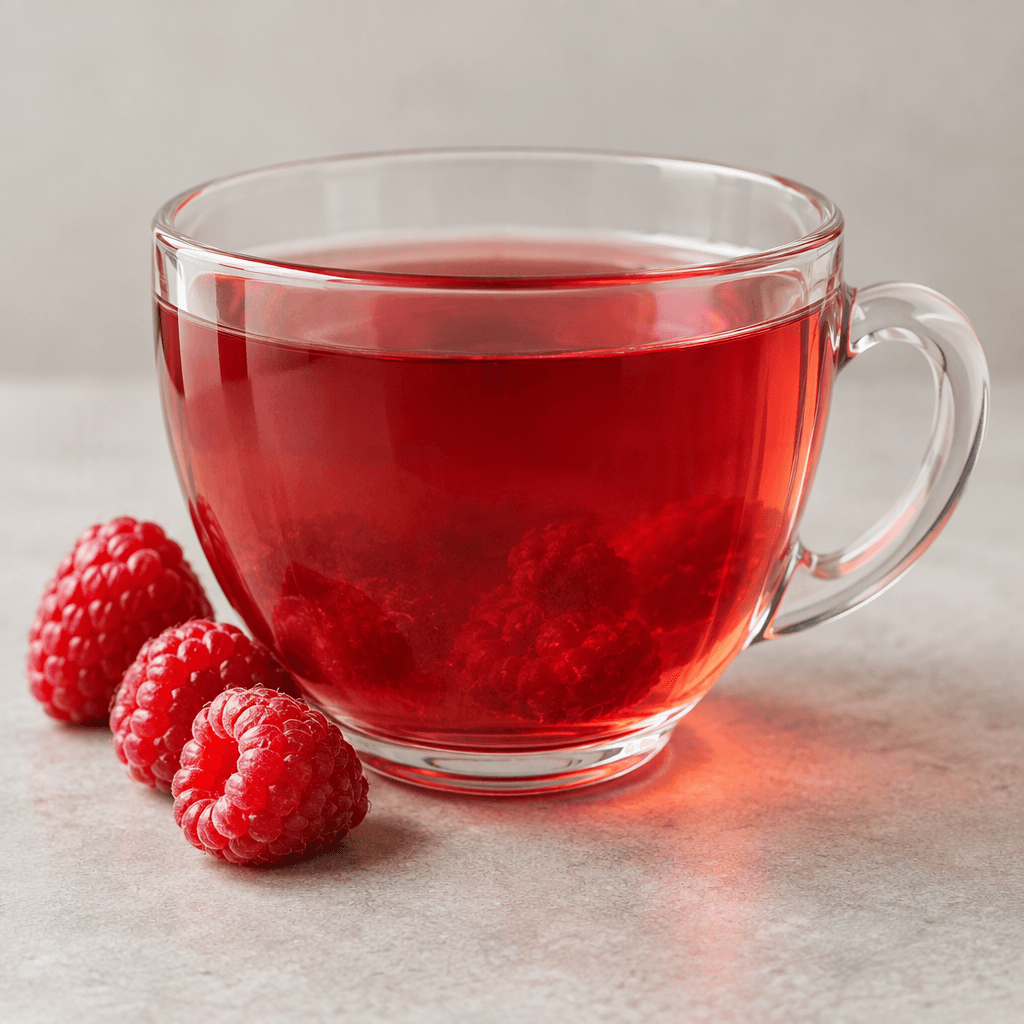
Raspberry tea Calories
Low-calorie, lightly fruity tea infusion
CALORIES
GI
POTASSIUM
FIBER
Quick answer
1 cup (medium) of Raspberry tea (240 g) has 2 calories. That works out to 1 calories per 100 g. It contains 0.5 g of carbs, 0.2 g of protein, 0 g of fat and 0 g of fiber. Its 0.2 mg of Manganese covers 8% of the Daily Value. Its glycemic index is 0 (low), so it raises blood sugar slowly.
What is Raspberry tea?
Raspberry tea is a fruit infusion made by steeping dried raspberry pieces or a raspberry-containing fruit blend in hot water. Depending on the product, it may also be flavoured; despite the name, it is not necessarily made from tea leaves, and it is distinct from raspberry-leaf tea.
It has a rosy-red colour and a gentle, tangy fruit flavour. Drink it hot or chill it for an iced version; in many places it is enjoyed through the day, on its own or with a light snack. Unsweetened, it is mostly water and very low in calories. Check the blend if you want a caffeine-free cup, and leave out added sugar to keep it light.
Raspberry tea Nutrition Facts
Selected: 100 g
1
KCAL / 100G
Carbs
0.2g
· 0% DV
Protein
0.1g
· 0% DV
Fat
0g
· 0% DV
Fiber
0g
· 0% DV
DV is the share of the daily value covered, on a 2,000 kcal reference diet.
Calories come from: Carbs 67% · Protein 33% · Fat 0%
Raspberry tea Vitamins & Minerals
Vitamins
Vitamin A
0µg · 0% DV
B1
0mg · 0% DV
B2
0mg · 0% DV
B3
0.03mg · 0% DV
Minerals
Potassium ⭐
18mg · 1% DV
Calcium
3mg · 0% DV
Iron
0mg · 0% DV
Magnesium
2mg · 0% DV
How Nutritious Is Raspberry tea?
Nutrient density
Low
How many vitamins, minerals and how much fiber this food carries per calorie. A high score means a lot of nutrition for few calories.
Satiety score
Medium
An EatBetter score computed from fiber, protein and calorie density. A high score means staying full longer on the same calories.
Both scores are calculated per 100 g and do not change with the selected portion. The satiety score is EatBetter's own calculation, not a clinical measure.
Raspberry tea Glycemic Index
GLYCEMIC INDEX
GLYCEMIC LOAD
Accounts for portion size — a more realistic measure than GI alone.
How to Burn Off Raspberry tea
To burn the 1 calories in 100 g:
🚶
Walking (5 km/h)
🏃
Running (8 km/h)
🚴
Cycling
🏊
Swimming
Times are calculated with the MET equation for a 70 kg adult. Actual burn varies with your weight, age and pace.
Is Raspberry tea Processed?
NOVA 2
Minimally Processed
1. Unprocessed
2. Minimally Processed
3. Processed
4. Ultra-Processed
NOVA classifies foods into 4 groups by industrial processing. NOVA 1 (unprocessed) is the healthiest.
Does Raspberry tea Contain Allergens?
No known major allergens
Which Diets Is Raspberry tea Good For?
Vegan
✓ Suitable
Vegetarian
✓ Suitable
Gluten-Free
✓ Suitable
Dairy-Free
— Not suitable
Mediterranean
✓ Suitable
Paleo
✓ Suitable
Whole30
— Not suitable
DASH
— Not suitable
Keto
✓ Suitable
Low FODMAP
— Not suitable
Raspberry tea Fat Profile
SATURATED
0g
MONOUNSATURATED
0g
POLYUNSATURATED
0g
Compare Raspberry tea
Foods Similar to Raspberry tea
Frequently Asked Questions About Raspberry tea
How do you make raspberry tea?
Make raspberry tea by steeping fresh, frozen, or dried raspberries in hot water, then strain if you prefer a clear drink. Lightly crushing the fruit before steeping helps release more flavor.
Does raspberry tea have caffeine?
Plain raspberry tea made from the fruit and water is caffeine-free. Some blends include black or green tea, which do contain caffeine, so check the ingredient list if you are avoiding it.
Is raspberry tea the same as raspberry leaf tea?
No. Raspberry tea usually refers to an infusion made with the berries, while raspberry leaf tea is made from the plant’s leaves. They are different drinks and should not be treated as interchangeable, especially during pregnancy.
What are the benefits of raspberry tea?
Raspberry tea can add variety to your fluid intake, and compounds from the berries may pass into the infusion. It is not proven to prevent or treat illness, and adding sugar changes its nutritional profile.
Can you drink raspberry tea during pregnancy?
Fruit-based raspberry tea is different from raspberry leaf tea, which is sometimes used during pregnancy. Ask your maternity care professional before drinking raspberry leaf tea, since its safety and timing depend on the individual.
Can you make raspberry tea with fresh raspberries?
Yes, fresh raspberries work well for raspberry tea. Rinse them gently, steep them in hot water, and strain if desired; frozen or dried berries also work, though the flavor and strength may differ.
Can raspberry tea help with weight loss?
Raspberry tea does not cause weight loss on its own. Unsweetened raspberry tea can replace a sugary drink, but sweeteners such as honey or syrup add energy and can reduce that advantage.
Can you drink raspberry tea cold?
Yes, raspberry tea can be served cold. Brew it hot and chill it, or steep raspberries in cold water for a gentler flavor; refrigerate the drink rather than leaving it out.
Does raspberry tea help you sleep?
Plain raspberry tea is caffeine-free, so it does not have the stimulant effect of caffeinated tea and is usually suitable as an evening drink. A raspberry blend containing black or green tea may affect sleep.
How long does brewed raspberry tea last in the fridge?
Keep brewed raspberry tea in a covered container in the refrigerator and use it within a few days. Discard it if it develops an unusual smell, taste, or appearance.
Have another question about Raspberry tea?
Ask the AI nutrition coach — calories, portions, alternatives and more, answered in seconds in the app.

Scan calories with your camera
Instant AI nutrition analysis

Nutrition data compiled from USDA FoodData Central and scientific sources.