

Ready & Packaged Foods
All →Vegetables & Legumes
All →Desserts & Confectionery
All →Meat & Protein
All →Grains & Bakery
All →Beverages
All →Milk & Dairy
All →

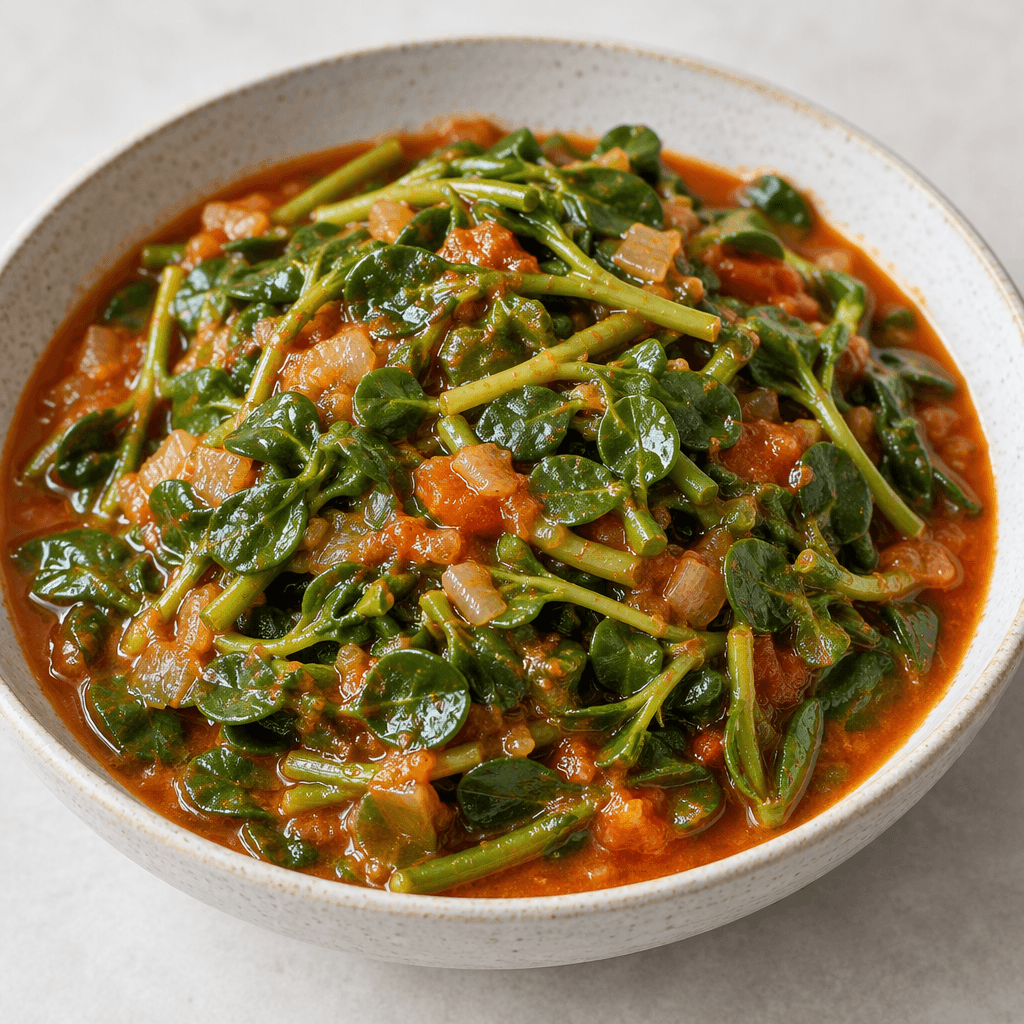
Purslane Stew Calories
Iron, Omega-3, Vitamin C, low calorie
In season: Spring · Summer
CALORIES
GI
POTASSIUM
FIBER
Quick answer
1 serving (medium) of Purslane Stew (200 g) has 84 calories. That works out to 42 calories per 100 g. It contains 14.4 g of carbs, 3.4 g of protein, 2.2 g of fat and 5.2 g of fiber. Its 360 µg of Vitamin K covers 300% of the Daily Value. Its glycemic index is 35 (low), so it raises blood sugar slowly.
What is Purslane Stew?
Purslane Stew is a Turkish home-style dish of purslane leaves and tender stems simmered with onion and tomato. Some cooks add a little rice, while others keep it simple and let the greens and their lightly tangy flavour take centre stage. Purslane is especially familiar in summer cooking across Turkey.
The leaves turn soft and juicy as they cook, making the stew good warm or at room temperature. In Turkey it is often served with yogurt and bread; an olive-oil version can also be enjoyed cold. It is a vegetable-forward, relatively light dish with some fibre, rather than a substantial source of protein. For a more filling meal, pair it with yogurt, beans or another protein-rich side.
Purslane Stew Nutrition Facts
Selected: 100 g
42
KCAL / 100G
Carbs
7.2g
· 3% DV
Protein
1.7g
· 3% DV
Fat
1.1g
· 1% DV
Fiber
2.6g
· 9% DV
DV is the share of the daily value covered, on a 2,000 kcal reference diet.
Calories come from: Carbs 63% · Protein 15% · Fat 22%
Purslane Stew Vitamins & Minerals
Vitamins
Vitamin K
180µg · 150% DV
Vitamin A
420µg · 47% DV
Vitamin C
21mg · 23% DV
Vitamin E
1.4mg · 9% DV
Minerals
Iron
2mg · 11% DV
Potassium ⭐
370mg · 11% DV
Magnesium
44mg · 10% DV
Sodium
210mg · 9% DV
How Nutritious Is Purslane Stew?
Nutrient density
Very high
How many vitamins, minerals and how much fiber this food carries per calorie. A high score means a lot of nutrition for few calories.
Satiety score
Medium
An EatBetter score computed from fiber, protein and calorie density. A high score means staying full longer on the same calories.
Both scores are calculated per 100 g and do not change with the selected portion. The satiety score is EatBetter's own calculation, not a clinical measure.
Purslane Stew Glycemic Index
GLYCEMIC INDEX
GLYCEMIC LOAD
Accounts for portion size — a more realistic measure than GI alone.
How to Burn Off Purslane Stew
To burn the 42 calories in 100 g:
🚶
Walking (5 km/h)
🏃
Running (8 km/h)
🚴
Cycling
🏊
Swimming
Times are calculated with the MET equation for a 70 kg adult. Actual burn varies with your weight, age and pace.
Is Purslane Stew Processed?
NOVA 2
Minimally Processed
1. Unprocessed
2. Minimally Processed
3. Processed
4. Ultra-Processed
NOVA classifies foods into 4 groups by industrial processing. NOVA 1 (unprocessed) is the healthiest.
Does Purslane Stew Contain Allergens?
No known major allergens
Which Diets Is Purslane Stew Good For?
Vegan
✓ Suitable
Vegetarian
✓ Suitable
Gluten-Free
✓ Suitable
Dairy-Free
— Not suitable
Mediterranean
✓ Suitable
Paleo
✓ Suitable
Whole30
— Not suitable
DASH
— Not suitable
Keto
— Not suitable
Low FODMAP
— Not suitable
Purslane Stew Fat Profile
SATURATED
0.18g
MONOUNSATURATED
0.32g
POLYUNSATURATED
0.23g
Omega 6:3 ratio 0.2:1
Below the ideal 4:1 — a good omega balance.
Compare Purslane Stew
Foods Similar to Purslane Stew
Frequently Asked Questions About Purslane Stew
What is Purslane Stew made of?
Purslane Stew is a home-style dish made by simmering purslane leaves and tender stems with ingredients such as onion and tomato. Some versions include rice, while others keep the recipe simple with olive oil and seasoning.
What does Purslane Stew taste like?
Purslane Stew tastes mildly tangy and green, with a soft, succulent texture. Tomato and onion add sweetness and savoriness, while the purslane itself can give the finished dish a slight natural tartness.
Can Purslane Stew be eaten cold?
Yes, Purslane Stew can be eaten cold, especially when it is made with olive oil rather than meat. Chill it promptly after cooking, then serve it as a light vegetable dish or alongside bread and yogurt.
Can spinach replace purslane in Purslane Stew?
Yes, spinach can replace purslane in Purslane Stew, but the result will be less tangy and slightly different in texture. Add spinach later in cooking because its leaves usually wilt faster than purslane stems.
Do you eat the stems in Purslane Stew?
Yes, the tender stems are eaten in Purslane Stew and cook along with the leaves. Remove any thick, tough lower stems, since they can stay fibrous even after the rest of the greens have softened.
How do you remove grit from purslane for Purslane Stew?
Rinse the purslane for Purslane Stew several times in a large bowl of fresh water. Lift the greens out rather than pouring them through the grit at the bottom, and repeat until no soil remains.
What goes well with Purslane Stew?
Purslane Stew pairs well with plain yogurt, crusty bread, or a simple grain dish. Yogurt is a particularly common accompaniment because its cool, creamy taste balances the stew’s tomato and pleasantly tangy greens.
Why is Purslane Stew slimy?
Purslane Stew can feel slightly slippery because purslane naturally contains mucilage, a gel-like substance released during cooking. This texture is normal; shorter cooking and avoiding excess water can keep the dish from becoming overly soft.
How long does Purslane Stew last in the fridge?
Purslane Stew keeps for about three days in the refrigerator when cooled promptly and stored in a covered container. Reheat only the portion you plan to eat, rather than repeatedly warming the whole batch.
Can you freeze Purslane Stew?
Yes, you can freeze Purslane Stew, although the greens may become softer and release more liquid after thawing. Cool it first, freeze it in meal-size portions, and stir it well while reheating.
Have another question about Purslane Stew?
Ask the AI nutrition coach — calories, portions, alternatives and more, answered in seconds in the app.

Scan calories with your camera
Instant AI nutrition analysis

Nutrition data compiled from USDA FoodData Central and scientific sources.