

Ready & Packaged Foods
All →Vegetables & Legumes
All →Desserts & Confectionery
All →Meat & Protein
All →Grains & Bakery
All →Beverages
All →Milk & Dairy
All →

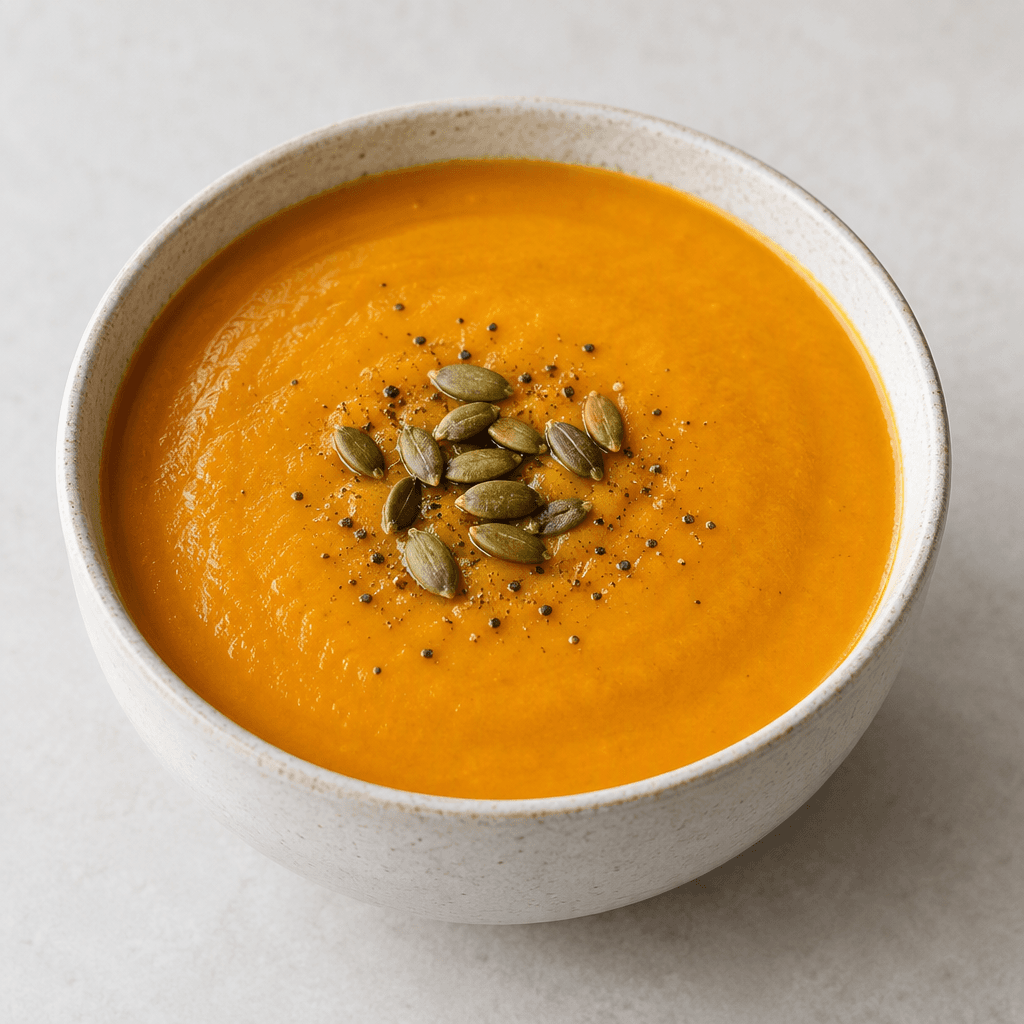
Pumpkin Soup Calories
Low calorie, high fiber, source of vitamin A and C
In season: Autumn · Winter
CALORIES
GI
POTASSIUM
FIBER
Quick answer
1 cup (medium) of Pumpkin Soup (250 g) has 95 calories. That works out to 38 calories per 100 g. It contains 19.5 g of carbs, 3 g of protein, 1.3 g of fat and 4 g of fiber. Its 1200 µg of Vitamin A covers 133% of the Daily Value. Its glycemic index is 50 (low), so it raises blood sugar slowly.
What is Pumpkin Soup?
Pumpkin Soup is made by simmering pumpkin with onion and stock, then blending it until smooth. Versions appear in many cuisines, including across Europe and North America, where it is especially popular in cooler weather. Some recipes add cream or milk; ginger, nutmeg and pepper bring warmth without hiding the pumpkin’s gentle sweetness.
Serve it hot as a starter or a light meal, with crusty bread, or top it with toasted pumpkin seeds for crunch. It is a light choice with fibre and vitamins A and C; a 100 g portion has 38 calories. For a dairy-free or lighter bowl, use vegetable stock instead of cream, and adjust the seasoning to suit your taste.
Pumpkin Soup Nutrition Facts
Selected: 100 g
38
KCAL / 100G
Carbs
7.8g
· 3% DV
Protein
1.2g
· 2% DV
Fat
0.5g
· 1% DV
Fiber
1.6g
· 6% DV
DV is the share of the daily value covered, on a 2,000 kcal reference diet.
Calories come from: Carbs 77% · Protein 12% · Fat 11%
Pumpkin Soup Vitamins & Minerals
Vitamins
Vitamin A
480µg · 53% DV
Vitamin C
7.5mg · 8% DV
B1
0.05mg · 4% DV
B5
0.22mg · 4% DV
Minerals
Sodium
210mg · 9% DV
Potassium ⭐
160mg · 5% DV
Phosphorus
28mg · 4% DV
Magnesium
11mg · 3% DV
How Nutritious Is Pumpkin Soup?
Nutrient density
Medium
How many vitamins, minerals and how much fiber this food carries per calorie. A high score means a lot of nutrition for few calories.
Satiety score
Medium
An EatBetter score computed from fiber, protein and calorie density. A high score means staying full longer on the same calories.
Both scores are calculated per 100 g and do not change with the selected portion. The satiety score is EatBetter's own calculation, not a clinical measure.
Pumpkin Soup Glycemic Index
GLYCEMIC INDEX
GLYCEMIC LOAD
Accounts for portion size — a more realistic measure than GI alone.
How to Burn Off Pumpkin Soup
To burn the 38 calories in 100 g:
🚶
Walking (5 km/h)
🏃
Running (8 km/h)
🚴
Cycling
🏊
Swimming
Times are calculated with the MET equation for a 70 kg adult. Actual burn varies with your weight, age and pace.
Is Pumpkin Soup Processed?
NOVA 2
Minimally Processed
1. Unprocessed
2. Minimally Processed
3. Processed
4. Ultra-Processed
NOVA classifies foods into 4 groups by industrial processing. NOVA 1 (unprocessed) is the healthiest.
Does Pumpkin Soup Contain Allergens?
No known major allergens
Which Diets Is Pumpkin Soup Good For?
Vegan
✓ Suitable
Vegetarian
✓ Suitable
Gluten-Free
✓ Suitable
Dairy-Free
— Not suitable
Mediterranean
✓ Suitable
Paleo
— Not suitable
Whole30
— Not suitable
DASH
— Not suitable
Keto
— Not suitable
Low FODMAP
— Not suitable
Pumpkin Soup Fat Profile
SATURATED
0.13g
MONOUNSATURATED
0.09g
POLYUNSATURATED
0.13g
Omega 6:3 ratio 3:1
Below the ideal 4:1 — a good omega balance.
Compare Pumpkin Soup
Foods Similar to Pumpkin Soup
Frequently Asked Questions About Pumpkin Soup
How do you make pumpkin soup?
To make pumpkin soup, simmer peeled, chopped pumpkin with onion and stock until tender, then blend until smooth. Season with salt and pepper, and adjust the thickness with extra stock. Sautéing the onion first gives the soup a deeper flavor.
What ingredients go in pumpkin soup?
Pumpkin soup is commonly made with pumpkin, onion, stock or water, and seasoning. Many recipes add garlic, carrot, or potato, while cream or coconut milk can make it richer; the ingredients vary by style and preference.
What spices go well in pumpkin soup?
Nutmeg, black pepper, ginger, and cinnamon all complement pumpkin soup. For a savory, warming version, try cumin or chili; add spices gradually so they enhance the pumpkin rather than overpower its flavor.
Why does pumpkin soup taste bitter?
Pumpkin soup can taste bitter if the pumpkin itself is bitter, or if onion or garlic has been scorched during cooking. Taste the raw pumpkin before using it, and discard it if it has a distinctly bitter flavor.
How can you thicken pumpkin soup?
You can thicken pumpkin soup by simmering it uncovered to reduce excess liquid, then blending it again. Adding cooked potato is another easy option; it thickens the soup without changing its pumpkin flavor as much as flour might.
Can you freeze pumpkin soup?
Yes, pumpkin soup freezes well. Cool it, portion it into airtight freezer-safe containers, and leave a little room for expansion. If the recipe includes cream, freeze the soup before adding it and stir the cream in after reheating for a smoother texture.
How long does pumpkin soup last in the fridge?
Pumpkin soup keeps for about 3–4 days in the refrigerator when stored covered and chilled promptly. Reheat only the portion you plan to eat, and avoid leaving the soup at room temperature for an extended time.
What can you serve with pumpkin soup?
Crusty bread, grilled cheese, or croutons pair well with pumpkin soup. For a more complete meal, serve it with a green salad; a savory side helps balance the soup’s naturally sweet pumpkin flavor.
Can you make pumpkin soup with canned pumpkin?
Yes, canned pumpkin works in pumpkin soup and saves preparation time. Use plain pumpkin purée rather than pumpkin pie filling, which is already sweetened and spiced; add it to sautéed aromatics and stock, then simmer and season to taste.
Is pumpkin soup good for weight loss?
Pumpkin soup can fit into a weight-loss meal plan, especially when it is made with vegetables and broth instead of large amounts of cream or butter. Its fiber helps make the meal more filling, but toppings and portion size also matter.
Have another question about Pumpkin Soup?
Ask the AI nutrition coach — calories, portions, alternatives and more, answered in seconds in the app.

Scan calories with your camera
Instant AI nutrition analysis

Nutrition data compiled from USDA FoodData Central and scientific sources.