

Ready & Packaged Foods
All →Vegetables & Legumes
All →Desserts & Confectionery
All →Meat & Protein
All →Grains & Bakery
All →Beverages
All →Milk & Dairy
All →

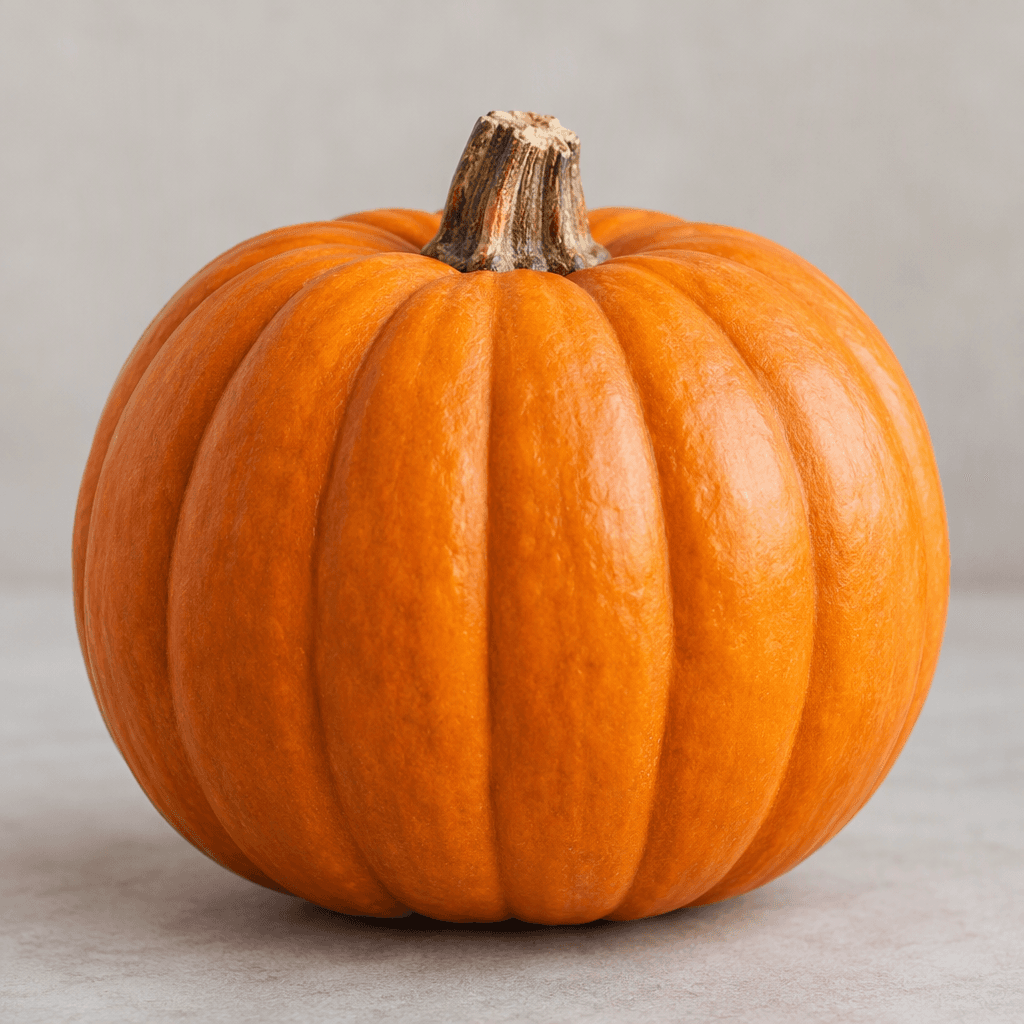
Pumpkin Calories
Low calorie, high fiber, rich in vitamin A
In season: Autumn · Winter
CALORIES
GI
POTASSIUM
FIBER
Quick answer
1 cup (medium) of Pumpkin (120 g) has 31 calories. That works out to 26 calories per 100 g. It contains 7.8 g of carbs, 1.2 g of protein, 0.1 g of fat and 0.6 g of fiber. Its 511.2 µg of Vitamin A covers 57% of the Daily Value. Its glycemic index is 75 (medium), so it raises blood sugar at a moderate pace.
What is Pumpkin?
Pumpkin is a firm-skinned winter squash, cultivated in many parts of the world and native to the Americas. Its orange flesh has a gentle sweetness that becomes more pronounced as it cooks, turning soft and smooth. In North America it is a familiar ingredient in autumn soups, roasted dishes and pies; elsewhere, it also works well in curries, stews and purées. Small pumpkins may be roasted whole or stuffed, while larger ones are usually cut into manageable pieces first.
It is low in calories and provides some fibre, while its orange colour signals carotenoids that the body can use to make vitamin A. Pair it with warming spices, herbs or beans for a satisfying meal, or use stock rather than cream for a lighter soup.
Pumpkin Nutrition Facts
Selected: 100 g
26
KCAL / 100G
Carbs
6.5g
· 2% DV
Protein
1g
· 2% DV
Fat
0.1g
· 0% DV
Fiber
0.5g
· 2% DV
DV is the share of the daily value covered, on a 2,000 kcal reference diet.
Calories come from: Carbs 84% · Protein 13% · Fat 3%
Pumpkin Vitamins & Minerals
Vitamins
Vitamin A
426µg · 47% DV
Vitamin C
9mg · 10% DV
B2
0.11mg · 8% DV
Vitamin E
1.1mg · 7% DV
Minerals
Potassium ⭐
340mg · 10% DV
Iron
1mg · 6% DV
Phosphorus
44mg · 6% DV
Magnesium
12mg · 3% DV
How Nutritious Is Pumpkin?
Nutrient density
High
How many vitamins, minerals and how much fiber this food carries per calorie. A high score means a lot of nutrition for few calories.
Satiety score
Medium
An EatBetter score computed from fiber, protein and calorie density. A high score means staying full longer on the same calories.
Both scores are calculated per 100 g and do not change with the selected portion. The satiety score is EatBetter's own calculation, not a clinical measure.
Pumpkin Glycemic Index
GLYCEMIC INDEX
GLYCEMIC LOAD
Accounts for portion size — a more realistic measure than GI alone.
How to Burn Off Pumpkin
To burn the 26 calories in 100 g:
🚶
Walking (5 km/h)
🏃
Running (8 km/h)
🚴
Cycling
🏊
Swimming
Times are calculated with the MET equation for a 70 kg adult. Actual burn varies with your weight, age and pace.
Is Pumpkin Processed?
NOVA 1
Unprocessed
1. Unprocessed
2. Minimally Processed
3. Processed
4. Ultra-Processed
NOVA classifies foods into 4 groups by industrial processing. NOVA 1 (unprocessed) is the healthiest.
Does Pumpkin Contain Allergens?
No known major allergens
Which Diets Is Pumpkin Good For?
Vegan
✓ Suitable
Vegetarian
✓ Suitable
Gluten-Free
✓ Suitable
Dairy-Free
— Not suitable
Mediterranean
✓ Suitable
Paleo
✓ Suitable
Whole30
— Not suitable
DASH
— Not suitable
Keto
✓ Suitable
Low FODMAP
— Not suitable
Pumpkin Fat Profile
SATURATED
0.02g
MONOUNSATURATED
0.01g
POLYUNSATURATED
0.03g
Omega 6:3 ratio 2:1
Below the ideal 4:1 — a good omega balance.
Compare Pumpkin
Foods Similar to Pumpkin
Frequently Asked Questions About Pumpkin
Is pumpkin a fruit or a vegetable?
Pumpkin is botanically a fruit because it develops from a flower and contains seeds, but it is generally treated as a vegetable in cooking. Its mild flavor works in savory dishes such as soups as well as in sweet recipes.
Which pumpkins are best for pie?
Small, dense cooking pumpkins, often sold as sugar pumpkins or pie pumpkins, are best for pumpkin pie. They tend to have sweeter, less watery flesh than large carving pumpkins, which are bred mainly for appearance and can make a watery filling.
How do you roast a pumpkin?
To roast a pumpkin, halve it, scoop out the seeds, and place the pieces cut-side down on a baking sheet. Roast until the flesh is easily pierced with a fork, then scoop it from the skin for soup, baking, or purée.
How can you tell if a pumpkin is ripe?
A ripe pumpkin usually has firm, evenly colored skin and feels heavy for its size. Its stem should be dry and firm rather than soft or moldy. Avoid pumpkins with soft patches, deep cuts, or signs of rot.
Can you freeze pumpkin?
Yes, pumpkin freezes well after cooking. Roast or steam the flesh, mash or purée it, cool it, and freeze it in airtight portions. Raw pumpkin can also be frozen in cubes, though the thawed texture is softer and works best in cooked dishes.
How long does pumpkin last?
A whole, uncut pumpkin can keep for weeks in a cool, dry place with good airflow. Once cut, wrap or cover it and refrigerate it, then use it within a few days. Discard pumpkin that becomes slimy, moldy, or smells sour.
Can you eat pumpkin skin?
Yes, pumpkin skin is edible, but whether it is pleasant to eat depends on the variety and how it is cooked. Wash the outside well, then roast or cook the pumpkin until the skin softens; peel it if it remains tough.
Can you eat pumpkin raw?
Yes, pumpkin can be eaten raw. Peel it, remove the seeds, and grate or slice the firm flesh thinly for salads or slaws. Its texture is crunchy and its flavor less sweet than cooked pumpkin, so a tangy dressing works well.
Can homemade pumpkin purée replace canned pumpkin?
Yes, homemade pumpkin purée can replace canned pumpkin in most recipes. Roast the pumpkin and blend the flesh until smooth, then drain excess liquid if it seems watery. This helps baked goods keep the thicker consistency that canned purée provides.
Can dogs eat pumpkin?
Yes, dogs can eat plain, cooked pumpkin in small amounts. Serve it without added sugar, salt, spices, or butter, and remove the skin and seeds if they could be a choking risk. Pumpkin pie filling is not a suitable substitute.
Have another question about Pumpkin?
Ask the AI nutrition coach — calories, portions, alternatives and more, answered in seconds in the app.

Scan calories with your camera
Instant AI nutrition analysis

Nutrition data compiled from USDA FoodData Central and scientific sources.